589 views
·
Last viewed: 15 hrs ago
Uploaded: 18 Jul 2018 (8 years ago) · Shared: 19 Jul 2018
Duration: 1:19
Uploaded: 18 Jul 2018 (8 years ago) · Shared: 19 Jul 2018
Duration: 1:19
Video Description
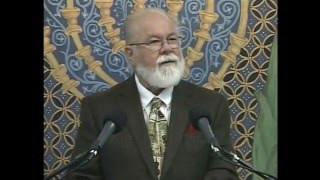
In this insightful discussion, distinguished scholar Charles Hedrick explores a pivotal moment in early history: how Athanasius compiled the New Testament Bible canon around 340 AD while referencing the GreekExplore More
Charles Hedrick Bible Canon Athanasius SeptuagintSearch Google Search Explore Topics
 Who is Charles Hedrick?
Charles Hedrick (born 1934) is a distinguished Professor Emeritus at Missouri State University. Hedrick's research interests include Christian Origins, Jesus of Nazareth, New Testament Introduction, Parables, Gnosticism etc. He has written books in the areas of Gospels, Nag Hammadi, Gnosticism, the Graeco-Roman world and related topics.
 What is Bible Canon?
A biblical canon or canon of scripture is a set of texts (or books) which a particular religious community regards as authoritative scripture. Most of the canons are considered by adherents 'closed' (i.e. books cannot be added or removed), reflecting a belief that public revelation has ended and thus some person or persons can gather approved inspired texts into a complete and authoritative canon. These canons have developed through debate and agreement on the part of the religious authorities of their respective faiths and denominations. Believers consider canonical books as inspired by God or as expressive of the authoritative history of the relationship between God and his people.
 Who was Athanasius?
Athanasius of Alexandria (298-373 AD), also called Athanasius the Great, Athanasius the Confessor or Athanasius the Apostolic was the 20th bishop of Alexandria (as Athanasius I). His on-again-off-again episcopate spanned 45 years of which over 17 encompassed five exiles, when his episcopate was replaced on the order of four different Roman emperors. Athanasius was a Christian theologian, a Church Father, the chief defender of Trinitarianism against Arianism, and a noted Egyptian leader of the fourth century. Conflict with Arius and Arianism as well as successive Roman emperors shaped Athanasius' career. In 325 AD, at the age of 27, Athanasius began his leading role against the Arians as a deacon and assistant to Bishop Alexander of Alexandria during the First Council of Nicaea. Roman emperor Constantine the Great had convened the council in August 325 to address the Arian position that the Son of God, Jesus of Nazareth, is of a distinct substance from the Father.
What was the Septuagint?The Septuagint or LXX is the earliest extant Greek translation of the Old Testament from the original Hebrew. It is estimated that the first five books of the Old Testament, known as the Torah or Pentateuch, were translated in the mid-3rd century BCE and the remaining texts were translated in the 2nd century BCE. Under Christian auspices, the Septuagint includes the Hebrew Bible as well as the deuterocanonical books of the Christian Old Testament. Considered the primary Greek translation of the Old Testament, it is quoted a number of times in the New Testament, particularly in Pauline epistles, by the Apostolic Fathers, and later by the Greek Church Fathers. The Septuagint should not be confused with other Greek versions of the Old Testament, most of which did not survive except as fragments. Of these, the most important are those by Aquila, Symmachus, and Theodotion.