Uploaded: 10 Jul 2018 (8 years ago) · Shared: 11 Jul 2018
Duration: 0:58
Video Description
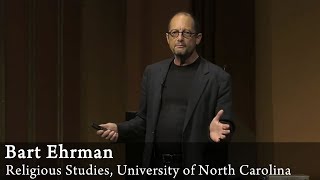
Did early Christians have to follow ancient Jewish laws to be saved? In this insightful discussion, renowned New Testament scholar Bart Ehrman explores the historical teachings of the Apostle Paul regarding new gentile converts. Unpacking the complex relationship between early Christianity, Judaism, and the Torah, Ehrman reveals how the early Church navigated faith, identity, and scripture for ex-pagans entering the movement.
Understanding these foundational developments offers vital historical perspective for modern believers seeking theological clarity across the Abrahamic traditions. Whether you are studying the evolution of biblical doctrine, exploring the shared early history between the Bible and Islamic guidance, or seeking thoughtful spiritual reminders about context and faith, this video provides deep historical scholarship. Dive into this engaging analysis of scripture, history, and the pivotal decisions that shaped global religious history forever.
Explore More
Apostle Paul Bart Ehrman Convert Judaism PaganSearch Google Search Explore Topics
 Who was Apostle Paul?
Paul the Apostle (Latin: Paulus), commonly known as Saint Paul and also known by his Jewish name Saul of Tarsus was an apostle (though not one of the Twelve Apostles) who taught the gospel of Christ to the first century world. Paul is generally considered one of the most important figures of the Apostolic Age and in the mid-30s to the mid-50s AD he founded several churches in Asia Minor and Europe. He took advantage of his status as both a Jew and a Roman citizen to minister to both Jewish and Roman audiences. According to writings in the New Testament and prior to his conversion, Paul was dedicated to persecuting the early disciples of Jesus in the area of Jerusalem. In Acts, Paul was traveling on the road from Jerusalem to Damascus on a mission to 'arrest them and bring them back to Jerusalem' when the resurrected Jesus appeared to him in a great light. He was struck blind, but after three days his sight was restored by Ananias of Damascus and Paul began to preach that Jesus of Nazareth is the Jewish Messiah and the Son of God.
 Who is Bart Ehrman?
Bart Ehrman (born 1955) is an American New Testament scholar focusing on textual criticism of New Testament, historical Jesus, and development of early Christianity. Ehrman has written and edited 30 books, including three college textbooks. He has also authored six New York Times bestsellers. He is currently the James A. Gray Distinguished Professor of Religious Studies at the University of North Carolina at Chapel Hill.
 What is Convert?
Religious conversion is the adoption of a set of beliefs identified with one particular religious denomination. Thus "religious conversion" would describe the abandoning of adherence to one denomination and affiliating with another. People convert to a different religion for various reasons, including active conversion by free choice due to a change in beliefs, secondary conversion, deathbed conversion, conversion for convenience, marital conversion, and forced conversion.
 What is Judaism?
Judaism encompasses the religion, philosophy, culture and way of life of the Jewish people. Judaism is a monotheistic religion, with the Torah as its foundational text (part of the larger text known as the Tanakh or Hebrew Bible), and supplemental oral tradition represented by later texts such as the Midrash and the Talmud. Judaism is considered by religious Jews to be the expression of the covenantal relationship that God established with the Children of Israel. Judaism includes a wide corpus of texts, practices, theological positions, and forms of organization. Within Judaism there are a variety of movements, most of which emerged from Rabbinic Judaism, which holds that God revealed his laws and commandments to Moses on Mount Sinai in the form of both the Written and Oral Torah. The Jews are an ethnoreligious group and include those born Jewish and converts to Judaism. In 2012, the world Jewish population was estimated at about 14 million, or roughly 0.2% of the total world population. About 42% of all Jews reside in Israel and about 42% reside in the United States and Canada, with most of the remainder living in Europe.
 What is Pagan?
Paganism is a term first used in the fourth century by early Christians. It was applied on populations of the Roman Empire who practiced polytheism, either because they were increasingly rural and provincial relative to the Christian population or because they were not milites Christi (soldiers of Christ). Alternate terms in Christian texts for the same group were hellene, gentile, and heathen. Pagan and paganism were pejorative terms for the same polytheistic group, implying its inferiority. Paganism has broadly connoted the "religion of the peasantry", and for much of its history was a derogatory term. Both during and after the Middle Ages, pagan was a pejorative term that was applied to any non-Abrahamic or unfamiliar religion, and the term presumed a belief in false god(s).