1100 views
·
Last viewed: 13 hrs ago
Uploaded: 01 Jul 2018 (8 years ago) · Shared: 02 Jul 2018
Duration: 0:49
Uploaded: 01 Jul 2018 (8 years ago) · Shared: 02 Jul 2018
Duration: 0:49
Youtube Description
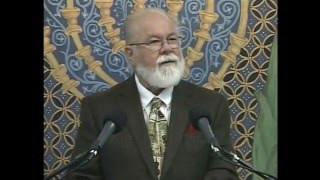
Nicholas Thomas Wright (born 1 December 1948) is a leading English New Testament scholar, Pauline theologian, and retired Anglican bishop. Inacademia, he is published as N.T. Wright, but is also known as Tom Wright. Between 2003 and his retirement in 2010, he was the Bishop of Durham. He then became Research Professor of New Testament and Early Christianity at St Mary’s College in the University of St Andrews in Scotland.
Link to N.T. Wright videos:
http://muslimprophets.com/videos.php?search=NT+Wright
Link to the original video:
https://www.youtube.com/watch?v= xksJMBG3qfg
DISCLAIMER
We do NOT own the video materials and all credits belong to the respectful owners. In case of copyright issues, please contact us immediately for further credits or clip delete.
COPYRIGHT
Under Section 107 of the Copyright Act 1976, allowance is made for 'fair use' for purposes such as criticism, comment, news reporting, teaching, scholarship and research. Fair use is a use permitted by copyright statute that might otherwise be infringing. Non-profit, educational or personal use tips the balance in favour of fair use.
Explore More
Apostle Paul NT Wright Damascus Syria JESUS
JESUS
Search Google Search Explore Topics
 Who was Apostle Paul?
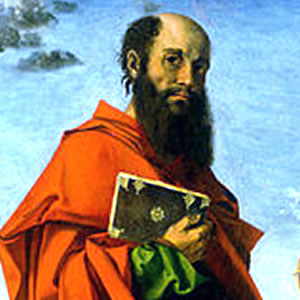
Paul the Apostle (Latin: Paulus), commonly known as Saint Paul and also known by his Jewish name Saul of Tarsus was an apostle (though not one of the Twelve Apostles) who taught the gospel of Christ to the first century world. Paul is generally considered one of the most important figures of the Apostolic Age and in the mid-30s to the mid-50s AD he founded several churches in Asia Minor and Europe. He took advantage of his status as both a Jew and a Roman citizen to minister to both Jewish and Roman audiences. According to writings in the New Testament and prior to his conversion, Paul was dedicated to persecuting the early disciples of Jesus in the area of Jerusalem. In Acts, Paul was traveling on the road from Jerusalem to Damascus on a mission to 'arrest them and bring them back to Jerusalem' when the resurrected Jesus appeared to him in a great light. He was struck blind, but after three days his sight was restored by Ananias of Damascus and Paul began to preach that Jesus of Nazareth is the Jewish Messiah and the Son of God.
 Who is NT Wright?
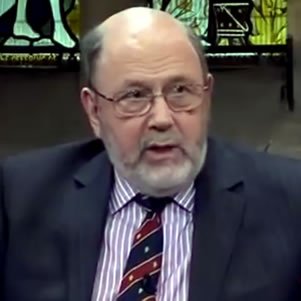
Nicholas Thomas Wright (born 1948) is a leading English New Testament scholar, Pauline theologian, and retired Anglican bishop. In academia, he is published as N.T. Wright, but is also known as Tom Wright. Between 2003 and his retirement in 2010, he was the Bishop of Durham. He then became Research Professor of New Testament and Early Christianity at St Mary's College in the University of St Andrews in Scotland.
 Where is Damascus?
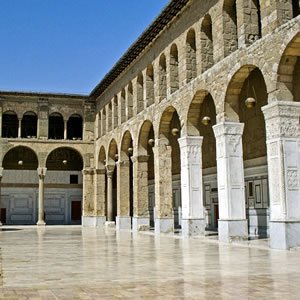
Damascus is the capital of the Syrian Arab Republic. It is also the country's largest city, following the decline in population of Aleppo due to the battle for the city. In addition to being one of the oldest continuously inhabited cities in the world, Damascus is a major cultural center of the Levant and the Arab world. The city has an estimated population of 1,711,000 as of 2009.
 What is Syria?
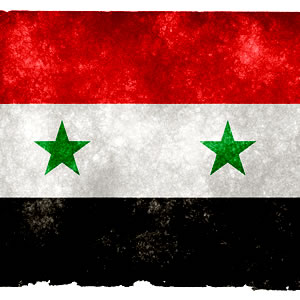
Syria, officially the Syrian Arab Republic is a country in Western Asia, bordering Lebanon to the southwest, the Mediterranean Sea to the west, Turkey to the north, Iraq to the east, Jordan to the south, and Israel to the southwest. A country of fertile plains, high mountains, and deserts, Syria is home to diverse ethnic and religious groups, including Syrian Arabs, Greeks, Armenians, Assyrians, Kurds, Circassians, Mandeans and Turkemens. Religious groups include Sunnis, Christians, Alawites, Druze, Isma'ilis, Mandeans, Shiites, Salafis, Yazidis, and Jews. Sunnis make up the largest religious group in Syria.