1448 views
·
Last viewed: 2 hrs ago
Uploaded: 26 Jun 2018 (8 years ago) · Shared: 27 Jun 2018
Duration: 1:36
Uploaded: 26 Jun 2018 (8 years ago) · Shared: 27 Jun 2018
Duration: 1:36
Youtube Description
Link to the original video channel: https://www.youtube.com/playlist?list=PLJ1Y6CjV4QxFDmQLn_dXIzzPKB6rmEZTK DISCLAIMER We do NOT own the videomaterials and all credits belong to the respectful owners. In case of copyright issues, please contact us immediately for further credits or clip delete.
COPYRIGHT
Under Section 107 of the Copyright Act 1976, allowance is made for 'fair use' for purposes such as criticism, comment, news reporting, teaching, scholarship and research. Fair use is a use permitted by copyright statute that might otherwise be infringing. Non-profit, educational or personal use tips the balance in favour of fair use.
Explore More
Apostle Paul Circumcision Bart Ehrman Jewish Law Judaism JESUSSearch Google Search Explore Topics
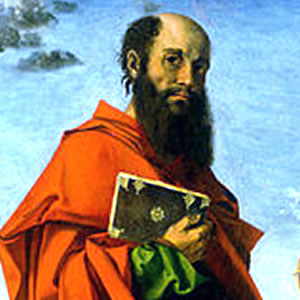 Who was Apostle Paul?
Paul the Apostle (Latin: Paulus), commonly known as Saint Paul and also known by his Jewish name Saul of Tarsus was an apostle (though not one of the Twelve Apostles) who taught the gospel of Christ to the first century world. Paul is generally considered one of the most important figures of the Apostolic Age and in the mid-30s to the mid-50s AD he founded several churches in Asia Minor and Europe. He took advantage of his status as both a Jew and a Roman citizen to minister to both Jewish and Roman audiences. According to writings in the New Testament and prior to his conversion, Paul was dedicated to persecuting the early disciples of Jesus in the area of Jerusalem. In Acts, Paul was traveling on the road from Jerusalem to Damascus on a mission to 'arrest them and bring them back to Jerusalem' when the resurrected Jesus appeared to him in a great light. He was struck blind, but after three days his sight was restored by Ananias of Damascus and Paul began to preach that Jesus of Nazareth is the Jewish Messiah and the Son of God.
 What is Circumcision?
Circumcision is the removal of the foreskin from the human penis. Topical or locally injected anesthesia is sometimes used to reduce pain and physiologic stress. For adults and children, general anesthesia is an option, and the procedure may be performed without a specialized circumcision device. The procedure is most often an elective surgery performed on babies and children, for religious or cultural reasons.
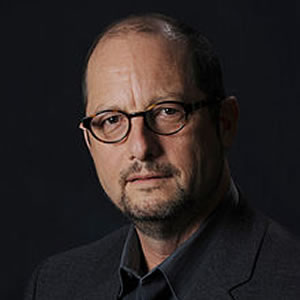 Who is Bart Ehrman?
Bart Ehrman (born 1955) is an American New Testament scholar focusing on textual criticism of New Testament, historical Jesus, and development of early Christianity. Ehrman has written and edited 30 books, including three college textbooks. He has also authored six New York Times bestsellers. He is currently the James A. Gray Distinguished Professor of Religious Studies at the University of North Carolina at Chapel Hill.
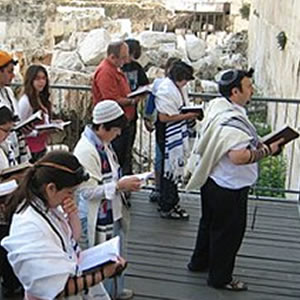 What is Jewish Law?
Jewish Law (Halakha) is the collective body of Jewish religious laws derived from the written and Oral Torah. Halakha is based on biblical commandments (mitzvot), subsequent Talmudic and rabbinic law, and the customs and traditions compiled in the many books such as the Shulchan Aruch. Halakha is often translated as "Jewish law", although a more literal translation might be "the way to behave" or "the way of walking". The word derives from the root that means "to behave" (also "to go" or "to walk"). Halakha guides not only religious practices and beliefs, but also numerous aspects of day-to-day life.
 What is Judaism?
Judaism encompasses the religion, philosophy, culture and way of life of the Jewish people. Judaism is a monotheistic religion, with the Torah as its foundational text (part of the larger text known as the Tanakh or Hebrew Bible), and supplemental oral tradition represented by later texts such as the Midrash and the Talmud. Judaism is considered by religious Jews to be the expression of the covenantal relationship that God established with the Children of Israel. Judaism includes a wide corpus of texts, practices, theological positions, and forms of organization. Within Judaism there are a variety of movements, most of which emerged from Rabbinic Judaism, which holds that God revealed his laws and commandments to Moses on Mount Sinai in the form of both the Written and Oral Torah. The Jews are an ethnoreligious group and include those born Jewish and converts to Judaism. In 2012, the world Jewish population was estimated at about 14 million, or roughly 0.2% of the total world population. About 42% of all Jews reside in Israel and about 42% reside in the United States and Canada, with most of the remainder living in Europe.