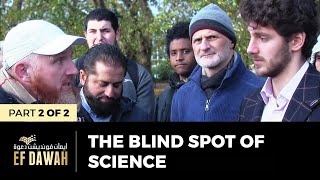
Youtube Description:
Link to the original video:
DISCLAIMER
We do NOT own the video materials and all credits belong to the respectful owners. In case of copyright issues, please contact us immediately for further credits or clip delete.
COPYRIGHT
Under Section 107 of the Copyright Act 1976, allowance is made for 'fair use' for purposes such as criticism, comment, news reporting, teaching, scholarship and research. Fair use is a use permitted by copyright statute that might otherwise be infringing. Non-profit, educational or personal use tips the balance in favour of fair use.
Link to the original video:
DISCLAIMER
We do NOT own the video materials and all credits belong to the respectful owners. In case of copyright issues, please contact us immediately for further credits or clip delete.
COPYRIGHT
Under Section 107 of the Copyright Act 1976, allowance is made for 'fair use' for purposes such as criticism, comment, news reporting, teaching, scholarship and research. Fair use is a use permitted by copyright statute that might otherwise be infringing. Non-profit, educational or personal use tips the balance in favour of fair use.
Explore More
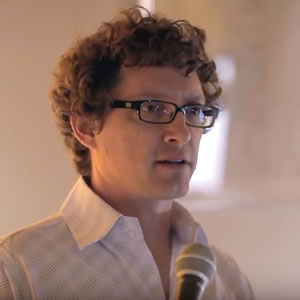 Who is Richard Carrier?
Richard Carrier (born 1969) is an American historian, atheist activist, author, public speaker and blogger. Carrier has a doctorate in ancient history from Columbia University where his thesis was on the history of science in antiquity.
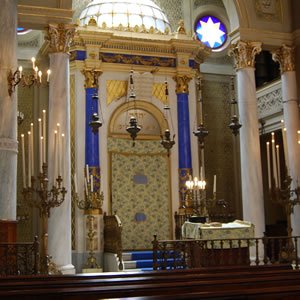 What is Jewish Temple?
The Second Temple was the Jewish holy temple which stood on the Temple Mount in Jerusalem during the Second Temple period, between 516 BCE and 70 CE. According to Jewish tradition, it replaced Solomon's Temple (the First Temple), which was destroyed by the Neo-Babylonian Empire in 586 BCE, when Jerusalem was conquered and part of the population of the Kingdom of Judah was taken into exile to Babylon. Much like the Babylonians destroyed the First Temple, the Romans destroyed the Second Temple and Jerusalem in 70 CE as retaliation for an ongoing Jewish revolt. Jewish eschatology includes a belief that the Second Temple will be replaced by a future Third Temple.
 What is Sacrifice?
Sacrifice is the offering of food, objects or the lives of animals to a higher purpose, in particular divine beings, as an act of propitiation or worship. While sacrifice often implies the ritual killing of an animal, the term offering can be used for bloodless sacrifices of food or artifacts.
 What is Hebrew?
Hebrew is a Northwest Semitic language within the Afroasiatic language family. A regional dialect of the Canaanite languages, it was natively spoken by the Israelites and remained in regular use as a first language until after 200 CE and as the liturgical language of Judaism (since the Second Temple period) and Samaritanism. The language was revived as a spoken language in the 19th century, and is the only successful large-scale example of linguistic revival. It is the only Canaanite language still spoken today. It is also one of the only two Northwest Semitic languages with contemporary speakers, the other being Aramaic. Nearly all of the Hebrew Bible is written in Biblical Hebrew, with much of its present form in the dialect that scholars believe flourished around the 6th century BCE, during the time of the Babylonian captivity.