822 views
·
Last viewed: 8 hrs ago
Uploaded: 24 Apr 2018 (8 years ago) · Shared: 01 May 2018
Duration: 35:05
Uploaded: 24 Apr 2018 (8 years ago) · Shared: 01 May 2018
Duration: 35:05
Youtube Description
Dr. Yasir Qadhi explains in detail the History of Qur'an, Preservation, Compilation, Differences in Readings & Recitations(Hafs, Warsh, Qalun, DuriEtc.) of the Arabic text of Qur'an. Disagreements among the students of Abdullah ibn Masud and Zaid Ibn Thabit on different Readings and Recitations. Exposing the Deceit Of Bigot Anti-Islamists & Cunning Christian Missionaries that Quran have many Versions.
TRUTH SHALL PREVAIL
FACEBOOK: https://www.facebook.com/info.truth.shall.prevail
GOOGLE +: https://plus.google.com/+TrueFaceOfISLAM
TWITTER: https://twitter.com/info_tsp
PALTALK: http://www.paltalk.com/g2/group/1587036342
YOUTUBE: https://www.youtube.com/ncapcs
EMAIL: tshallprevail@gmail.com
Explore More
Yasir Qadhi The Quran Myth ONSSearch Google Search Explore Topics
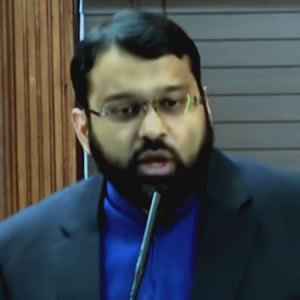 Who is Yasir Qadhi?
Yasir Qadhi is an American Muslim scholar and writer of Pakistani descent. Since 2001, he has served as Dean of Academic Affairs at the Al-Maghrib Institute, an international Islamic educational institution with a center in Houston, Texas. He also teaches in the Religious Studies department at Rhodes College in Memphis, Tennessee, where he resides. Qadhi has written numerous books and lectured widely on Islam and contemporary Muslim issues. A 2011 The New York Times Magazine essay by Andea Elliott described Qadhi as "one of the most influential conservative clerics in American Islam."
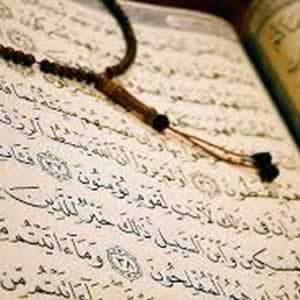 What is The Quran?
Quran, literally meaning "the recitation" is the central religious text of Islam, which Muslims believe to be a revelation from God (Allah). It is widely regarded as the finest work in classical Arabic literature. The Quran is divided into chapters (surah in Arabic), which are then divided into verses (ayah). Muslims believe that the Quran was verbally revealed by God to Muhammad through the angel Gabriel (Jibril), gradually over a period of approximately 23 years, beginning on 22 December 609 CE, when Muhammad was 40, and concluding in 632, the year of his death. Muslims regard the Quran as the most important miracle of Muhammad, a proof of his prophethood, and the culmination of a series of divine messages that started with the messages revealed to Adam and ended with Muhammad.
 What is Myth?
Mythology refers to a collection of sacred, traditional tales from a specific culture that explain natural phenomena, world origins, and cultural values. This often featuring gods, goddesses, and heroes. It serves as a lens for interpreting shared human experiences through stories, rituals, and art. Myth is a genre of folklore consisting primarily of narratives that play a fundamental role in a society. For scholars, this is totally different from the ordinary sense of the term myth, meaning a belief that is not true, as the veracity of a piece of folklore is entirely irrelevant to determining whether it constitutes a myth. Myths are often endorsed by religious and secular authorities, and may be natural or supernatural in character. Many societies group their myths, legends, and history together, considering myths and legends to be factual accounts of their remote past. In particular, creation myths take place in a primordial age when the world had not achieved its later form. Origin myths explain how a society's customs, institutions, and taboos were established and sanctified. National myths are narratives about a nation's past that symbolize the nation's values. There is a complex relationship between recital of myths and the enactment of rituals.
 Who are ONS?
The Office for National Statistics (ONS) is the official national statistical institute of the United Kingdom.