Uploaded: 01 Jan 2018 (9 years ago) · Shared: 05 Jan 2018
Duration: 8:51
Video Description
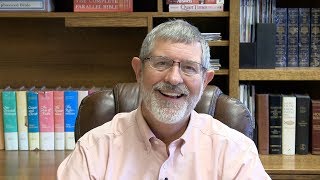
In this insightful biblical teaching, scholar Dustin Smith explores the famous opening of the Gospel of Prophet John by breaking John 1:1 into three distinct, meaningful sections. By examining scripture in its original linguistic and historical context, Smith reveals how the expression "a Word with Him" is actually a common, recurring phrase throughout the Bible rather than an isolated theological anomaly.
This engaging study invites followers of Christian theology, as well as students of early history and comparative religious studies, to re-examine foundational scriptures with fresh clarity. Whether you are seeking deeper biblical knowledge or thoughtful spiritual reminders to enrich your personal faith, Dustin Smith provides a compelling, evidence-based breakdown that sheds light on the true message of the text. Discover how broader scriptural patterns shape our understanding of God's Word and strengthen your study of the Bible today.
Explore More
John Schoenheit The Bible UnitarianSearch Google Search Explore Topics
 Who are John Schoenheit?
BiblicalUnitarian serves as the digital media outlet for BiblicalUnitarian.com, a web resource operated in connection with Christian ministries like Spirit & Truth Fellowship International. The channel focuses on teaching non-Trinitarian theology based directly on Scripture.
What is The Bible?The Bible is a canonical collection of texts sacred in Judaism and Christianity. There is no single "Bible" and many Bibles with varying contents exist. The term Bible is shared between Judaism and Christianity, although the contents of each of their collections of canonical texts is not the same. Different religious groups include different books within their Biblical canons, in different orders, and sometimes divide or combine books, or incorporate additional material into canonical books. The Hebrew Bible, or Tanakh, contains 24 books. Christian Bibles range from the 66 books of the Protestant canon to the 81 books of the Ethiopian Orthodox Church canon. The first part of Christian Bibles is the Old Testament, which contains, at minimum, the 24 books of the Hebrew Bible divided into 39 books and ordered differently from the Hebrew Bible. The Catholic Church and Eastern Christian churches also hold certain deuterocanonical books and passages to be part of the Old Testament canon. The second part is the New Testament, containing 27 books: the 4 Canonical gospels, Acts of the Apostles, 21 Epistles or didactic letters, and the Book of Revelation.
 What is Unitarian?
Unitarianism can be viewed as a form of Nontrinitarianism which is a form of Christianity that rejects the mainstream Christian doctrine of the Trinity. The teaching that God is three distinct hypostases or persons who are coeternal, coequal, and indivisibly united in one being, or essence (from the Greek ousia). Certain religious groups that emerged during the Protestant Reformation have historically been known as antitrinitarian, but are not considered Protestant in popular discourse due to their nontrinitarian nature. According to churches that consider the decisions of ecumenical councils final, Trinitarianism was definitively declared to be Christian doctrine at the 4th-century ecumenical councils, that of the First Council of Nicaea (325 AD), which declared the full divinity of the Son, and the First Council of Constantinople (381 AD), which declared the divinity of the Holy Spirit. In terms of number of adherents, nontrinitarian denominations comprise a minority of modern Christianity. The largest nontrinitarian Christian denominations are The Church of Jesus Christ of Latter-day Saints ("Mormons") and Jehovah's Witnesses.