Uploaded: 28 Sep 2013 (13 years ago) · Shared: 01 Jan 2018
Duration: 2:21
Video Description
In this compelling message, Pastor Joel Osteen explores foundational biblical dietary guidelines, highlighting why swine and pork were historically deemed unclean and unfit for consumption. Drawing from scripture, Osteen reflects on how early faith traditions prioritized both spiritual purity and physical health. This perspective aligns with long-standing dietary laws found across Abrahamic faiths, including Judaism, Christianity, and Islam, where sacred texts like the Torah, Bible, and Quran emphasize mindful living and divine wellness principles.
By connecting ancient scriptural wisdom with modern health benefits, this talk offers timeless spiritual reminders for believers seeking to honor God through their daily lifestyle choices. Whether you are exploring church teachings, studying early history, or seeking practical Islamic guidance on clean eating, Osteen’s insights encourage a deeper reflection on how faith shapes our wellness and devotion today.
Explore More
Search Google Search Explore Topics Joel Osteen The Bible Swine Who is Joel Osteen?
Joel Scott Osteen (born 1963) is an American televangelist based in Houston, Texas. Osteen's televised sermons are seen by over 7 million viewers weekly and over 20 million monthly in over 100 countries. His sermons also broadcast 24 hours a day on Sirius XM Satellite Radio, Channel 128. Osteen has written seven New York Times Best Sellers.
What is The Bible?The Bible is a canonical collection of texts sacred in Judaism and Christianity. There is no single "Bible" and many Bibles with varying contents exist. The term Bible is shared between Judaism and Christianity, although the contents of each of their collections of canonical texts is not the same. Different religious groups include different books within their Biblical canons, in different orders, and sometimes divide or combine books, or incorporate additional material into canonical books. The Hebrew Bible, or Tanakh, contains 24 books. Christian Bibles range from the 66 books of the Protestant canon to the 81 books of the Ethiopian Orthodox Church canon. The first part of Christian Bibles is the Old Testament, which contains, at minimum, the 24 books of the Hebrew Bible divided into 39 books and ordered differently from the Hebrew Bible. The Catholic Church and Eastern Christian churches also hold certain deuterocanonical books and passages to be part of the Old Testament canon. The second part is the New Testament, containing 27 books: the 4 Canonical gospels, Acts of the Apostles, 21 Epistles or didactic letters, and the Book of Revelation.
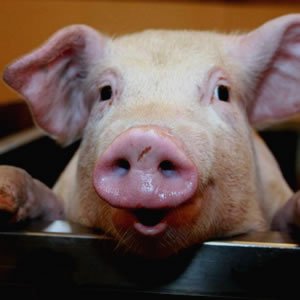 What is Swine?
The domestic pig, often called swine, hog, or pig. It is a domesticated large, even-toed ungulate. It is variously considered a subspecies of the wild boar or a distinct species. The domestic pig's head-plus-body-length ranges from 0.9 to 1.8 m (35 to 71 in), and the adult can weigh between 50 and 350 kg (110 and 770 lb).