Explore More
Anthony Buzzard Monotheism Unitarian IslamSearch Google Search Explore Topics
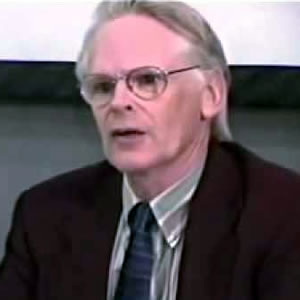 Who is Anthony Buzzard?
Sir Anthony Farquhar Buzzard, 3rd Baronet, ARCM (28 June 1935), is a biblical scholar, unitarian Christian theologian, author and professor on the faculty of Atlanta Bible College. Buzzard gained a Diploma in Biblical Hebrew from the University of Jerusalem in 1970. He attended the University of London. He gained a Masters in Theology from Bethany Theological Seminary, Chicago, in 1990. Buzzard taught French and German at The American School in London and taught theology and Biblical languages for 24 years at Atlanta Bible College, McDonough, Georgia.
 What is Monotheism?
Monotheism has been defined as the belief in the existence of only one god. A god that created the world, is all-powerful and intervenes in the world. A broader definition of monotheism is the belief in one god. A distinction may be made between exclusive monotheism, and both inclusive monotheism and pluriform (panentheistic) monotheism which, while recognising various distinct gods, postulate some underlying unity.
What is Unitarian?Unitarianism can be viewed as a form of Nontrinitarianism which is a form of Christianity that rejects the mainstream Christian doctrine of the Trinity. The teaching that God is three distinct hypostases or persons who are coeternal, coequal, and indivisibly united in one being, or essence (from the Greek ousia). Certain religious groups that emerged during the Protestant Reformation have historically been known as antitrinitarian, but are not considered Protestant in popular discourse due to their nontrinitarian nature. According to churches that consider the decisions of ecumenical councils final, Trinitarianism was definitively declared to be Christian doctrine at the 4th-century ecumenical councils, that of the First Council of Nicaea (325 AD), which declared the full divinity of the Son, and the First Council of Constantinople (381 AD), which declared the divinity of the Holy Spirit. In terms of number of adherents, nontrinitarian denominations comprise a minority of modern Christianity. The largest nontrinitarian Christian denominations are The Church of Jesus Christ of Latter-day Saints ("Mormons") and Jehovah's Witnesses.
 What is Islam?
One of the major religions of the world, Islam literally translates to "submission," as a follower of Islam (Muslims) devotes their life to that of their God. The religion began with the teachings of Muhammad in the 7th century. The theology of Islam is based on the Qur'an, which was given to Muhammad by God. Some of the major fundamental principles of Islam include the Five Pillars, which hope to unite all Muslims into a community. Two different factions of Muslims exist - the majority are known as Sunni, with a small percentage known as Shi'a - both predominantly reside throughout the Middle East. Muhammad died in 632 AD and the religion of Islam formally started after his death. The Quran was formally compiled and finalised in 650 AD, prior to which it was 'memorised' and written across many parchments.