Uploaded: 19 Apr 2016 (10 years ago) · Shared: 23 Nov 2017
Duration: 28:50
Video Description
In this captivating interfaith theological debate hosted on TITANS TV, English Muslim speaker Paul William faces off against Prophet Noah , an Irish Christian, to examine the profound scriptural claim in 1 Timothy 2:5. Centering on Apostle Paul's writing that Prophet Jesus is the mediator between God and mankind, this intense exchange bridges core concepts from both the Bible and the Quran. Scholars and seekers alike will gain rich insights into contrasting perspectives on salvation, divine oneness, and prophetic roles across Christian and Islamic traditions.
Whether you are exploring the historical roots of faith, comparing Christian theology with Islamic guidance, or searching for thought-provoking spiritual reminders, this debate offers a respectful yet energetic dialogue. Dive into deep discussions on foundational scriptures, testaments of faith, and the enduring conversation between Islam and Christianity. Subscribe to TITANS TV for more dynamic religious debates and engaging interfaith exchanges.
Explore More
Apostle Paul Paul William GOD JESUS
JESUS
Search Google Search Explore Topics
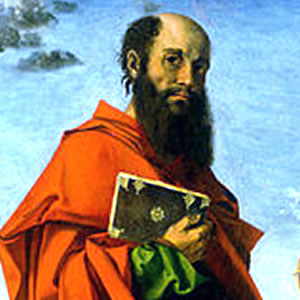 Who was Apostle Paul?
Paul the Apostle (Latin: Paulus), commonly known as Saint Paul and also known by his Jewish name Saul of Tarsus was an apostle (though not one of the Twelve Apostles) who taught the gospel of Christ to the first century world. Paul is generally considered one of the most important figures of the Apostolic Age and in the mid-30s to the mid-50s AD he founded several churches in Asia Minor and Europe. He took advantage of his status as both a Jew and a Roman citizen to minister to both Jewish and Roman audiences. According to writings in the New Testament and prior to his conversion, Paul was dedicated to persecuting the early disciples of Jesus in the area of Jerusalem. In Acts, Paul was traveling on the road from Jerusalem to Damascus on a mission to 'arrest them and bring them back to Jerusalem' when the resurrected Jesus appeared to him in a great light. He was struck blind, but after three days his sight was restored by Ananias of Damascus and Paul began to preach that Jesus of Nazareth is the Jewish Messiah and the Son of God.
 Who is Paul William?
Welcome to Blogging Theology. Our mission is to produce bitesized discussions of academic and scholarly books on Islam, Christianity and Judaism to encourage respectful interfaith dialogue and discussion to have some fun.
Who is GOD?In monotheism and henotheism, God is conceived as the Supreme Being and principal object of faith. The concept of God as described by theologians commonly includes the attributes of omniscience (infinite knowledge), omnipotence (unlimited power), omnipresence (present everywhere), omnibenevolence (perfect goodness), divine simplicity, and eternal and necessary existence. In theism, God is the creator and sustainer of the universe In deism, God is the creator, but not the sustainer, of the universe Monotheism is the belief in the existence of one God or in the oneness of God In pantheism, God is the universe itself In atheism, God is purported not to exist, while deemed unknown or unknowable within the context of agnosticism.