Should 1 John 5:7 be in the Bible? - Daniel Wallace - Ankerberg Show

   1:59
707 views  ·  Last viewed: 22 hrs ago
Uploaded: 23 Mar 2009   (17 years ago)  ·  Shared: 01 Aug 2017

Video Description (from Youtube)

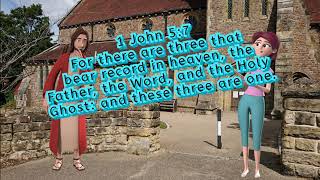
From our series "Battle to Discredit the Bible" this clip answers the question: 1 John 5:7 which explicitly defines the trinity, should it be in or should it be out of the new Testament?
DISCLAIMER
All videos are shared for educational and information purposes only. All videos are hosted and viewable on Youtube servers. Video titles are generated using the original video title; overall content theme including actual dialogue and speech (Transcript); and A.I-based recommendations with a focus on SEO, keyword density, and internal search functions. The video title does not represent the views held by the Youtube video uploader, or any individual, organisation or business.

If you spot any mistake, omission or give feedback, kindly Contact Us with details

Overview & Key Concepts


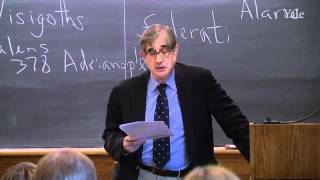
Who is Daniel Wallace?

Daniel Wallace (born 1952) is an American professor of New Testament Studies at Dallas Theological Seminary. Wallace is also the founder and executive

director of the Center for the Study of New Testament Manuscripts, who seek to digitize all known Greek manuscripts of the New Testament via digital photographs.

Who are Ankerberg Show?

John Ankerberg (born 1945) is an American Christian television host, author, and speaker. He is an ordained Baptist minister and has authored or

co-authored more than 150 books and study guides. He is the producer and host of the internationally televised weekly program The John Ankerberg Show.
What is The Bible?

The Bible is a canonical collection of texts sacred in Judaism and Christianity. There is no single "Bible" and many Bibles with varying contents

exist. The term Bible is shared between Judaism and Christianity, although the contents of each of their collections of canonical texts is not the same.
<br><br>
Different religious groups include different books within their Biblical canons, in different orders, and sometimes divide or combine books, or incorporate additional material into canonical books.
<br><br>
The Hebrew Bible, or Tanakh, contains 24 books. Christian Bibles range from the 66 books of the Protestant canon to the 81 books of the Ethiopian Orthodox Church canon.
<br><br>
The first part of Christian Bibles is the Old Testament, which contains, at minimum, the 24 books of the Hebrew Bible divided into 39 books and ordered differently from the Hebrew Bible. The Catholic Church and Eastern Christian churches also hold certain deuterocanonical books and passages to be part of the Old Testament canon.
<br><br>
The second part is the New Testament, containing 27 books: the 4 Canonical gospels, Acts of the Apostles, 21 Epistles or didactic letters, and the Book of Revelation.


Videos on Ankerberg Show (4)

Video: In John 7:53, the Woman caught in Adultery was added to the Bible -  Lee Strobel - Ankerberg Show 5:53
Video: Should 1 John 5:7 be in the Bible? - Daniel Wallace - Ankerberg Show 1:59
Video: What events will happen before the Temple is built over the Al-Aqsa Mosque in Jerusalem? - Jimmy DeYoung - Ankerberg Show 5:03
Video: Which Countries does Bible mention in the End Times war on Earth? - Ankerberg Show 2:19

EXPLORE TOPICS : DANIEL WALLACE | 23 ANKERBERG SHOW | 4 THE BIBLE | 0

Latest videos  •  6,061 videos  •  0 viewed/24 hour

SUBSCRIBE

Receive the latest news and updates by email - Subscribe Now!
About  |  Q&A  |  Contact Us    •    Terms  |  Privacy  |  Disclaimer  |  Sitemap
Connect:      Facebook  |    Twitter  |    Youtube
MuslimProphets.com is an educational website on the Prophets of God: David, Noah, Abraham, Moses, Jesus and Muhammad, who established the Abrahamic faiths of Judaism, Christianity and Islam. MuslimProphets.com explores contemporary social themes through Scripture, Evidences, Photo, Video, Maps, Current Affairs, Debate and 'alternative' Views held by Theologians, Apologists, Scholars and Street Preachers. Take a Site Tour

In accordance with Islamic etiquette, all prophet names should be followed with 'Peace Be Upon Him (PBUH)'. This is omitted to minimise text.

DISCLAIMER: All website content is for general information and educational purposes only and available in the public domain. Whilst all information comes from sources believed to be reliable, this cannot be guaranteed. External links are provided as a convenience and for informational purposes only. They do not constitute endorsement or approval for any products, services or comments by organizations or individuals. Title and Text links may be edited for external SEO, internal site and keyword search purposes. We bear no responsibility for the accuracy, legality, or content found on any external website or its subsequent links. Unless indicated, all images and content is licensed under a Creative Commons Attribution License distributed by Wikipedia, Wikimedia Commons, Pixabay, Pxhere, Pexels, Unsplash, Flickr and others. All Torah, Psalms, Old and New Testament Bible quotes are from the King James Version (KJV) Holy Bible in the public domain. All Quran quotes are from Taqi-ud-Din al-Hilali/Muhsin Khan English Quran translation.

ALWAYS DO YOUR OWN RESEARCH. If you spot any mistake, error or omission of information, contact us so we can correct it.