1 views · Last viewed: 2 weeks ago · Watch on Youtube
 New Uploads
Video Description (from Youtube)
Professor Freedman introduces the major themes of the course: the crisis of the Roman Empire, the rise of Christianity, the threats from barbarian invasions, and the continuity of the Byzantine Empire. At the beginning of the period covered in this course, the Roman Empire was centered politically, logistically, and culturally on the Mediterranean Sea. Remarkable for its size and longevity, the Empire was further marked by its tolerance. Although it contained an eclectic mix of peoples, the Empire was unified in part by a local elite with a shared language and customs. In the third century these strengths were increasingly threatened by the Empire's sheer size, its imbalances, both East-West and urban-rural, and by an army that realizes it could make and unmake emperors. Having set the scene, Professor Freedman looks to subsequent lectures where he will discuss reforms enacted to address these weaknesses.
00:00 - Chapter 1. Welcome
09:54 - Chapter 2. Introduction to the Themes of the Course
18:48 - Chapter 3. The Roman Empire before the Crisis of the Third Century
34:09 - Chapter 4. Flaws of the Roman Empire
Complete course materials are available at the Yale Online website: online.yale.edu
This course was recorded in Fall 2011.
All videos are for educational purposes only. All videos remain hosted on Youtube and are shared on this page. The video title is derived from: (1) the original Youtube video title, (2) the video content, (3) dialogue and speech in the video, and (4) the overall content. The video title does not represent the views of any individual, speaker, organisation or business. Video titles are edited and optimized for SEO, keyword density, clarity of information and internal/external search purposes.
If you spot any mistake, omission or to report abuse, kindly Contact Us with details.
Multipart Video ()
This video is part of a series as displayed below :
 48:10
48:10
6
1493856000
1753692575
Rome and Constantine - Christian History 2/2
002890
1
 40:08
40:08
1
1493856000
1752865259
Rome: Rome's Greatness and First Crisis - Paul Freedman 1/18
002408
2
 33:55
33:55
1
1496793600
1753275056
Flavian Signature: Proof Rome Invented Jesus - Joseph Atwill (Caesar Messiah)
002035
3
 25:54
25:54
1
1501545600
1752739193
Seige of Jerusalem: Rome destroys the Jewish Temple (66-70 AD) - HistoryTV
001554
4
 11:00
11:00
3
1502912103
1753802198
Eclipsing Empire: Apostle Paul, Rome and Kingdom of God - John Dominic Crossan
000660
5
 14:49
14:49
3
1502912089
1753752305
Christianity opposed Rome Imperialism by adopting the titles Son of God, Lord and Savior, previously reserved for Roman Emperors - Marcus Borg
000889
6
 28:51
28:51
1
1505867172
1752859941
Rome and 3rd Century Crisis - Ryan Reeves
001731
7
 48:37
48:37
1
1506722487
1752693247
Rome: 3rd Century Crisis and Diocletian Reforms - Paul Freedman 2/18
002917
8
 45:17
45:17
5
1506722498
1753748146
Rome: Constantine & The Early Roman Church - Paul Freedman 3/18
002717
9
 47:56
47:56
1
1506722501
1753223684
Rome: Christian Roman Empire - Paul Freedman 4/18
002876
10
 46:23
46:23
4
1506722504
1753422691
Rome: Augustine's Confessions - Paul Freedman 5/18
002783
11
 49:22
49:22
2
1506722507
1753320734
Rome: Transformation of the Roman Empire - Paul Freedman 6/18
002962
12
 49:15
49:15
3
1506722515
1753787520
Rome: Barbarian Kingdoms - Paul Freedman 7/18
002955
13
 47:10
47:10
2
1506722518
1753359648
Rome: Survival in the East - Paul Freedman 8/18
002830
14
 48:47
48:47
2
1506722520
1753333387
Rome: The Reign of Justinian - Paul Freedman 9/18
002927
15
 46:55
46:55
1
1506722523
1752988616
Rome: Clovis and the Franks - Paul Freedman 10/18
002815
16
 50:01
50:01
1
1506722527
1753056545
Rome: Frankish Society - Paul Freedman 11/18
003001
17
 44:15
44:15
1
1506722534
1752740608
Rome: Britain and Ireland - Paul Freedman 12/18
002655
18
 45:50
45:50
2
1506722662
1753674138
Rome: Monasticism ('Devoted Living') - Paul Freedman 13/18
002750
19
 43:15
43:15
1
1506722660
1752710977
Rome: Muhammed and the Arab Conquests - Paul Freedman 14/18
002595
20
 49:44
49:44
2
1506722656
1753398776
Rome: Islamic Conquests, Forced Conversions and Civil War - Paul Freedman 15/18
002984
21
 44:11
44:11
3
1506722610
1753652762
Rome: The Splendor of the Abbasid Period - Paul Freedman 16/18
002651
22
 45:18
45:18
1
1506722613
1753240135
Rome: The Crucial 7th Century - Paul Freedman 17/18
002718
23
 48:40
48:40
2
1506722616
1753674855
Rome: The Splendor of Byzantium - Paul Freedman 18/18
002920
24
 14:17
14:17
2
1510335563
1753403413
The World of Jesus, Rome and Julius Ceaser - John Dominic Crossan
000857
25
 8:01
8:01
4
1522431761
1753684783
In 70 AD, Rome destroyed Jerusalem and Jewish Temple. Christianity was born and Jesus invented to fulfill ancient prophecy - Paul George
000481
26
 13:25
13:25
2
1523010479
1753661318
Christian theology is based on decisions made in Rome - Hashim vs American Jew
000805
27
 17:21
17:21
2
1523216593
1753330538
Triumph of Christianity: How Rome took over Christianity - Bart Ehrman
001041
28
 17:01
17:01
4
1526084007
1753769219
In 73 AD, Masada was conquered by Rome; 967 Jews killed themselves - HolyLandSite
001021
29
 14:20
14:20
2
1528480496
1753550032
Islam's victory over Byzantine Rome - Quran Miracle
000860
30
 1:10
1:10
4
1529453925
1753784184
'Christianity converts to Rome' by adopting Roman myths and practises - Tovia Singer
000070
31
 2:21
2:21
4
1530141489
1753629175
Jesus, an Aramaic speaking Palestinian. New Testament originally in Greek, language of Rome - Bart Ehrman
000141
32
 2:27
2:27
2
1530604603
1753420083
Apostle Paul evolves from radical, liberal to conservative; de-radicalized and sanitized to appease Rome - John Dominic Crossan
000147
33
 5:42
5:42
2
1534072414
1753662431
In 382 AD, Council of Rome was earliest church council to list the 'canon' books in both OT & NT Bible - Jimmy Akin
000342
34
 1:28
1:28
2
1534119910
1753783257
Theodosius (380 AD) declared Christianity as official state religion of Rome - Richard Rubenstein
000088
35
 0:48
0:48
8
1534149741
1753797620
From 306 AD, Constantine used Christianity to restore power & glory to Rome - Richard Rubenstein
000048
36
 11:24
11:24
2
1535110948
1753533176
In 389 AD, Rome ordered Library of Alexandria be destroyed, so a new religion, Christianity be created unchallenged - Arjun Walia
000684
37
 1:27:19
3
1541937296
1753327654
In 70 AD, Rome destroyed Jesus; and invented a new, beardless, young, man God - Felix Just
005239
38
 5:06
5:06
4
1549451069
1753560230
Greek Apostate Fathers: Clement, Ignatius, Justin Martyr, Shepherd of Hermas & Polycarp founded the Catholic 'cult' of Rome - approvedofGod
000306
39
 7:44
7:44
1
1553512499
1752876535
Bar Kokhba and Jesus were both killed by Rome. Who is the Messiah? - Tovia Singer
000464
40
 4:13
4:13
4
1568332790
1753810599
Pagan Rome invented Jesus based on ancient Celestial and Astrotheology - Robert Sullivan IV
000253
41
 1:28
1:28
4
1570625396
1753695414
Christianity is a Graeco-Roman production for Greek Rome - Robert Eisenman
000088
42
 23:16
23:16
3
1572230539
1753665738
Early Christians believed Jesus was a Man. Rome destroyed this History - Hamza Saudi vs Christian 1/3
001396
43
 9:49
9:49
2
1572251643
1753395040
Early Christians believed Jesus was a Man. Rome destroyed this History - Hamza Saudi vs Christian 2/3
000589
44
 8:01
8:01
5
1572251635
1753663403
Early Christians believed Jesus was a Man. Rome destroyed this History - Hamza Saudi vs Christian 3/3
000481
45
 5:23
5:23
4
1574294142
1753755148
In 70 AD, Rome destroyed the Jerusalem Church, establishing 'Pagan' Trinitarian Christianity - Hamza Saudi
000323
46
 10:49
10:49
1
1629301443
1752892468
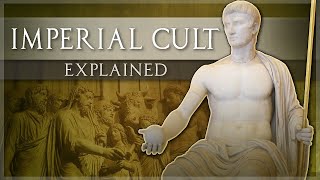
Rome's Gods: From Imperial Cult to Christianity - SPQR Historian
000649
47
 3:32
3:32
1
1663073769
1752601466
Pantheon, Roman Temple to the Gods and Idols of pagan Rome
000212
48
 6:44
6:44
1
1744071180
1753281772
Jesus, Rome and Sun God Worship | Gaia
000404
49