253 views
·
Last viewed: 6 days ago
Uploaded: 29 Dec 2014 (12 years ago) · Shared: 04 May 2017
Duration: 5:49
Uploaded: 29 Dec 2014 (12 years ago) · Shared: 04 May 2017
Duration: 5:49
Youtube Description
'JESUS IS DERIVED FROM ZEUS MYTHOLOGY!' 'THE WORD, JESUS IS LINKED TO ZEUS MYTHOLOGY!' This brief article focuses on the alleged linguisticconnections of the Greek 'Iesius' and the biblical 'Yah'usha'.
Which is the Greek spelling of the name of our Savior?
a) ιησου ['Ihsou'] or
b) ιεσιυς ['Iesius']
Answer: 'Iesius', answer (b), is the name of the son of Zeus and Electra. In Latin it is 'Iesus', from which we get 'Jesus'!
Answer (a), 'Ihsou', is the phonetic rendition (transliteration) of the Hebrew name 'Yah'usha', the prophetic name of our Savior. (a) is the correct one but (b) is the one in the Bible!
Do you worship 'Jesus' or 'Yahusha?'
Why this is important? IDENTITY!
Not knowing the difference opens the door to putting faith in a counterfeit Savior! Just because others say 'Iesius, Iesus, or Jesus' is from the Hebrew, doesn't mean it really is!
Since this was a specific warning connected to the coming of Messiah (Mat 24:24), which appears to drawing closer every day, it is crucial to your future. The majority view may not be the right one since Satan deceives the whole world (Rev 12:9).
More than just 'a name', or a doctrine, it is the entire identity, both character and name, of the possessor of that name. There is a deception.
Do you understand what this difference is?
Iesius or Ihsou? it's the Ie... or Ih? A profound difference!
Contrary to popular belief, these two names at the beginning of this paragraph are NOT written in Greek letters! They are English equivalents of Greek letters! At the end of this paragraph there is the actual Greek lettering, and it's English counterpart.
Note: There is no 'e' in the biblical Greek spelling of the Savior's name, which is from the Hebrew, יהושוע, 'Yah'usha' [Ιησου- Ihsou].
But...there is an 'e' in Iesius - ιεσιυς!
Why is there no 'oo' sound in Jesus?
There is an 'oo' or long 'u' sound in Yahusha!
In addition, the omichron, 'o', in [Ιησου - Ihsou] cannot be omitted in a phonetic articulation, i.e. transliteration, because it is part of a combined vowel sound 'ou' (a dipthong) representing the 'oo' sound of the Hebrew [ו] 'waw'. [see comment on 'Yahusha']
However, there is no such vowel combination (dipthong) in the 'iu' of 'Iesius', thus the 'i' is easily omitted, leaving the 'uh' sound of a short 'u', as in 'us'...and Jes-us! See the Problem?
The implications are clear! Any name allegedly pertaining to the biblical Messiah containing an 'e', and not containing an 'oo' sound only in the second syllable, is not biblical! Thus 'Iesius'...aka 'Iesus'...aka 'Jesus' is not biblical.
It is, however, the name of someone else, i.e the son of Zeus!
The similarities shared among the pagan mysteries in the son of Zeus, 'Iesius', The Persian 'Mithra', and the Christian 'Jesus' are simply overwhelming, even to the point of being highly documented variations of the same entity! The ancient practice of assuming the worship of foreign deities by changing names as well as adapting situations is well known. References to Mithra are in the footnotes, and are highly recommended reading.
'Yahusha': We also note that the full Hebrew six letter of the name [יהושוע] does contain 2 [ו] 'waws', but some incorrectly attempt to vocalize both. As we shall see, the first 'waw' is not vocalized, thus rendering the vocalization as 'Yah'usha'. (The apostrophe in 'Yah'usha' is employed to represent the silent 'waw'.)
If the silent 'waw' were vocalized, there would have to be a linguistic representation in the Greek in order to articulate that sound, which would be... Ιηουσου ['Ih-ou-s-ou-(a)' (Yah-u-sh-(a)] which was never there. How do we know this?
The earliest Greek rendering of the Hebrew 'Yah'usha', was done by a committee of 72 Hebrew speaking Jews in (or sent to) Alexandria, Egypt, around the year 250 BCE when they translated the Hebrew scriptures into Greek (according to the Letter of Aristeas).
Since these Jews knew how the Hebrew was pronounced, they faithful reproduced the articulation, which omitted the first 'waw' sound. Thus the name [יהושוע] 'Yah'usha' was phonetically rendered in the Greek as Ιησου ['Ihsou']...but still pronounced 'Yah'usha'.
Note: the final Greek endings ['s', 'n', or no letter] are grammatical, thus not part of the name proper. So again it cannot be, 'Iesius'
Incidentally, Yah'usha means 'Yah is Salvation'. The name of the successor to Moses, and the name of a High Priest after the return of the Babylonian captivity, is the same name used of Messiah in the Greek writings called the 'New Testament'. The similarity between the two proto-types as leaders into the promised land from types of exile and bondage, cannot be lost on the prophetic Messianic fulfillment. More on that in a moment.
https://www.facebook.com/groups/lastdaysprophecies/
Explore More
Search Google Search Explore Topics Myth Zeus What is Myth?
Mythology refers to a collection of sacred, traditional tales from a specific culture that explain natural phenomena, world origins, and cultural values. This often featuring gods, goddesses, and heroes. It serves as a lens for interpreting shared human experiences through stories, rituals, and art. Myth is a genre of folklore consisting primarily of narratives that play a fundamental role in a society. For scholars, this is totally different from the ordinary sense of the term myth, meaning a belief that is not true, as the veracity of a piece of folklore is entirely irrelevant to determining whether it constitutes a myth. Myths are often endorsed by religious and secular authorities, and may be natural or supernatural in character. Many societies group their myths, legends, and history together, considering myths and legends to be factual accounts of their remote past. In particular, creation myths take place in a primordial age when the world had not achieved its later form. Origin myths explain how a society's customs, institutions, and taboos were established and sanctified. National myths are narratives about a nation's past that symbolize the nation's values. There is a complex relationship between recital of myths and the enactment of rituals.
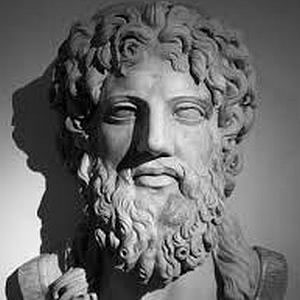 Who is Zeus?
Zeus is the sky and thunder god in ancient Greek religion. He rules as king of the gods of Mount Olympus. His name is cognate with the first element of his Roman equivalent Jupiter. His mythologies and powers are similar, though not identical, to those of Indo-European deities such as Indra, Jupiter, Perkanas, Perun, Thor, and Odin. Zeus is the child of Cronus and Rhea, the youngest of his siblings to be born, though sometimes reckoned the eldest as the others required disgorging from Cronus's stomach. In most traditions, he is married to Hera, by whom he is usually said to have fathered Ares, Hebe, and Hephaestus.