626 views
·
Last viewed: 3 hrs ago
Uploaded: 20 Feb 2011 (16 years ago) · Shared: 01 Aug 2017
Duration: 1:23:53
Uploaded: 20 Feb 2011 (16 years ago) · Shared: 01 Aug 2017
Duration: 1:23:53
Youtube Description:
Download this lecture from iTunes:
We are the original producer of this video. Your purchase supports the production of new videos! See our catalog of lectures at
Abdullah Hakim Quick, an African-American convert to Islam, sheds light on the fascinating topic of Islam and the African people. From the beginning, Africa has been a continent of various religions and beliefs including monotheism. Therefore Islam, the root definition of which is 'submission to the one God', was not a new concept in Africa and Prophet Muhammad (P) simply came to confirm this. Tackling the controversial topic of slavery, the speaker looks at the root of 'racial' slavery while making a survey of what slavery was like during the time of the Prophet (P). What was, or is, the role of slavery in Islam? And is it possible that the concept of slavery has changed with time? This lecture is full of important historical information relevant for people of all races and religions. Other topics discussed: stereotyping, the separation of Asia and Africa, Columbus, evidence of Muslims resisting slavery in the Americas, non-Muslim scholars not using primary sources, the modern day economic-spiritual-psychological 'slavery', and the connections between Muslim slaves in Haiti and Africa. (Duration: 1 hour, 24 min)
Download this lecture from iTunes:
We are the original producer of this video. Your purchase supports the production of new videos! See our catalog of lectures at
Abdullah Hakim Quick, an African-American convert to Islam, sheds light on the fascinating topic of Islam and the African people. From the beginning, Africa has been a continent of various religions and beliefs including monotheism. Therefore Islam, the root definition of which is 'submission to the one God', was not a new concept in Africa and Prophet Muhammad (P) simply came to confirm this. Tackling the controversial topic of slavery, the speaker looks at the root of 'racial' slavery while making a survey of what slavery was like during the time of the Prophet (P). What was, or is, the role of slavery in Islam? And is it possible that the concept of slavery has changed with time? This lecture is full of important historical information relevant for people of all races and religions. Other topics discussed: stereotyping, the separation of Asia and Africa, Columbus, evidence of Muslims resisting slavery in the Americas, non-Muslim scholars not using primary sources, the modern day economic-spiritual-psychological 'slavery', and the connections between Muslim slaves in Haiti and Africa. (Duration: 1 hour, 24 min)
Explore More
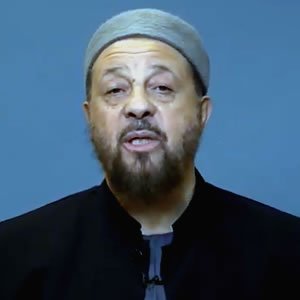 Who is Abdullah Hakim Quick?
Abdullah Hakim Quick (born 1949) is an imam, historian and travelling lecturer from North America. He received a Bachelor's Degree from the Islamic University of Madinah in 1979. He was one of the first two students from the west and the first American to have done so and receive an Ijazah. Quick received a Master's Degree and PhD from the University of Toronto. His thesis was an analysis of the life and writings of Sheikh Uthman Dan Fodio, a great West African Scholar, warrior, and social activist.
 What is African?
The ethnic groups of Africa number in the thousands. Each population generally having its own language (or dialect of a language) and culture. The ethnolinguistic groups include various Afroasiatic, Khoisan, Niger-Congo and Nilo-Saharan populations.
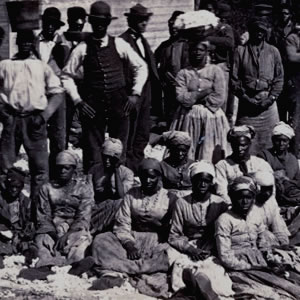 What is Slavery?
Slavery is any system in which principles of property law are applied to people. Thus allowing individuals to own, buy and sell other individuals, as a de jure form of property. A slave is unable to withdraw unilaterally from such an arrangement and works without remuneration. Slavery began to exist before written history, in many cultures. A person could become enslaved from the time of their birth, capture, or purchase. While slavery was institutionally recognized by most societies, it has now been outlawed in all recognized countries, the last being Mauritania in 2007. Nevertheless, there are an estimated 45.8 million people subject to some form of modern slavery worldwide.
 What is Islam?
One of the major religions of the world, Islam literally translates to "submission," as a follower of Islam (Muslims) devotes their life to that of their God. The religion began with the teachings of Muhammad in the 7th century. The theology of Islam is based on the Qur'an, which was given to Muhammad by God. Some of the major fundamental principles of Islam include the Five Pillars, which hope to unite all Muslims into a community. Two different factions of Muslims exist - the majority are known as Sunni, with a small percentage known as Shi'a - both predominantly reside throughout the Middle East. Muhammad died in 632 AD and the religion of Islam formally started after his death. The Quran was formally compiled and finalised in 650 AD, prior to which it was 'memorised' and written across many parchments.