538 views
·
Last viewed: 3 days ago
Uploaded: 02 Sep 2009 (17 years ago) · Shared: 04 May 2017
Duration: 48:06
Uploaded: 02 Sep 2009 (17 years ago) · Shared: 04 May 2017
Duration: 48:06
Youtube Description
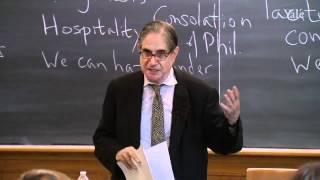
Introduction to New Testament (RLST 152) There are many ways of interpreting the text, and ancient methods of interpretation may seem bizarre toour modern sensibilities. The New Testament offers us many examples of how an early Christian might interpret the text of the Hebrew Bible, which was their scripture. The Letter to the Hebrews, which is not really a letter but a speech of encouragement, structures its argument around the thesis that Jesus' liturgy and priesthood is superior to that in the Hebrew Bible. The author of Hebrews proves this through several interesting interpretations of passages from the Hebrew Bible.
00:00 - Chapter 1. What Does A Text Mean? Methods of Interpretation
14:23 - Chapter 2. The Interpretation of the Hebrew Bible in the New Testament
23:42 - Chapter 3. The Letter to the Hebrews: A Speech of Encouragement
29:35 - Chapter 4. The Outline of the Epistle
34:39 - Chapter 5. Hebrews As Synkrisis: A Comparison between the Superior and the Inferior
Complete course materials are available at the Open Yale Courses website: http://open.yale.edu/courses
This course was recorded in Spring 2009.
Explore More
Christine Hayes New Testament Dale Martin HebrewSearch Google Search Explore Topics
 Who is Christine Hayes? (MEMBER OF Yale University)
Christine Hayes is the Robert F and Patricia Ross Weis Professor of Religious Studies at Yale University. She is former Chair of the Department of Religious Studies, and one of the foremost American academics focusing on talmudic-midrashic studies and Classical Judaica. Hayes received her B.A. summa cum laude in The Study of Religion from Harvard University in 1984. She subsequently received an M.A. with distinction from the University of California, Berkeley in 1988 which included a year of graduate work at the Hebrew University of Jerusalem. She received her PhD. in Talmudic and Judaic Studies (Department of Near Eastern Studies) from the University of California, Berkeley in 1993.
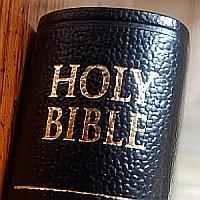 What is New Testament?
The New Testament is the second part of the Christian biblical canon. The first part being the Old Testament, based on the Hebrew Bible. The New Testament discusses the teachings and person of Jesus, as well as events in first-century Christianity. Christians regard both the Old and New Testaments together as sacred scripture. The New Testament (in whole or in part) has frequently accompanied the spread of Christianity around the world. It reflects and serves as a source for Christian theology and morality.
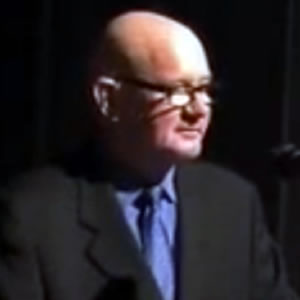 Who is Dale Martin? (MEMBER OF Yale University)
Dale Martin (born 1954) is an American New Testament scholar. He is Woolsey Professor of Religious Studies at Yale University. He has degrees from Abilene Christian University, Princeton Theological Seminary, and Yale. Martin previously taught at Rhodes College and Duke University. Martin was elected a Fellow of the American Academy of Arts and Sciences in 2009.
 What is Hebrew?
Hebrew is a Northwest Semitic language within the Afroasiatic language family. A regional dialect of the Canaanite languages, it was natively spoken by the Israelites and remained in regular use as a first language until after 200 CE and as the liturgical language of Judaism (since the Second Temple period) and Samaritanism. The language was revived as a spoken language in the 19th century, and is the only successful large-scale example of linguistic revival. It is the only Canaanite language still spoken today. It is also one of the only two Northwest Semitic languages with contemporary speakers, the other being Aramaic. Nearly all of the Hebrew Bible is written in Biblical Hebrew, with much of its present form in the dialect that scholars believe flourished around the 6th century BCE, during the time of the Babylonian captivity.