1064 views
·
Last viewed: 2 days ago
Uploaded: 02 Sep 2009 (17 years ago) · Shared: 04 May 2017
Duration: 48:17
Uploaded: 02 Sep 2009 (17 years ago) · Shared: 04 May 2017
Duration: 48:17
Video Description
Join renowned scholar Dale Martin as he delves into the Gospel of Matthew, offering profound insights into the New Testament. This enlightening video explores the early history of Christianity, examining the teachings and narratives that have shaped the faith of millions. Whether you're a student of religion, a Christian, or simply curious about the intersection of the Bible and Islamic guidance, this discussion is a must-watch. Discover how the Gospel of Matthew aligns with and diverges from other religious texts, such as the Quran and the Torah, and gain a deeper understanding of the spiritual messages that resonate across faiths. Tune in for a thoughtful exploration of one of the most influential books in Christian and world history.
Explore More
Christine Hayes New Testament Dale Martin GospelSearch Google Search Explore Topics
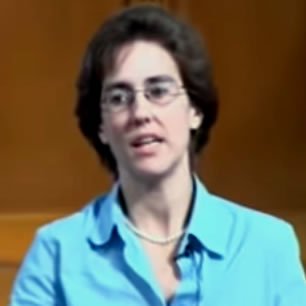 Who is Christine Hayes? (MEMBER OF Yale University)
Christine Hayes is the Robert F and Patricia Ross Weis Professor of Religious Studies at Yale University. She is former Chair of the Department of Religious Studies, and one of the foremost American academics focusing on talmudic-midrashic studies and Classical Judaica. Hayes received her B.A. summa cum laude in The Study of Religion from Harvard University in 1984. She subsequently received an M.A. with distinction from the University of California, Berkeley in 1988 which included a year of graduate work at the Hebrew University of Jerusalem. She received her PhD. in Talmudic and Judaic Studies (Department of Near Eastern Studies) from the University of California, Berkeley in 1993.
 What is New Testament?
The New Testament is the second part of the Christian biblical canon. The first part being the Old Testament, based on the Hebrew Bible. The New Testament discusses the teachings and person of Jesus, as well as events in first-century Christianity. Christians regard both the Old and New Testaments together as sacred scripture. The New Testament (in whole or in part) has frequently accompanied the spread of Christianity around the world. It reflects and serves as a source for Christian theology and morality.
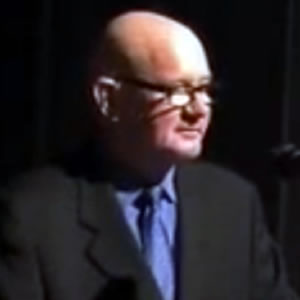 Who is Dale Martin? (MEMBER OF Yale University)
Dale Martin (born 1954) is an American New Testament scholar. He is Woolsey Professor of Religious Studies at Yale University. He has degrees from Abilene Christian University, Princeton Theological Seminary, and Yale. Martin previously taught at Rhodes College and Duke University. Martin was elected a Fellow of the American Academy of Arts and Sciences in 2009.
 What is Gospel?
Gospel is the Old English translation of Greek evangelion, meaning "good news". It originally meant the Christian message itself, but in the 2nd century it came to be used for the books in which the message was set out. The four gospels of the New Testament: Matthew, Mark, Luke and John are the main source of information on the life of Jesus.