Explore More
Old Testament Emanuel Tov HebrewSearch Google Search Explore Topics
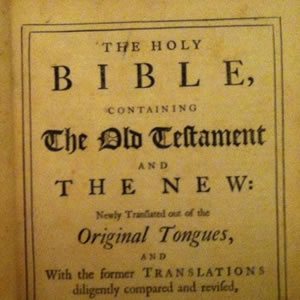 What is Old Testament?
The Old Testament (OT) is the first part of Christian Bibles. This is based primarily upon the Hebrew Bible (or Tanakh), a collection of ancient religious writings by the Israelites believed by most Christians and religious Jews to be the sacred Word of God. The second part of the Christian Bible is the New Testament. The books that comprise the Old Testament canon, as well as their order and names, differ between Christian denominations. The Catholic canon comprises 46 books, and the canons of the Eastern Orthodox and Oriental Orthodox Churches comprise up to 51 books and the most common Protestant canon comprises 39 books.
 Who is Emanuel Tov?
Emanuel Tov (born 1941) is emeritus Professor in the Department of Bible at the Hebrew University of Jerusalem. In 1986, he was appointed Professor at the Hebrew University and in 1990 he became the J. L. Magnes Professor of Bible Studies. Served as visiting Professor at the Universities of Oxford, Uppsala, Doshisha (Kyoto), Macquarie and Sydney (Australia), Stellenbosch (South Africa), Vrije Universiteit (Amsterdam), University of Pennsylvania (Philadelphia), the Pontifical Gregorian University (Rome), and Halle (Germany). From 1990-2009 Tov served as the Editor-in-Chief of the international Dead Sea Scrolls Publication Project, which during those years produced 33 volumes of the series Discoveries in the Judean Desert as well as two concordances.
 What is Hebrew?
Hebrew is a Northwest Semitic language within the Afroasiatic language family. A regional dialect of the Canaanite languages, it was natively spoken by the Israelites and remained in regular use as a first language until after 200 CE and as the liturgical language of Judaism (since the Second Temple period) and Samaritanism. The language was revived as a spoken language in the 19th century, and is the only successful large-scale example of linguistic revival. It is the only Canaanite language still spoken today. It is also one of the only two Northwest Semitic languages with contemporary speakers, the other being Aramaic. Nearly all of the Hebrew Bible is written in Biblical Hebrew, with much of its present form in the dialect that scholars believe flourished around the 6th century BCE, during the time of the Babylonian captivity.