431 views
·
Last viewed: 1 day ago
Uploaded: 05 May 2017 (9 years ago) · Shared: 04 May 2017
Duration: 15:46
Uploaded: 05 May 2017 (9 years ago) · Shared: 04 May 2017
Duration: 15:46
Youtube Description
In this video series we look into the idea that the original hebrew of the bible says that there is actually many gods. We examine the claim that thehebrew religion worshiped many canaanite and pagan gods. Then over time they began favoring one of these gods and ultimately decided that there is only one Creator. We explore many pagan deities mentioned in the bible such as the horned god El or the fact that the original hebrew genesis 1:1 says gods in the plural (In the beginning the gods created the heavens and the earth)
In this specific episode we continue discussing the mesopotamian moon god Sin or (also known as Nanna) who is mentioned in the bible. We then discuss Shamash who is also mentioned in scriptures. This deity is one of the winged solar disk entities spoken about in many ancient cultures. These disks were either gods themselves or were used to transport them
List of all links used in this video
-Sin deity in New World Encyclopedia= http://www.newworldencyclopedia.org/entry/Sin_(mythology)
-Sin deity wikipedia=https://en.wikipedia.org/wiki/Sin_(mythology)
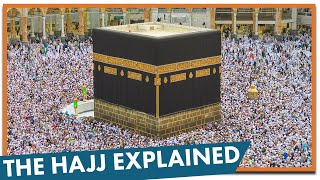
-Sin symbol https://www.google.co.za/url?sa=i&rct=j&q=&esrc=s&source=images&cd=&cad=rja&uact=8&ved=0ahUKEwjC35ryhtvTAhXF6xoKHdBwDEsQjRwIBw&url=https%3A%2F%2Fexposingthelieofislam.wordpress.com%2Fthe-kaaba-originally-a-pagan-temple%2F&psig=AFQjCNEVQgdY0LjsfXuMxgPO5w8ff3I9_g&ust=1494152717057960
-Bull horn depiction https://www.dhushara.com/book/orsin/horns.jpg
-Egyptian Godess Hathor= https://en.wikipedia.org/wiki/Hathor
- God Shamash New World Enclopedia= http://www.newworldencyclopedia.org/entry/Shamash
-Shamash God https://en.wikipedia.org/wiki/Shamash
-Hebrew alphabet wiki= https://en.wikipedia.org/wiki/Hebrew_alphabet
-Legend of Egyptian God and winged disk (translated to english)= http://www.sacred-texts.com/egy/leg/leg07.htm
-Zoroastrian winged disk http://static.newworldencyclopedia.org/thumb/8/80/Faravahar.png/300px-Faravahar.png
-Winged disk of Horus http://firstlegend.info/3rivers/winged-disk%20Susa.jpg
Explore More
Polytheism The Bible Pagan GODSearch Google Search Explore Topics
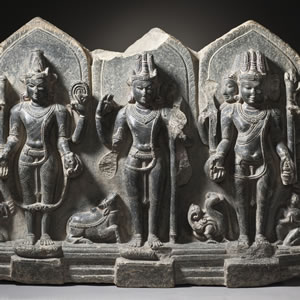 What is Polytheism?
Polytheism is the worship of or belief in multiple deities, usually as a pantheon of gods and goddesses. In most religions which accept polytheism, the different gods and goddesses are representations of forces of nature or ancestral principles, and can be viewed either as autonomous or as aspects or emanations of a creator deity or transcendental absolute principle (monistic theologies), which manifests immanently in nature (panentheistic and pantheistic theologies). Most of the polytheistic deities of ancient religions, with the notable exceptions of the Ancient Egyptian and Hindu deities, were conceived as having physical bodies. Polytheism is a type of theism. Within theism, it contrasts with monotheism, the belief in a singular God, in most cases transcendent. Important polytheistic religions practiced today include Chinese traditional religion, Hinduism, Japanese Shinto, and various neopagan faiths.
 What is The Bible?
The Bible is a canonical collection of texts sacred in Judaism and Christianity. There is no single "Bible" and many Bibles with varying contents exist. The term Bible is shared between Judaism and Christianity, although the contents of each of their collections of canonical texts is not the same. Different religious groups include different books within their Biblical canons, in different orders, and sometimes divide or combine books, or incorporate additional material into canonical books. The Hebrew Bible, or Tanakh, contains 24 books. Christian Bibles range from the 66 books of the Protestant canon to the 81 books of the Ethiopian Orthodox Church canon. The first part of Christian Bibles is the Old Testament, which contains, at minimum, the 24 books of the Hebrew Bible divided into 39 books and ordered differently from the Hebrew Bible. The Catholic Church and Eastern Christian churches also hold certain deuterocanonical books and passages to be part of the Old Testament canon. The second part is the New Testament, containing 27 books: the 4 Canonical gospels, Acts of the Apostles, 21 Epistles or didactic letters, and the Book of Revelation.
 What is Pagan?
Paganism is a term first used in the fourth century by early Christians. It was applied on populations of the Roman Empire who practiced polytheism, either because they were increasingly rural and provincial relative to the Christian population or because they were not milites Christi (soldiers of Christ). Alternate terms in Christian texts for the same group were hellene, gentile, and heathen. Pagan and paganism were pejorative terms for the same polytheistic group, implying its inferiority. Paganism has broadly connoted the "religion of the peasantry", and for much of its history was a derogatory term. Both during and after the Middle Ages, pagan was a pejorative term that was applied to any non-Abrahamic or unfamiliar religion, and the term presumed a belief in false god(s).
Who is GOD?In monotheism and henotheism, God is conceived as the Supreme Being and principal object of faith. The concept of God as described by theologians commonly includes the attributes of omniscience (infinite knowledge), omnipotence (unlimited power), omnipresence (present everywhere), omnibenevolence (perfect goodness), divine simplicity, and eternal and necessary existence. In theism, God is the creator and sustainer of the universe In deism, God is the creator, but not the sustainer, of the universe Monotheism is the belief in the existence of one God or in the oneness of God In pantheism, God is the universe itself In atheism, God is purported not to exist, while deemed unknown or unknowable within the context of agnosticism.