14:20
591 views
·
Last viewed: 1 day ago
Uploaded: 30 Oct 2015 (11 years ago) · Shared: 08 Jun 2018
Video Description (from Youtube)
For more detailed information, you can visit the websites below.It is impossible for a person who cannot read and write to inform about the Ghayb (unseen, unknown) and the information given by him toturn out to be right all the time. When we divide the Ghayb into two as future and past, it is not possible for someone to inform about the future at all. In order to give information about the past, that person must be literate and have to study works about the past if the given news is not well known and not something that people talk about in their daily lives. However, you see someone who informs about the future though he is illiterate and cannot read a single sentence, he informs about the past and what he informs always proves to be right. So, can anyone be skeptical about the person who gives this information to be the apostle of Allah and the book in which this information is contained to be the word of Allah? No, never… For, none can know the Ghayb except Allah and the person whom He teaches.
In the second part of our work, which is about the Qur’an as being the word of Allah, we will show the trueness of the information that the Qur’an gives about the Ghayb and prove that the Qur’an is the word of Allah.
We starting this work with the verses of the surah of ar-Room which informs about the victory of armies of the Byzantine.
Alif Lam Mim. The Roman Empire has been defeated― In a land close by; but they, (even) after (this) defeat of theirs, will soon be victorious. Within a few years. With Allah is the Decision, in the Past and in the Future: on that Day shall the Believers rejoice― (Surah ar-Room, 1-4)
Now let us analyze the proof that this glorious verse indicates:
During the years of 613-614, Zoroastrian and Persian armies beat the armies of the Christians and Byzantine by an overwhelming defeat. The Meccan polytheists were very happy about the defeat of Christians who were the people of the book and they said to the Muslims: “If Allah were to be the only dominant power, He would let the Byzantine be victorious and make them triumph over the Persians.” So as a miracle, the Qur’an gave the news of a result about the future which seemed impossible at that moment: The Byzantine was going to be triumph over Persians and Muslims were going to be happy with this…
As a matter of fact, Hazrat Abu Bakr said the following to the polytheists who were happy about victory of Persians: Allah will not let your happiness last so long because He informed that the Byzantine would be victorious again within a few years”. Upon this, Ubay B. Khalaf offered Hz. Abu Bakr to make a bet on this subject. They made a bet on ten camels whether the Byzantine would be victorious or not within three years.
When Hazrat Abu Bakr told the Prophet Muhammad (PBUH) about what had happened, the prophet said: The word of “bid” (بِضْعِ) (a few) as said in the verse does not express three years but between three and nine years; thus, he told Hz. Abu bakr to increase the time period and the number of camels three times more.
This time, they made a bet on whether the Byzantine could be victorious within nine years for one hundred camels. In fact, according to the Sahih of Tirmidhi, during the days of the Battle of Badr, the Byzantine became victorious over Persians in the battle and the news of the Qur’an from the Ghayb became true. Hz. Abu Bakr gave the camels that he gained from the successors of Ubay Ibn Khalaf to the poor upon the advice of the prophet (PBUH).
www.questionsonislam.com
www.windowsofislam.com
www.basicsofbelief.com
DISCLAIMER
All videos are shared for educational and information purposes only. All videos are hosted and viewable on Youtube servers. Video titles are generated using the original video title; overall content theme including actual dialogue and speech (Transcript); and A.I-based recommendations with a focus on SEO, keyword density, and internal search functions. The video title does not represent the views held by the Youtube video uploader, or any individual, organisation or business.
If you spot any mistake, omission or give feedback, kindly Contact Us with details
Overview & Key Concepts
What is Quran Miracle?
 Quran, literally meaning "the recitation" is the central religious text of Islam, which Muslims believe to be a revelation from God (Allah). It is
widely regarded as the finest work in classical Arabic literature. The Quran is divided into chapters (surah in Arabic), which are then divided into verses (ayah). Muslims believe that the Quran was verbally revealed by God to Muhammad through the angel Gabriel (Jibril), gradually over a period of approximately 23 years, beginning on 22 December 609 CE, when Muhammad was 40, and concluding in 632, the year of his death. Muslims regard the Quran as the most important miracle of Muhammad, a proof of his prophethood, and the culmination of a series of divine messages that started with the messages revealed to Adam and ended with Muhammad.
What is Islam?
 Early Islam or the history of Islam is believed, by most historians to have originated with Muhammad's mission in Mecca and Medina at the start of the
7th century CE. Although Muslims regard this time as a return to the original faith passed down by the Abrahamic prophets, such as Adam, Noah, Abraham, Moses, David, Solomon, and Jesus, with the submission (Islam) to the will of God. According to the traditional account, the Islamic prophet Muhammad began receiving what Muslims consider to be divine revelations in 610 CE, calling for submission to the one God, preparation for the imminent Last Judgement, and charity for the poor and needy.
Where is Rome?
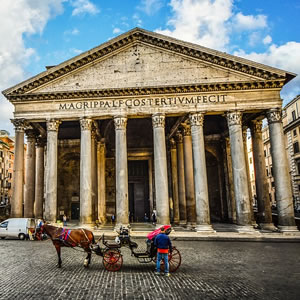 Rome is the capital city of Italy and a special comune (named Comune di Roma Capitale). Rome also serves as the capital of the Lazio region. With
2,872,800 residents in 1,285 km2 (496.1 sq mi), it is also the country's most populated comune. It is the fourth-most populous city in the European Union by population within city limits. It is the centre of the Metropolitan City of Rome, which has a population of 4.3 million residents. Rome is located in the central-western portion of the Italian Peninsula, within Lazio (Latium), along the shores of the Tiber. The Vatican City is an independent country inside the city boundaries of Rome, the only existing example of a country within a city: for this reason Rome has been often defined as capital of two states. Rome's history spans 28 centuries. While Roman mythology dates the founding of Rome at around 753 BC, the site has been inhabited for much longer, making it one of the oldest continuously occupied sites in Europe.
Frequently Asked Questions
1.When did Catholic Christianity become official religion of Rome?
In 380 AD, Catholicism became the state religion of Rome. A calendar of feast days was set: Christmas - to mark the birth of Jesus; Easter - to mark the death and resurrection.
2.What happened when Rome chose Christianity as the state religion?
The Romans adopted the Roman Catholic version of Christianity; and chose the teachings of Paul over Jesus.
3.What is the "Lazarus Effect" or "Lazarus Syndrome" in science?
In medicine, this refers to a rare phenomenon where a patient's blood circulation spontaneously returns after CPR has failed and resuscitation attempts have stopped. The patient essentially "comes back to life."
4.Why should we believe the Quran if it comes 600 years after Jesus?
The Quran may have come 600 years after Jesus, but does that make it false? Jesus came 1600 years after Moses, does that make Jesus false? The underlying or main argument here is the time between one person and another, but as we can see, if time is a problem then Christians should reject the other Prophets and Messengers since they have a greater number of years between them.
The complete manuscript collections of the New Testament and Old Testament date to the 4th and 5th century, within 100 years of the Qur'an, if Christians want to reject the Qur'an because it is 600 years after Jesus then they must be consistent and also reject the New Testament.
It should be noted that the Church itself did not ordain or make it canon (law) that the New Testament should be scripture until 393 and 397 CE in the Carthaginian councils. With all of these evidences, and centuries between Jesus and the New Testament, then they must reject the New Testament first. If not, then they are admitting that their argument is weak, unintelligent and absurd.
5.What is the Quran?
The Quran is the scripture revealed to Muhammad via the Angel Gabrial
6.Do Muslims believe in scripture other than their own Quran?
Muslims believe the scripture given to other prophets including Moses, David and Jesus have some elements of truth in them. But the Quran is the final revelation from God and takes precedence over other scripture.
7.How was the Quran revealed?
The Quran was revealed to Prophet Muhammad through the Angel Gabrial. Muhammad would repeat the exact words Gabrial gave him and they were written down and memorised.
8.What does the Quran say about Jews and Christians?
The Jews say "The Christians have nothing [true] to stand on," and the Christians say, "The Jews have nothing to stand on," although they [both] recite the Scripture. Thus the polytheists speak the same as their words. But Allah will judge between them on the Day of Resurrection concerning that over which they used to differ.
[Quran 2:113]
9.How authentic is the Quran?
Thanks to its undisputed authenticity, the text of the Quran holds a unique place among the books of Revelation, shared neither by the Old nor the New Testament.
10.How was the Quran text kept authentic?
As the Quran was revealed, the Prophet and the believers following him recited the text by heart and it was also written down by the scribes in his following.
It therefore starts off with two elements of authenticity that the Gospels do not possess. This continued up to the Prophet's death.
At a time when not everybody could write, but everyone was able to recite, recitation afforded a considerable advantage because of the double-checking possible when the definitive text was compiled.
11.How was the Quran revealed?
The Quranic revelation was made by Archangel Gabriel to Muhammad. It took place over a period of more than 23-years of the Prophet's life up to his death in 632 AD
12.How was the Quran preserved?
Whenever a fragment of the Quran was revealed, the Prophet called one of his literate companions and dictated it to him, and setting the exact position of the new fragment in the fabric of what had already been received.
Muhammad then asked the scribe to repeat back what he dictated so that he could correct any deficiencies.
Another famous story tells how every year in the month of Ramadan, the Prophet would recite the whole of the Quran (so far revealed) to Gabriel.
Since that day, Muslims recite the whole Quran during the month of Ramadan. The head scribe of the Quran was Zaid Ibn Thabit who was present at the final compilation of the Quran text.
Extremely diverse materials were used when recording: parchment, leather, wooden tablets, camels' scapula, soft stone for inscriptions, etc.
At the same time however, Muhammad encouraged the faithful to learn the Quran by heart. Many memorized the entire Quran by heart and helped to spread it abroad.
By preserving the Quran text both in writings (on materials) and by human memorization proved invaluable in the preservation of the entire text.
13.After the death of Muhammad, the Quran was changed?
This is false. The first three Caliphs, especially Uthman completed a critical analysis of the entire Quran text.
This was due to the rapid expansion of Islam in the first decade amongst people whose native language was not Arabic. So it was deemed essential the text retained its original purity.
Uthman sent copies of the standardized Quran text to the centre of the Islamic Empire. Today, copies attributed to Uthman exist can be found in Tashkent and Istanbul.
Apart from a few dialect variations in copying, the oldest documents known to the present day found throughout the Islamic world are identical; the same is true for documents preserved in Europe (fragments in the Bibliothèque Nationale in Paris which, according to the experts date from the 8th Century AD).
The minor dialect variations do not change the general meaning of the text. For example, the absence of diacritical marks could make a verb either active or passive and in some instances, masculine or feminine. This is a minor issue since the context indicated the meaning in many instances.
Therefore the Quran has been fully preserved since its revelation.
14.Is Muhammad mentioned in the Quran?
The Bible speaks about a prophet who cannot read Gods word
15.Does the Quran tell Jews and Christians to refer to their Scriptures (Torah and Bible)?
When the Quran refers to the previous Scriptures (Torah, Gospel etc.), this is understood to mean the original revelations sent to Moses and Jesus, and not the 'corrupted' versions we have today
16.Does the Quran encourage violence against the disbelievers (non-Muslims)?
The historical context is that this Quran verse was revealed at the Battle of Badr, a battle in which the pagans of Makkah traveled over 200 miles to destroy the Muslims of Madinah. The Pagans of Makkah had an army of about 1000 while the Muslims were only 300 followers. Muhammad and his followers had suffered severe persecutions and torture for 13 years in the city of Makkah. Having fled from Makkah to the safety of Madinah, they found that they were once again threatened.
It is obvious from historical and textual context therefore that this Quran verse does not promote the killing of innocents.
17.Are Muslims told to kill polytheists in the Quran?
This Quran verse is often quoted out of context. The preceeding Quran verses inform us there was a war treaty between the Muslims and pagan Arabs, which the pagans of Arabia broke.
Therefore this verse applies to a very specific historical event and applied only to those who broke the agreement.
Naturally, in war violence is expected. If country A declares war with country B because a peace treaty was violated, then both countries will expect their soldiers to kill or be killed.
18.Does the Quran promote killing?
This Quran verse is often misquoted. The previous verses clearly state the command is to fight those who fight you, and not to overstep the limits. This verse does not promote the killing of innocents, Muslim or non-Muslim, and only allows for fighting in self-defence (when attacked).
19.Does the Quran promote violence?
This verse was revealed by God to Muhammad at a time when Muslims were being attacked by the enemy from Makkah on a regular basis. The verse only allows for self-defence fighting against those who 'withdraw not from you nor give you (guarantees) of peace besides restraining their hands'. So the guarantee of a peace treaty or agreement is required for the war and fighting to completely stop.
20.Does the Quran encourage Muslims to kill non-Muslims?
This verse was revealed about the Battle of Badr. The pagans of Mecca travelled more than 200 miles to Madinah with an army of about 1000 to kill the Muslims who numbered around 300. The Prophet Muhammad and fellow Muslims had suffered severe persecution, torture and even murder of their brethren for 13 years in the city of Mecca at the hands of these very same pagans.
And once the Muslims had fled Mecca and found a sanctuary in the city of Madinah, they were followed by the pagans of Mecca. By this verse God gave the order to Muslims to fight to defend their lives and faith, as they had previously been forbidden from defending themselves.
21.Is their violence in the Quran?
This verse is applicable to the Muslims during the time of Muhammad – historical Muslims – who were terrified of fighting in the battles to defend themselves because they were out numbered.
God bolstered their bravery by assuring them that they would be rewarded.
22.Does the Quran encourage ill-treatment of non-Muslims?
The 'disbelievers' in this verse refers to those who persecuted and attacked the Muslims. This is not a verse directing Muslim to just go out and be awful to non-Muslims.
In fact there is a lot in the Quran and hadith collections that command Muslims to be compassionate and kind to all of God's creation. One such hadith states: Whoever is deprived of gentleness is deprived of all good. (Muslim, Abu Dawood)
It is also reported by Abu Dawood (a hadith collection) that Muhammad said, 'Beware! Whoever is cruel and hard on a non-Muslim minority, or curtails their rights, or burdens them with more than they can bear, or takes anything from them against their free will; I (Muhammad) will complain against the person on the Day of Judgement.'
23.Why does the Quran discourage the asking of questions?
This is in reference to those who asked useless questions about revelation. If all their questions were answered, it would have made the duties of faith more specific and, therefore, more difficult to perform. There is mercy in leaving questions alone and specifics unspecified. 7
In Chapter 2 of the Quran, when the Children of Israel were told to slaughter a cow, they began to ask useless questions about what type of cow. All the questions were answered to the point that it became very difficult for them to find such a cow. If they had not asked, any cow would have been acceptable.
Useless, petty questions are just a stalling tactic; ask any mother or teacher. But asking honest, sincere questions to clarify matters of faith is, in fact, encouraged.
24.What is Islam?
Islam means Submission and full surrender to God. In this sense, all prophets, from the start of mankind, including Adam, Noah, Abraham, Isaac, Ishmael, Jacob, Joseph, Moses, David, Solomon, Jesus, and Mohammad (peace upon all of them) are Islam prophets
25.Who is a Muslim?
A Muslim is a follower of the religion of Islam, a monotheistic Abrahamic religion revealed to prophet Muhammad
26.Were all Prophets Muslim?
In essence, all the prophets were Muslim because they preached Monotheism (i.e. the worship of one God, and not the worship false dieties).
27.Do Muslims believe in Prophets?
A Muslim must believe, honour and respect each and every prophet of God
28.Why choose the name MuslimProphets.com?
All Prophets preached Monotheism. The worship of one God and forbade the worship of false diety. Therefore, all Prophets 'in-essence' are considered to be Muslim.
29.Does Islam promote extremism, terrorism and violence?
Islam is a religion of peace and tolerance. This was the message of all the prophets and it is from God's way
30.Where can I learn more about Islam?
Their are many online sources of information, such as http://www.onereason.org
31.Do Muslims believe in the Bible?
And We sent, following in their footsteps, Jesus, the son of Mary, confirming that which came before him in the Torah; and We gave him the Gospel, in which was guidance and light and confirming that which preceded it of the Torah as guidance and instruction for the righteous. [Quran 5:46]
Therefore Muslims believe their was a Gospel and it was revealed by God.
32.What is the basic teaching of Islam?
It is to make peace with God, which means to submit to and obey God completely
33.How did Islam come into the world?
The religion of Islam in its present form came to us through the teachings of the Prophet Muhammad, who lived and preached in Arabia some 1400 years ago (born 571 CE, died 632 CE). However, the Holy Prophet taught that he was not bringing a completely new religion into the world, because the basic principles of Islam had also been preached by all the great founders of the various religions before him. Islam, therefore, did not begin with Muhammad, but was also the religion of Abraham, Moses, Jesus and every other prophet of God.
34.If all prophets taught Islam, what was so different about Muhammad?
The teachings delivered by previous prophets had gradually become lost, altered and obscured. God then sent Muhammad to:
* re-establish those original principles,
* preach other truths which had not been preached before, but were necessary now because mankind had advanced,
* to collect together the best of every religion into one faith.
So Muhammad appeared as the Last Prophet to give to the whole world one, perfect and ever-lasting, religion - Islam.
35.What do I have to do to become a Muslim?
A person becomes a Muslim by declaring in public an oath of: I bear witness that there is no god except Allah. And I bear witness that Muhammad is the Messenger of Allah.
36.What do Muslims believe?
The Muslim belief consists of 5 fundamentals:
1. God, Who possess the most perfect and excellent qualities.
2. Angels, who act upon the heart of each person, inspiring him to do good.
3. Prophets and Messengers of God, sent to all the nations of the world, who taught virtue by their own high moral example.
4. Books of God, which were revealed to all the nations through their respective prophets, containing guidance on how man should live and conduct himself.
5. Life after death, when each person shall become conscious of all the deeds, good or bad, he/she did in this life, and shall face the consequences.
37.What is the most important point Islam teaches about belief?
It is this, that belief does not just mean believing something in ones heart, but also acting on the belief. Mere faith counts for nothing if not carried into practice. The purpose of belief is to show us what to do in practice. No 'belief' by itself can bring salvation.
38.What is the basic teaching of Islam about God?
Islam teaches that there is one, and only one, God Who is the Creator and Controller of the entire universe. He is unique in every respect, and there is nothing which bears any likeness to Him. He is the Knower of all things, and has full power over the whole of creation. He does not stand in need of anything at all, while everything is totally dependent on Him. He possesses all the perfect qualities, and man should worship Him, and Him alone.
39.Does Islam give any arguments to prove the existence of God?
The Holy Quran gives three kinds of arguments on this point.
Firstly, it refers us to the physical world which shows great order and arrangement, works according to laws, and where everything has a set purpose in the whole scheme of things. There is also immense beauty in nature which attracts man's heart. Science is discovering more and more of these characteristics of the world all the time. So behind this highly purposeful and beautiful working of nature must be One, single Intelligence of great beauty and attraction.
Secondly, the Quran tells us about the close and deep connection between God and the inner nature of every person. There is an in-built desire in each and every person to search for something higher than oneself, and when in difficulties a person instinctively wants to call upon a Hidden Power to help him.
Thirdly, and most convincingly, Prophets and men of God appeared in every nation in the world and showed their people the reality of God through their teachings and works. Just as most of us learn about science not by making all the discoveries ourselves, but by accepting the work and evidence of those who devote themselves to the study of science, similarly the proof of the existence of God is provided by the lives of the great luminaries whom God sent all over the world for this very purpose.
40.Other religions also teach the existence of God. Is there any difference between their teaching and the Islamic concept of God?
The first major difference is that Islam teaches the absolute one-ness of God, with Whom no one can share in Divinity. No idol or heavenly object, nor any religious or spiritual teacher, can possess some Divine power or attribute.
Secondly, Islam teaches the highest conception of God, and does not accept any limitation to His power and knowledge, while other religions set limits to Him. For instance, Islam rejects the Hindu belief that God is not the Creator of matter and souls but exists alongside them. It also rejects the Christian doctrine that God is unable to forgive sins unless He punishes someone, and so He sent His 'son' to suffer the punishment for the sins of all humanity. Moreover, a son is needed to take the place of the father when the father dies, and clearly this cannot apply if God is perfect.
Thirdly, Islam refutes the idea that any human being, however great, was a 'manifestation' of God on earth, or a Divine incarnate.
41.Which prophets do Muslims have to believe in?
Muslims have to believe in all the prophets and messengers of God, equally, without distinction, wherever they may have appeared.
42.Since Muslims believe in all the Prophets equally, why is Muhammad special?
All Prophets were equally from God, and equally true, but the scope of their missions varied. The messengers before Muhammad were each given teachings limited to their respective nations, because in those times a nation did not have much to do with other nations.
Furthermore, the teachings of each Prophet applied for a limited period of time only, after which God would raise another Prophet to revise some of the teachings for the new circumstances.
The time came to unite all the nations upon a single religion so that mankind may live in peace as one nation. Muhammad, to whom God gave teachings for the whole world for all time to come fulfilled this purpose.
43.Do Muslims believe in scripture other than their own Quran?
Muslims believe the scripture given to other prophets including Moses, David and Jesus have some elements of truth in them. But the Quran is the final revelation from God and takes precedence over other scripture.
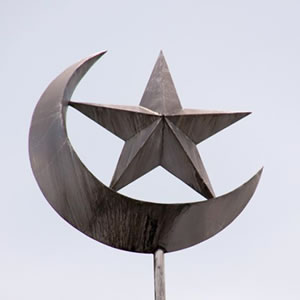
44.Is the Star and Crescent a symbol of Islam?
The crescent is not a symbol of Islam, but of the Ottoman Empire. The Ottomans are those tribes that moved to Turkey from east and middle Asia. They converted to Islam and built a huge Muslim Empire that ruled the whole Muslim world for centuries. When they took Islam as a religion they started using the lunar calendar, the calendar that was used by Muslims, Jews and early Christians. Even today, the flag of Turkey has a crescent on it. There was no crescent on any mosque built before the Ottomans era.
45.How are Noah, Abraham, Moses and Jesus considered Muslim Prophets, when Islam came 600-years after Jesus?
A Muslim is essentially a person who believes in one God.
All of the prophets of God preached the message of 'Monotheism' (they all called people to the worship of one God). Based on this fact, they are considered 'in-essence', in terms of their basic beliefs to be Muslim.
46.Can Muslims eat Pork?
The Muslim’s diet, like all other aspects of his or her life, is governed by divine law. Muslims (male and female) implement the commandments of Islam because the fundamental concept of Islam is submission to Allah, Almighty God, recognising that in His infinite knowledge, He knows what is best for His creation.
This passage also clearly prohibits the consumption of meat and other products derived from both wild and domestic pigs, including pork, bacon, and ham.
Furthermore, it is not only Muslims who refrain from eating pork, with both Jews and some Christian denominations refraining from doing so, and the Old Testament describing pork as unclean.
47.Do Muslims believe in a God?
Yes, Muslims believe in Allah(God)
Muslims believe that Allah is the all-powerful Creator of a perfect, ordered universe.
He is transcendent and not a part of his creation. He is all-powerful, absolutely Just and He is First, Last, and Everlasting; He was when nothing was, and will be when nothing else remains. Also, There is no other entity in the entire universe worthy of worship besides Him.
This belief in God is how one becomes a Muslim and is similar to the first commandment of Christianity and Judaism: You shall have no other gods before Me.
The Quran presents this belief in Allah as:
Say He is Allah,the One,
Allah the Eternal,Absolute;
He does not beget,not nor is He begotten,
And there is none like Him.
Al-Ikhlas(1:1-4)
48.In Islam, can God become a Man?
God is perfect and He is all powerful. Both Muslims and Christians accept that this is true. The ontological term for this is that God is "immutable" or absolute in His perfect nature. In the Christian faith, God's incarnation is seen as a manifestation of His power, whereas in Islam it is seen as the changing of God's nature. If God is perfect, and God's nature changes, how can He be perfect?
It would have to mean that He was not perfect before and is now perfect, which would not make Him God or that He was perfect before and is now not perfect, which would also not
make Him God.
If God is perfect, then there is no need for Him to become anything, so that He can grant us salvation. Since He's already perfect, loving and merciful, why would He need to change His nature to a weaker, human nature to grant us salvation? That's a contradiction. Therefore, when the Christian argues that God changing His nature makes Him perfect, this is not the case. They need to think before they speak.
If God is perfect and you add something to His nature, does that mean He was not perfect before? Which means He was not a God before this addition?
If God is perfect and you add something to His nature, that would mean He lacked something before and thus could not be a God.
49.Does the Quran encourage violence against the disbelievers (non-Muslims)?
The historical context is that this Quran verse was revealed at the Battle of Badr, a battle in which the pagans of Makkah traveled over 200 miles to destroy the Muslims of Madinah. The Pagans of Makkah had an army of about 1000 while the Muslims were only 300 followers. Muhammad and his followers had suffered severe persecutions and torture for 13 years in the city of Makkah. Having fled from Makkah to the safety of Madinah, they found that they were once again threatened.
It is obvious from historical and textual context therefore that this Quran verse does not promote the killing of innocents.
50.Does Islam encourage violence?
No. Islam forbids violence. It allows for defensive war where if Muslims are attacked first, then they are allowed to fight back.
51.Why should non-Muslims pay the Jizya (tax)?
This Quran verse refers to the Jizya, a tax levied on non-Muslims living in an Islamic State. Also, Muslims would have to pay the Zakah (charity tax) to the Islamic State. It is universally agreed that any civilized government or system requires residents to financially contribute towards its running. In return, the state offers basic services such as education, security, welfare, protection, amenities etc.
52.Are Muslims told to kill polytheists in the Quran?
This Quran verse is often quoted out of context. The preceeding Quran verses inform us there was a war treaty between the Muslims and pagan Arabs, which the pagans of Arabia broke.
Therefore this verse applies to a very specific historical event and applied only to those who broke the agreement.
Naturally, in war violence is expected. If country A declares war with country B because a peace treaty was violated, then both countries will expect their soldiers to kill or be killed.
53.Can the Muslims have non-Muslim friends?
In this verse, the words “Awliya”- plural- or “wali” – singular- has been (badly) translated as “friends” or “friend”; however, the more appropriate translation would be a “guardian, protector, or advocate”. Muslims are to be advocates and protectors for each other. And friends with everyone.
Muhammad was kind to the pagans of Mecca and fought them only when they fought him. He made treaties with the Jews of Madinah and honored the treaties until they broke them. He received the Christians of Najran with kindness in Madinah. They argued with him about Islam, but he treated them with honor and respect.
Some translate this verse to mean that Muslim should not take the Jews and the Christians for friends who are exclusively friends of each other at the exclusion and detriment of the Muslims, as is seen in Zionism and the Islamophobic lobby.
54.Does the Quran encourage Muslims to kill non-Muslims?
This verse was revealed about the Battle of Badr. The pagans of Mecca travelled more than 200 miles to Madinah with an army of about 1000 to kill the Muslims who numbered around 300. The Prophet Muhammad and fellow Muslims had suffered severe persecution, torture and even murder of their brethren for 13 years in the city of Mecca at the hands of these very same pagans.
And once the Muslims had fled Mecca and found a sanctuary in the city of Madinah, they were followed by the pagans of Mecca. By this verse God gave the order to Muslims to fight to defend their lives and faith, as they had previously been forbidden from defending themselves.
55.Why should non-Muslims pay a Jizyah tax?
These verses are also historical in context. They are about the Battles of Mu'tah and Tabuk.
These verse were in reference to The Byzantine Empire instigating war against the Muslims. They murdered an ambassador of Muhammad who was carrying a message to the ruler of Busra. The Chosroe of Persia even ordered his commander in Yemen to kill Muhammad, and they mobilized their forces to fight the Prophet. The Muslims confronted them.
There are many people who misunderstand over the Jizyah (a tax on non-Muslims living under the protection of a Muslim authority) claiming it is discriminatory. But the truth is that Muslims are not exempt from taxes, they just go by a different term.
The tax collected from non-Muslims is only imposed on adult males. It exempts them from military service; affords them protection under the law; and freedom to practice their religion. And Muslim taxes go to welfare programs.
56.Can the Muslims be harsh to non-Muslims?
This verse is speaking about the hypocrites who were among the Muslims in the time of Muhammad. The 'unbelievers who are near you' were, in actuality, non-Muslims posing as Muslims who sought to corrupt the believing Muslims from within. The instruction was to fight them (here, 'fight' means to resist the hypocrites’ skepticism, as we will see in the next verse) without preferential treatment for the social or economic standing.
57.Does the Quran encourage ill-treatment of non-Muslims?
The 'disbelievers' in this verse refers to those who persecuted and attacked the Muslims. This is not a verse directing Muslim to just go out and be awful to non-Muslims.
In fact there is a lot in the Quran and hadith collections that command Muslims to be compassionate and kind to all of God's creation. One such hadith states: Whoever is deprived of gentleness is deprived of all good. (Muslim, Abu Dawood)
It is also reported by Abu Dawood (a hadith collection) that Muhammad said, 'Beware! Whoever is cruel and hard on a non-Muslim minority, or curtails their rights, or burdens them with more than they can bear, or takes anything from them against their free will; I (Muhammad) will complain against the person on the Day of Judgement.'
58.Why do Muslims say non-Muslims will go to Hell?
One of the basic teachings of Islam is that God does not have a favorable opinion of those who knowingly deny His right to be worshiped alone (as He alone is responsible for our creation, our sustenance, and our judgement) and reject any of His messengers.
This is not to say that there will be conveyor belts for each religion, and we just jump on and go to either Heaven or Hell according to what we call ourselves. Each person will be judged based on their understanding of God's message, as well as his or her capability and intentions to follow the path to God as best he or she could.
Muslims are not allowed to say that someone will go to hell just because they call themselves a Christian, Jew, or Polytheist. Muslims are not allowed to speak without knowledge. And each person's destination in the Hereafter is known only to God.
It is interesting to note that some people of different faiths insist on telling everyone who does not go to their specific place of worship that they will certainly be going to Hell (knowledge they do not have). But when they see this Quran verse, they are upset by it.
59.Why do Muslims sacrifice livestock (goat, sheep, cow etc.) on Eid Al-Adha?
The animal sacrifice is to honor the willingness of Abraham to sacrifice Ishmael, his eldest son, as an act of submission to God's command. At the point of sacrifice, God intervened and replaced his son with a ram (male sheep) which had been slaughtered instead.
Abraham had passed the test by his willingness to carry out God's command
Videos on Rome (57)
 48:10
48:10
755
1493856000
1787020589
Rome and Constantine - Christian History 2/2
002890
1
 40:08
40:08
523
1493856000
1786566030
Rome: Rome's Greatness and First Crisis - Paul Freedman 1/18
002408
2
 33:55
33:55
940
1496793600
1787020576
Flavian Signature: Proof Rome Invented Jesus - Joseph Atwill (Caesar Messiah)
002035
3
 25:54
25:54
834
1501545600
1786954092
Seige of Jerusalem: Rome destroys the Jewish Temple (66-70 AD) - HistoryTV
001554
4
 11:00
11:00
814
1502912103
1786291640
Eclipsing Empire: Apostle Paul, Rome and Kingdom of God - John Dominic Crossan
000660
5
 14:49
14:49
832
1502912089
1786687267
Christianity opposed Rome Imperialism by adopting the titles Son of God, Lord and Savior, previously reserved for Roman Emperors - Marcus Borg
000889
6
 28:51
28:51
494
1505867172
1786597967
Rome and 3rd Century Crisis - Ryan Reeves
001731
7
 48:37
48:37
592
1506722487
1786541484
Rome: 3rd Century Crisis and Diocletian Reforms - Paul Freedman 2/18
002917
8
 45:17
45:17
1100
1506722498
1786994244
Rome: Constantine & The Early Roman Church - Paul Freedman 3/18
002717
9
 47:56
47:56
840
1506722501
1786685447
Rome: Christian Roman Empire - Paul Freedman 4/18
002876
10
 46:23
46:23
621
1506722504
1786293309
Rome: Augustine's Confessions - Paul Freedman 5/18
002783
11
 49:22
49:22
704
1506722507
1786973084
Rome: Transformation of the Roman Empire - Paul Freedman 6/18
002962
12
 49:15
49:15
358
1506722515
1787007422
Rome: Barbarian Kingdoms - Paul Freedman 7/18
002955
13
 47:10
47:10
530
1506722518
1786447927
Rome: Survival in the East - Paul Freedman 8/18
002830
14
 48:47
48:47
440
1506722520
1786375496
Rome: The Reign of Justinian - Paul Freedman 9/18
002927
15
 46:55
46:55
697
1506722523
1786563329
Rome: Clovis and the Franks - Paul Freedman 10/18
002815
16
 50:01
50:01
442
1506722527
1786428271
Rome: Frankish Society - Paul Freedman 11/18
003001
17
 44:15
44:15
539
1506722534
1786927967
Rome: Britain and Ireland - Paul Freedman 12/18
002655
18
 45:50
45:50
403
1506722662
1786410503
Rome: Monasticism ('Devoted Living') - Paul Freedman 13/18
002750
19
 43:15
43:15
454
1506722660
1786751410
Rome: Muhammed and the Arab Conquests - Paul Freedman 14/18
002595
20
 49:44
49:44
591
1506722656
1786504988
Rome: Islamic Conquests, Forced Conversions and Civil War - Paul Freedman 15/18
002984
21
 44:11
44:11
676
1506722610
1786843597
Rome: The Splendor of the Abbasid Period - Paul Freedman 16/18
002651
22
 45:18
45:18
479
1506722613
1786306374
Rome: The Crucial 7th Century - Paul Freedman 17/18
002718
23
 48:40
48:40
471
1506722616
1786429988
Rome: The Splendor of Byzantium - Paul Freedman 18/18
002920
24
 14:17
14:17
493
1510335563
1786240731
The World of Jesus, Rome and Julius Ceaser - John Dominic Crossan
000857
25
 8:01
8:01
1742
1522431761
1786790524
In 70 AD, Rome destroyed Jerusalem and Jewish Temple. Christianity was born and Jesus invented to fulfill ancient prophecy - Paul George
000481
26
 13:25
13:25
758
1523010479
1786752546
Christian theology is based on decisions made in Rome - Hashim vs American Jew
000805
27
 17:21
17:21
1076
1523216593
1787030483
Triumph of Christianity: How Rome took over Christianity - Bart Ehrman
001041
28
 17:01
17:01
570
1526084007
1786447111
In 73 AD, Masada was conquered by Rome; 967 Jews killed themselves - HolyLandSite
001021
29
 14:20
14:20
591
1528480496
1786928791
Islam's victory over Byzantine Rome - Quran Miracle
000860
30
 1:10
1:10
1285
1529453925
1787012572
'Christianity converts to Rome' by adopting Roman myths and practises - Tovia Singer
000070
31
1284 views
2:21
1284
1530141489
1787028142
Jesus, an Aramaic speaking Palestinian. New Testament originally in Greek, language of Rome - Bart Ehrman
000141
32
 2:27
2:27
614
1530604603
1786287165
Apostle Paul evolves from radical, liberal to conservative; de-radicalized and sanitized to appease Rome - John Dominic Crossan
000147
33
1412 views
5:42
1412
1534072414
1786979825
In 382 AD, Council of Rome was earliest church council to list the 'canon' books in both OT & NT Bible - Jimmy Akin
000342
34
 1:28
1:28
1008
1534119910
1786997983
Theodosius (380 AD) declared Christianity as official state religion of Rome - Richard Rubenstein
000088
35
 0:48
0:48
962
1534149741
1787011734
From 306 AD, Constantine used Christianity to restore power & glory to Rome - Richard Rubenstein
000048
36
 11:24
11:24
855
1535110948
1786998604
In 389 AD, Rome ordered Library of Alexandria be destroyed, so a new religion, Christianity be created unchallenged - Arjun Walia
000684
37
 1:27:19
448
1541937296
1786556514
In 70 AD, Rome destroyed Jesus; and invented a new, beardless, young, man God - Felix Just
005239
38
 5:06
5:06
932
1549451069
1786949711
Greek Apostate Fathers: Clement, Ignatius, Justin Martyr, Shepherd of Hermas & Polycarp founded the Catholic 'cult' of Rome - approvedofGod
000306
39
 7:44
7:44
624
1553512499
1786572156
Bar Kokhba and Jesus were both killed by Rome. Who is the Messiah? - Tovia Singer
000464
40
 4:13
4:13
674
1568332790
1786579099
Pagan Rome invented Jesus based on ancient Celestial and Astrotheology - Robert Sullivan IV
000253
41
 1:28
1:28
1053
1570625396
1786839609
Christianity is a Graeco-Roman production for Greek Rome - Robert Eisenman
000088
42

747 views
23:16
747
1572230539
1786758183
Early Christians believed Jesus was a Man. Rome destroyed this History - Hamza Saudi vs Christian 1/3
001396
43

552 views
9:49
552
1572251643
1786804608
Early Christians believed Jesus was a Man. Rome destroyed this History - Hamza Saudi vs Christian 2/3
000589
44

727 views
8:01
727
1572251635
1786750312
Early Christians believed Jesus was a Man. Rome destroyed this History - Hamza Saudi vs Christian 3/3
000481
45
 5:23
5:23
1291
1574294142
1786759280
In 70 AD, Rome destroyed the Jerusalem Church, establishing 'Pagan' Trinitarian Christianity - Hamza Saudi
000323
46
 10:49
10:49
709
1629301443
1786854650
Rome's Gods: From Imperial Cult to Christianity - SPQR Historian
000649
47
 3:32
3:32
669
1663073769
1787009646
Pantheon, Roman Temple to the Gods and Idols of pagan Rome
000212
48

453 views
6:44
453
1744071180
1786951789
Jesus, Rome and Sun God Worship | Gaia
000404
49
 1:14:59
365
1770959211
1786584833
Did Rome Create the New Testament Bible? | James Valliant | MythVision
004499
50
 1:04:25
671
1774531376
1786981543
Greater Israel defeats United States (Rome) to establish Pax Judaica | Jiang Xueqin | Redacted
003865
51
 1:29:57
585
1774658478
1787028116
Caesar Messiah EXPOSED: Did Rome Create Christianity? | Joseph Atwill | MythVision TV
005397
52
 42:00
42:00
384
1777760462
1787024444
Edom (Christianity, Rome, Europe, USA) must FALL for Israel to RISE | Adam Green | Gnostic Informant
002520
53
 32:42
32:42
155
1778177597
1786994290
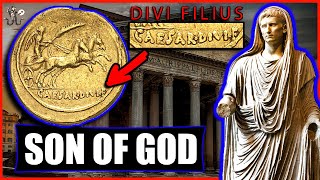
Caesar Augustus (63 BC-14 AD): Saviour of Rome and Original Son of God | Gnostic Informant
001962
54
 1:14:16
211
1778352441
1786943925
Rome-Persia War (602-628 AD) set the context for Early Islam to emerge in Arabia | James Howard-Johnston | MythVision
004456
55
 14:22
14:22
179
1784248137
1787026593
Apostle Paul invented Christianity to honour Rome | Jiang Xueqin
000862
56
 16:31
16:31
93
1784599559
1787009433
Virgin Births of Plato, Dionysus, Romeus, Augustus, Zoroaster, Horus, Buddha, Krishna, Mithra and Jesus | Adam Elmasri
000991
57