47:52
148 views
·
Last viewed: 1 hr ago
Uploaded: 07 Oct 2025 (10 months ago) · Shared: 13 Apr 2026
Video Description (from Youtube)
Links Mentioned in this Episode: - https://bartehrman.com/october - see our special offers for this month! - https://bartehrman.com/facetoface - our brand-new discussion series where leadingscholars will engage in a friendly exchange on hot-button questions in biblical studies.
- https://bartehrman.com/synoptics - buy Dr. Goodacre's ''The Mystery of the Synoptic Gospels'' course in October, and get a copy of his new book absolutely free. (US only.)
- https://bartehrman.com/gospels - The New Testament Gospels of Matthew, Mark, Luke, and John provide us with virtually all our knowledge of what Jesus said and did. But can we corroborate these accounts? Are they historically reliable? This 8-lecture course is an opportunity to dive deep into the stories that have defined a faith, questioning their origins and understanding their impact. (Use the code MJPODCAST for a special discount.)
*Episode Description*
Who were the Essenes, and what set them apart from other Jewish groups during the time of Jesus? That’s the starting point for today’s deep-dive discussion, as Bart Ehrman unpacks the lives, beliefs, and apocalyptic worldviews of this enigmatic sect—best known through the Dead Sea Scrolls, unearthed near Qumran in 1947.
Megan Lewis leads with the essentials: The Essenes, like Jesus and John the Baptist, anticipated the world’s imminent end. But how much did their practices, commitment to purity, and collective withdrawal from society overlap with the figures who would shape Christianity? Bart draws extensively on both ancient historian Josephus and the recent scholarship unlocked by the Dead Sea Scrolls to reconstruct a portrait of Essene life—from celibacy and purity rituals to their apocalyptic expectation of a coming war and God's final intervention.
The conversation then pivots: How do John the Baptist’s and Jesus’ beliefs compare to those of the Essenes? Drawing from the Gospels and Josephus, Bart outlines John’s famous baptism-for-repentance and urgent call that the “axe is at the root of the tree”—all part of a shared Jewish apocalyptic tradition. But crucial differences emerge: Where the Essenes retreated from society to maintain ritual purity, Jesus actively embraced the marginalized and called for inward moral repentance over external purity.
Bart navigates through theories about Jesus or John the Baptist possibly being Essenes—a notion previously sensationalized but not widely accepted among today’s scholars. Bart highlights why the evidence points away from any formal connection, despite the overlapping apocalyptic vibe.
After the feature discussion, Bart tackles listener questions, addressing topics such as whether Jesus’ moral teachings were radical for their time; how the Gospels connected Isaiah’s “voice in the wilderness” to John the Baptist; the ongoing evolution of Bart’s own scholarly views; and the original language of the Gospels.
*3 Key Takeaways*
- The Essenes and the Dead Sea Scrolls provide an invaluable glimpse into ancient Jewish apocalyptic thought—but should not be conflated with early Christianity. The ritual practices and separatist lifestyle of the Essenes stand in contrast to Jesus’ ministry.
- While Jesus, John the Baptist, and the Essenes were all apocalyptic in outlook, their approaches to purity and society diverged dramatically. Jesus’ focus on repentance and inclusion set him apart from Essene separatism.
- Modern scholarship, supported by both ancient sources and critical analysis, finds no compelling evidence that Jesus or John the Baptist were Essenes—even if they shared certain worldviews or practices.
*Key Points*
- The Essenes were a major Jewish sect at the time of Jesus, alongside the Pharisees, Sadducees, and Zealots.
- Our primary sources for the Essenes are the Jewish historian Josephus and the Dead Sea Scrolls.
- The Dead Sea Scrolls, discovered in 1947 near Qumran, include biblical texts, community rules, apocalyptic writings, and more.
- The Essenes practiced extreme asceticism, shared communal property, and were deeply concerned with ritual purity.
- They believed the end times were imminent and retreated from society to preserve their own purity.
- Unlike the Essenes, Jesus and John remained engaged with broader Jewish society—Jesus especially had a reputation for fellowship with social outcasts.
- Both John and Jesus were apocalyptic preachers, calling for repentance in light of the coming kingdom of God.
- The notion that Jesus or John were Essenes was once popular in sensationalist scholarship but is now largely dismissed.
- Jesus diverged from the Essenes by prioritizing inward repentance and communal inclusion over ritual observation.
- John the Baptist, according to Bart Ehrman, was also unlikely to have been an Essene, despite some parallels.
- Ritual purity was central to Essene practice but was far less emphasized in Jesus’ teachings.
DISCLAIMER
All videos are shared for educational and information purposes only. All videos are hosted and viewable on Youtube servers. Video titles are generated using the original video title; overall content theme including actual dialogue and speech (Transcript); and A.I-based recommendations with a focus on SEO, keyword density, and internal search functions. The video title does not represent the views held by the Youtube video uploader, or any individual, organisation or business.
If you spot any mistake, omission or give feedback, kindly Contact Us with details
Overview & Key Concepts
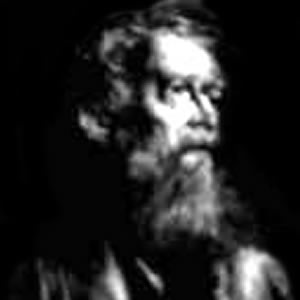
Who is Bart Ehrman?
 Bart Ehrman (born 1955) is an American New Testament scholar focusing on textual criticism of New Testament, historical Jesus, and development of
early Christianity. Ehrman has written and edited 30 books, including three college textbooks. He has also authored six New York Times bestsellers. He is currently the James A. Gray Distinguished Professor of Religious Studies at the University of North Carolina at Chapel Hill.