11:46
857 views
·
Last viewed: 1 day ago
Uploaded: 26 Nov 2018 (8 years ago) · Shared: 28 Nov 2018
Video Description (from Youtube)
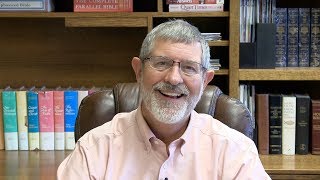
John Schoenheit of Spirit and Truth Fellowship International explains what "Biblical Unitarians" believe. You can find us online at: Biblical Unitarian - http://biblicalunitarian.com STFonline -http://STFonline.org
REV Bible Online - http://revisedenglishversion.com
DISCLAIMER
All videos are shared for educational and information purposes only. All videos are hosted and viewable on Youtube servers. Video titles are generated using the original video title; overall content theme including actual dialogue and speech (Transcript); and A.I-based recommendations with a focus on SEO, keyword density, and internal search functions. The video title does not represent the views held by the Youtube video uploader, or any individual, organisation or business.
If you spot any mistake, omission or give feedback, kindly Contact Us with details
EXPLORE TOPICS :
UNITARIAN |
32
UNITERIANISM |
0
JOHN SCHOENHEIT |
18
TRINITY |
154
TRINITARIAN |
18
BIBLICALUNITARIAN |
19
CHRISTIANITY |
236
CHRISTIAN |
883
GOD |
0
Overview & Key Concepts
Who are BiblicalUnitarian?

Who is John Schoenheit?
John Schoenheit is a teacher, author at Spirit & Truth Fellowship International. He was responsible for printed and online publications, research on
biblical topics, overseeing the translation and publication of the Revised English Version (REV) of the Bible, overseeing a project to produce an online commentary. Schoenheit received his education at the Reformed Theological Seminary.
What is Christian?
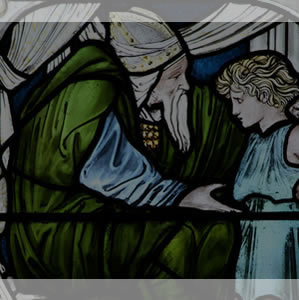 Christianity is a global religion centered on the life and teachings of Jesus Christ, who followers believe is the Son of God. It's a monotheistic
faith, meaning Christians believe in one God who exists in three co-equal persons: God the Father, God the Son (Jesus Christ), and the Holy Spirit. Christianity is based on the Bible, with the Old Testament and New Testament serving as sacred texts.
What is Trinity?
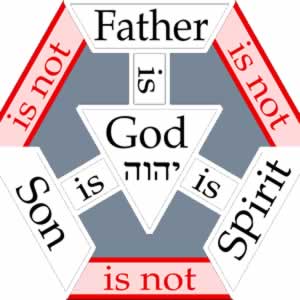 The Christian doctrine of the Trinity (Latin: trinus "threefold") holds that God is one God, but three coeternal consubstantial persons or
hypostases. These being the Father, the Son (Jesus Christ), and the Holy Spirit - as "one God in three Divine Persons". The three Persons are distinct, yet are one "substance, essence or nature" (homoousios).
Who is GOD?
In monotheism and henotheism, God is conceived as the Supreme Being and principal object of faith. The concept of God as described by theologians
commonly includes the attributes of omniscience (infinite knowledge), omnipotence (unlimited power), omnipresence (present everywhere), omnibenevolence (perfect goodness), divine simplicity, and eternal and necessary existence.
<ul>
<li>In theism, God is the creator and sustainer of the universe</li>
<li>In deism, God is the creator, but not the sustainer, of the universe</li>
<li>Monotheism is the belief in the existence of one God or in the oneness of God</li>
<li>In pantheism, God is the universe itself</li>
<li>In atheism, God is purported not to exist, while deemed unknown or unknowable within the context of agnosticism. </li>
</ul>
Frequently Asked Questions
1.How were the Triadic or 'Trinity-like' Pagan Gods presented?
2.Does the Christian Trinity come from pagan Triadic dieties?
3.Why is the Trinity so difficult to understand?
4.How did the Christian Trinity come about?
5.Does the Bible support the Trinity (3-in-1) God concept?
6.Does the Old Testament teach the Christian Trinity?
7.What is the Christian Trinity?
8.What do Christian 'Trinity' scholars say about the Old Testament?
9.What do Christian scholars say about the Trinity?
Videos on John Schoenheit (18)
 12:29
12:29
475
1479513600
1787108105
In John 1:1, In the beginning was the Word, and the Word was with God, and the Word was God - John Schoenheit (BiblicalUnitarian)
000749
1
 10:30
10:30
913
1480896000
1787187214
In 1 Corinthians 15:45, God speaks about the Christian Trinity - John Schoenheit (BiblicalUnitarian)
000630
2
 12:42
12:42
623
1480896000
1786582110
Can we pray to Jesus? - John Schoenheit (BiblicalUnitarian)
000762
3
 11:31
11:31
660
1482796800
1786963853
In Luke 10:18, I saw Satan fall like lightning from heaven - John Schoenheit (BiblicalUnitarian)
000691
4
496 views
10:21
496
1483401600
1787205831
In Matthew 12:40, Jesus claims he will be in the Tomb for 3 days and 3 nights - John Schoenheit (BiblicalUnitarian)
000621
5
 11:49
11:49
664
1485820800
1786273414
If Jesus is called Lord, does that make him God? - John Schoenheit (BiblicalUnitarian)
000709
6
 9:12
9:12
1191
1490659200
1787210741
In John 10:30, I and the Father are one - Does this prove the Trinity? - John Schoenheit (BiblicalUnitarian)
000552
7
 9:54
9:54
703
1493856000
1786553146
In Jude 1:5, who delivered the People out of Egypt? - John Schoenheit (BiblicalUnitarian)
000594
8
 12:40
12:40
1057
1493856000
1787234771
In John 1:18, is Jesus 'God' or 'Son'? - John Schoenheit (BiblicalUnitarian)
000760
9
 9:43
9:43
720
1493856000
1787224309
How old was Mary when she gave birth to Jesus? - John Schoenheit (BiblicalUnitarian)
000583
10
 10:19
10:19
571
1493856000
1787032182
Was Jesus born on December 25th? - John Schoenheit (BiblicalUnitarian)
000619
11
 10:16
10:16
498
1493856000
1786955618
What does the name Jesus Christ mean? - John Schoenheit (BiblicalUnitarian)
000616
12
 12:06
12:06
1105
1505259041
1787123183
In Exodus 3:14, John 6:20, John 8:24, John 8:58, Mark 6:50, Mark 13:6, Luke 21:8, Matthew 14:27 and Acts 26:29 Jesus claims I AM (Ego Eimi) God - John Schoenheit (BiblicalUnitarian)
000726
13
 10:30
10:30
924
1505868618
1787075700
In Isaiah 9:6 and Psalm 82:1, is Jesus a God or The God? - John Schoenheit (BiblicalUnitarian)
000630
14
 11:12
11:12
602
1516837961
1786734327
In Matthew 1:23, why is Jesus called Immanuel? - John Schoenheit (BiblicalUnitarian)
000672
15
 11:46
11:46
857
1543401557
1787133984
Unitarian Christians believe in One God; oppose Trinity - John Schoenheit (BiblicalUnitarian)
000706
16
 11:07
11:07
861
1546174479
1786742492
The Christian Bible supports Capital Punishment/Death Penalty - John Schoenheit (BiblicalUnitarian)
000667
17
 11:00
11:00
386
1551224623
1787213515
How the Bible Codex was formed - John Schoenheit
000660
18
EXPLORE TOPICS :
UNITARIAN |
32
UNITERIANISM |
0
JOHN SCHOENHEIT |
18
TRINITY |
154
TRINITARIAN |
18
BIBLICALUNITARIAN |
19
CHRISTIANITY |
236
CHRISTIAN |
883
GOD |
0