47:41
615 views
·
Last viewed: 5 days ago
Uploaded: 11 Jul 2018 (8 years ago) · Shared: 16 Jul 2018
Video Description (from Youtube)
» If you liked this video, please subscribe & share on your social media platforms. The Prophet said, “Whoever guides someone to goodness will have a similar reward.” Sahih Muslim 1893 » All rightsreserved Worldwide. No part of this video may be reproduced or utilised in any form by electronic, mechanical, or other means now known or hereafter invented, without express written permission from the copyright holder. CovFF
DISCLAIMER
All videos are shared for educational and information purposes only. All videos are hosted and viewable on Youtube servers. Video titles are generated using the original video title; overall content theme including actual dialogue and speech (Transcript); and A.I-based recommendations with a focus on SEO, keyword density, and internal search functions. The video title does not represent the views held by the Youtube video uploader, or any individual, organisation or business.
If you spot any mistake, omission or give feedback, kindly Contact Us with details
Overview & Key Concepts
Who is Chacha Usman?
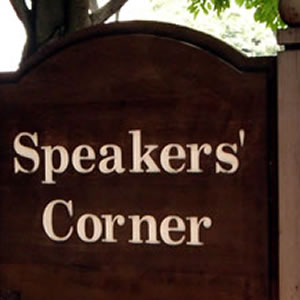 A Speakers' Corner is an area where open-air public speaking, debate, and discussion are allowed. The original and most noted is in the north-east
corner of Hyde Park in London, England. Speakers here may talk on any subject, as long as the police consider their speeches lawful, although this right is not restricted to Speakers' Corner only. Contrary to popular belief, there is no immunity from the law, nor are any subjects proscribed, but in practice the police intervene only when they receive a complaint. Speakers' Corner is often held up to demonstrate freedom of speech, as anyone can turn up unannounced and talk on almost any subject, although always at the risk of being heckled by regulars.
What is Apostolic?
 The Apostolic Fathers were Christian theologians who lived in the 1st and 2nd centuries AD. They were believed to have personally known some of the
Twelve Apostles, or to have been significantly influenced by them. Their writings, though popular in Early Christianity, were ultimately not included in the canon of the New Testament once it reached its final form. Many of the writings derive from the same time period and geographical location as other works of early Christian literature that did come to be part of the New Testament, and some of the writings found among the Apostolic Fathers' seem to have been just as highly regarded as some of the writings that became the New Testament.
What is Catholic?
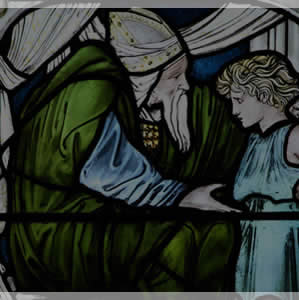 The Catholic Church, also known as the Roman Catholic Church. This is the largest Christian church, with approximately 1.3 billion baptised Catholics
worldwide, as of 2016. As one of the oldest religious institutions in the world, it has played a prominent role in the history and development of Western civilisation. The church is headed by the Bishop of Rome, known as the Pope. Its central administration, the Holy See, is in the Vatican City, an enclave within Rome, Italy. Catholic theology is based on the Nicene Creed.
What is the Church?
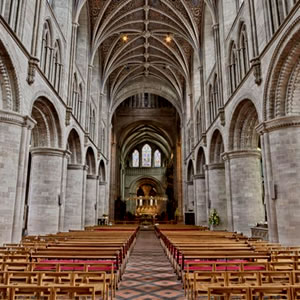 A church is a building used for Christian worship services and Christian activities. The earliest identified Christian church is a house church
founded between 233 AD and 256 AD. The word church also describes a body or assembly of Christian believers, while "the Church" refers to the worldwide Christian religious community.
Frequently Asked Questions
1.When was the word 'Catholic' first used?
The word Catholic meaning 'universal' was used as early as 107 AD
2.When did Catholic Christianity become official religion of Rome?
In 380 AD, Catholicism became the state religion of Rome. A calendar of feast days was set: Christmas - to mark the birth of Jesus; Easter - to mark the death and resurrection.
3.How did early Catholics learn about Christianity?
Early Catholics were taught Christianity by the priests, nuns and at Catholic schools - and not through Bible study. The priests role was to pass on Christian beliefs and practise to his congregation. The priest acted as an intermediary between God and the people; as mankind was regarded as inherently sinful.
Catholics were discouraged from individual Bible study and pushed towards conforming with traditional Church teachings.
4.When were Catholics encouraged to read the Bible for themselves?
In 1909, Pope Pius X first encouraged Bible study. For the first time, Catholics could now study the Bible for themselves and Catholicism returned to being a 'religion of the book' for the people
5.Was Jesus a Catholic Christian?
Jesus was a Jew and the origins of Christianity are as a reform movement within Judaism. In contrast to this, the Catholic Church believes Jesus' mission was not only for Jews but the whole world.
6.Why did early Christians have church synods and councils?
Priests and bishops would often come together and vote on Christian theological matters due to the disunity, differences and conflict within the Christian denominations.
7.How did James, leader of the Jerusalem Church, view Apostle Paul?
Paul's new doctrine met with disapproval from the Jewish-Christians of the Jerusalem Church, who regarded the substitution of Jesus' atoning death for the observance of the Torah as a lapse into paganism.
Paul was duly summoned to Jerusalem by the leaders James, Peter and John to explain his doctrine in 50 AD.
8.What are the origins of Christian church music?
Saint Ambrose (334-397), a keen advocate of church music is credited with introducing it into christian worship.
Videos on Apostolic (5)
 0:53
0:53
469
1530143835
1786260707
Anonymous Texts given Apostolic titles, Matthew, Mark etc. to qualify for Bible NT canon - Bart Ehrman
000053
1
 1:37
1:37
605
1530742143
1786989656
Irenaeus (180 AD) named popular, 'anonymous' texts Mark, Matthew, Luke, John for Apostolic reasons - Bart Ehrman
000097
2
 47:41
47:41
615
1531739647
1786571129
Fullness of truth is in the Catholic Apostolic Church. Open your Bible and read Deuteronomy 6:4 - Chacha Usman vs Public
002861
3
 1:27
1:27
666
1533124589
1786852554
Gospels were added to NT Bible canon based on their pre-100 AD Apostolic age - Richard Bauckham
000087
4
 28:10
28:10
443
1535194545
1787018563
Apostolic Fathers (75-200 AD) put context to the Early Church - Ryan Reeves
001690
5