6:34
581 views
·
Last viewed: 3 hrs ago
Uploaded: 16 Mar 2026 (5 months ago) · Shared: 18 Mar 2026
Video Description (from Youtube)
In fascinating interview, Nomi Greenberg interviews Rabbi Tovia Singer about religious anti-Zionism. @womensnishmatcircle3816 Help us combat aggressive Jewish evangelism in Israel:https://outreachjudaism.org/partners/
Let’s Get Biblical Study Guide (Volume 1 & 2) https://outreachjudaism.org/shop/lets-get-biblical-expanded-2-volume-study-guide/
https://outreachjudaism.org/
www.videvo.net
Music: https://www.purple-planet.com
http://www.toviasinger.tv/
#toviasinger #Judaism #Christianity #Messiah
DISCLAIMER
All videos are shared for educational and information purposes only. All videos are hosted and viewable on Youtube servers. Video titles are generated using the original video title; overall content theme including actual dialogue and speech (Transcript); and A.I-based recommendations with a focus on SEO, keyword density, and internal search functions. The video title does not represent the views held by the Youtube video uploader, or any individual, organisation or business.
If you spot any mistake, omission or give feedback, kindly Contact Us with details
EXPLORE TOPICS :
ISRAEL |
724
IDF |
15
TOVIA SINGER |
145
ZIONISM |
46
ZIONIST |
60
GREATER ISRAEL |
17
JEWISH |
224
JEWS |
140
JUDAISM |
74
SIN |
0
Overview & Key Concepts
Who is Tovia Singer?
 Tovia Singer (born 1960) is a Jewish rabbi. Singer is the founder and director of Outreach Judaism, Indonesia.
What is Zionist?
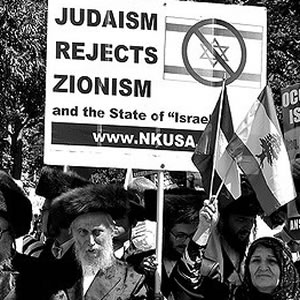 Zionism is a political movement that supports the self-determination and homeland for Jewish people in Israel. Zionists advocate for the existence and
continuation of Israel, but is used by Israel's settler movement to justify expansion and occupation into internationally recognized Palestinian lands.
<br><br>
Christian Zionists and Muslim Zionists are those Christians and Muslims who support Israel in its objectives in the 'Greater Israel' project.
<br><br>
The 'Greater Israel' project is a frequently contentious, right-wing Zionist project linked to settlement expansion and greater land annexation concepts for a Jewish state. The project may include the Jordan River to the Mediterranean Sea (including the West Bank and Gaza) to biblical, larger borders stretching from the River Nile to the Euphrates.
What is Israel?
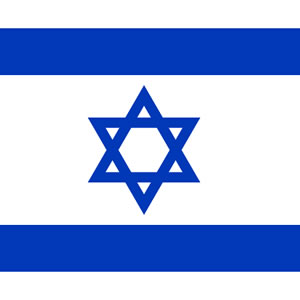 Israel, officially the State of Israel, is a country in the Middle East. Located on the southeastern shore of the Mediterranean Sea and the northern
shore of the Red Sea. It has land borders with Lebanon to the north, Syria to the northeast, Jordan on the east, the Palestinian territories of the West Bank and Gaza Strip to the east and west, respectively, and Egypt to the southwest.
What is Jewish?
 Judaism is an Abrahamic, monotheistic, ethnic religion that comprises the collective spiritual, cultural, and legal traditions of the Jewish people
Religious Jews regard Judaism as their means of observing the Mosaic covenant, which they believe was established between God and the Jewish people. The religion is considered one of the earliest monotheistic religions. Jewish religious doctrine encompasses a wide body of texts, practices, theological positions, and forms of organization. Among Judaism's core texts is the Torah - the first five books of the Hebrew Bible - and a collection of ancient Hebrew scriptures. The Tanakh, known in English as the Hebrew Bible, has the same books as Protestant Christianity's Old Testament, with some differences in order and content.
What is Jews?
Judaism is an Abrahamic, monotheistic, ethnic religion that comprises the collective spiritual, cultural, and legal traditions of the Jewish people
Religious Jews regard Judaism as their means of observing the Mosaic covenant, which they believe was established between God and the Jewish people. The religion is considered one of the earliest monotheistic religions. Jewish religious doctrine encompasses a wide body of texts, practices, theological positions, and forms of organization. Among Judaism's core texts is the Torah - the first five books of the Hebrew Bible - and a collection of ancient Hebrew scriptures. The Tanakh, known in English as the Hebrew Bible, has the same books as Protestant Christianity's Old Testament, with some differences in order and content.
Frequently Asked Questions
1.How did the Early Jewish-Christians practise their religion?
The earliest Jewish-Christians strictly followed traditional Hebrew practices, including daily prayers, circumcision, rituals for purity, fasting, dietary laws, and temple, according to the source material.
2.Did Jesus claim to be 'King of the Jews'?
The text notes that a political placard accusing Jesus of making this claim was nailed to his cross, and it states that this historical artifact can be found today at the Church of Santa Croce in Rome.
3.How was Jesus Jewish?
Jesus fully observed the laws of the Torah, maintained kosher dietary regulations, and never asked his followers to abandon Judaism, as they continued to meet at the Temple and practice circumcision rather than establishing a separate religion or attending a church.
4.What did early Jewish-Christians think of Apostle Paul?
Between 55 and 66 CE, early Jewish-Christian leaders in Jerusalem rejected Paul’s teachings and challenged his authority, leading to a significant decline in his popularity.
5.Were the early Christians Jews?
es, early followers were entirely Jewish, strictly observing traditional laws and customs.
6.Did Saul kill the early Jewish-Christians?
Before his conversion, Saul actively sought to imprison and execute early Jewish-Christians, believing he was serving God.
7.How did the Jews view Apostle Paul?
Faithful Jews viewed Paul's salvation theory as blatant blasphemy because his theological teachings explicitly ridiculed all previous revelations from God, including the sacred Torah, while teaching a doctrine that went against the absolute oneness of God.
8.According to Apostle Paul, why did God give Jews the Torah?
Paul viewed the Torah as a temporary guide, claiming it was given to the Jews until they could be saved through faith in Jesus Christ.
9.How did Apostle Paul differ with the Jewish Rabbis?
Jewish Rabbis taught that salvation came to individuals through maintaining an intention to remain within the divine covenant and by offering sincere repentance for their sins. In stark contrast, Paul preached that every human was inherently damned, enslaved by the flesh, and in bondage to the law, claiming the only cure was total liberation through a spiritual union with Christ.
10.How did the early Jewish-Christians view Jesus' resurrection?
The earliest Jewish-Christians did not believe that the resurrection meant Jesus was God, but rather that he was a righteous man approved by God through miracles, wonders, and signs. Based on texts like Acts 2:22-24, they maintained the theological view that Jesus had been raised by God, not that he was the Creator himself.
11.Who seperated Christianity from Judaism?
It was Apostle Paul's dramatic conversion and subsequent teachings that directly resulted in the permanent theological separation of Christianity from Judaism. Within mere months of Jesus' departure, the original human-centric and law-abiding message was fundamentally altered into an independent religious system.
12.Why Jews do not accept Jesus as the Messiah?
Mainstream Judaism rejects Jesus's messianic claims because he did not fulfill literal Old Testament prophecies. These expectations include rebuilding the Temple, gathering all exiled Jews back to Israel, and ushering in an era of universal world peace.
13.What does the Quran say about Jews and Christians?
The Quran recognizes Jews and Christians as "People of the Book" (Ahl al-Kitab), acknowledging that they were given previous divine revelations through prophets like Moses and Jesus. While it praises the righteous among them, it also critiques their theological developments, specifically rejecting the Christian doctrine of the Trinity and the divine sonship of Jesus.
14.How was Apostle Paul viewed by the Jews?
Paul was widely viewed by mainstream Jewish communities as a radical apostate and religious heretic because he preached that observance of the Mosaic Torah was no longer required for salvation. This fierce theological conflict frequently resulted in severe public opposition, legal charges before Roman authorities, and physical riots during his travel throughout ancient Mediterranean cities.
15.Does the Quran tell Jews and Christians to refer to their Scriptures (Torah and Bible)?
Yes, the Quran references previous scriptures in passages like Surah Al-Ma'idah (5:47), which tells the followers of the Gospel to judge by what God has revealed in it. From an academic perspective, this reflects the historical context of 7th-century Medina, where Jews and Christians were recognized as "People of the Book" who possessed divine laws. While Islamic theology holds that modern biblical texts have suffered from textual corruption (tahrif), the Quran historically appeals to the core monotheistic truths remaining in those scriptures to validate Muhammad's message.
16.In the time of Jesus, what qualities would identify the Messiah, to the Jews?
First-century Jewish expectations, as discussed in this analysis of Trinity dogma, centered on a human leader, such as a prophet or king from David's line, rather than a divine figure.
17.How did the 1st century Jews view the Holy Spirit?
As explained in this analysis of Trinity dogma, the Holy Spirit was understood as God's active, divine power, rather than a distinct, third person of a Trinity.
18.Jesus claimed to be God. The Jews must have understood this, as they accused him of blasphemy and were ready to stone him?
The platform asserts that Jesus did not claim divinity in this instance, and that his mention of Psalm 82:6 in John 10:34 was a defense noting that human judges are called "gods" in scripture, thus challenging the accusation of blasphemy.
19.Why do Jews let the hair grow on the sides of there head?
In the text of the Torah (Leviticus 19:27), God explicitly forbids cutting or rounding off the corners of the hair on the sides of the head and marring the edges of the beard.
20.How did Jews view the Greek Bible (Septuagint)?
The Jewish community regarded the Septuagint only as a translation of the original Hebrew, never as an independent or authoritative scripture.
21.In the time of Jesus, how were the Jews viewed by the Greeks?
The text suggests that the Greeks perceived Judaism as an insular tradition, weakened by long-term Roman occupation, economic decline, and emigration.
Videos on Uniterianism (0)
EXPLORE TOPICS :
ISRAEL |
724
IDF |
15
TOVIA SINGER |
145
ZIONISM |
46
ZIONIST |
60
GREATER ISRAEL |
17
JEWISH |
224
JEWS |
140
JUDAISM |
74
SIN |
0