6:22
631 views
·
Last viewed: 3 hrs ago
Uploaded: 05 Oct 2020 (6 years ago) · Shared: 08 Oct 2020
Video Description (from Youtube)
We're an organization based in Ohio, USA. Focusing on dawah or the teaching of Islam to non-muslim directly from a practicing Muslim around the world. If you find this video is helpful please shareand like this video. And if you want to support for our dawah, you can visit these links:
https://www.patreon.com/supportAskAMuslim
https://www.ask-a-muslim.com/donate/
DISCLAIMER
All videos are shared for educational and information purposes only. All videos are hosted and viewable on Youtube servers. Video titles are generated using the original video title; overall content theme including actual dialogue and speech (Transcript); and A.I-based recommendations with a focus on SEO, keyword density, and internal search functions. The video title does not represent the views held by the Youtube video uploader, or any individual, organisation or business.
If you spot any mistake, omission or give feedback, kindly Contact Us with details
Overview & Key Concepts
Who is Khalid Yasin?
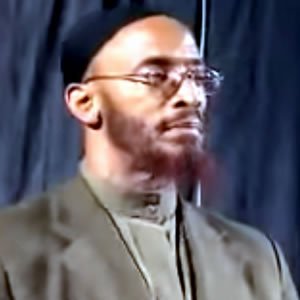 Khalid Yasin (born 1946) is an American convert from Christianity to Islam. He lives in Manchester, England and lectures in the United Kingdom and
elsewhere. Yasin frequently travels overseas to spread his faith and has called himself a "media-bedouin," remarking that the bedouins are willing to settle wherever there is "water and shelter".
What is The Quran?
 Quran, literally meaning "the recitation" is the central religious text of Islam, which Muslims believe to be a revelation from God (Allah). It is
widely regarded as the finest work in classical Arabic literature. The Quran is divided into chapters (surah in Arabic), which are then divided into verses (ayah). Muslims believe that the Quran was verbally revealed by God to Muhammad through the angel Gabriel (Jibril), gradually over a period of approximately 23 years, beginning on 22 December 609 CE, when Muhammad was 40, and concluding in 632, the year of his death. Muslims regard the Quran as the most important miracle of Muhammad, a proof of his prophethood, and the culmination of a series of divine messages that started with the messages revealed to Adam and ended with Muhammad.
What is Universe?
 The Universe is all of space and time and their contents, including planets, stars, galaxies, and all other forms of matter and energy. While the
spatial size of the entire Universe is still unknown, it is possible to measure the observable universe. The earliest scientific models of the Universe were developed by ancient Greek and Indian philosophers and were geocentric, placing Earth at the centre of the Universe. Over the centuries, more precise astronomical observations led Nicolaus Copernicus to develop the heliocentric model with the Sun at the centre of the Solar System.
What is Creation?
 A creation myth or cosmogonic myth is a type of cosmogony, a symbolic narrative of how the world began and how people first came to inhabit it. While
in popular usage the term myth often refers to false or fanciful stories, members of cultures often ascribe varying degrees of truth to their creation myths. In the society in which it is told, a creation myth is usually regarded as conveying profound truths - metaphorically, symbolically, historically, or literally. They are commonly, although not always, considered cosmological myths - that is, they describe the ordering of the cosmos from a state of chaos or amorphousness.
Creation myths often share several features. They often are considered sacred accounts and can be found in nearly all known religious traditions. They are all stories with a plot and characters who are either deities, human-like figures, or animals, who often speak and transform easily.
Frequently Asked Questions
1.Why should we believe the Quran if it comes 600 years after Jesus?
The 600-year gap does not invalidate the Quran, as earlier prophets had similar gaps between them, and early Bible manuscripts date to roughly the same period as the Quranic revelation.
2.What is the Quran?
The Quran is the sacred scripture of Islam, which was revealed to Prophet Muhammad through the Angel Gabriel.
3.How was the Quran revealed?
The Quran was verbally delivered to Prophet Muhammad through the Archangel Gabriel; the Prophet would then repeat the precise words, which were simultaneously memorised and recorded by scribes.
4.What does the Quran say about Jews and Christians?
The Quran recognizes Jews and Christians as "People of the Book" (Ahl al-Kitab), acknowledging that they were given previous divine revelations through prophets like Moses and Jesus. While it praises the righteous among them, it also critiques their theological developments, specifically rejecting the Christian doctrine of the Trinity and the divine sonship of Jesus.
5.How authentic is the Quran historically?
Islamic tradition holds that the text of the Quran has been preserved perfectly since its 7th-century revelation, with oral memorisation and scribal dictation acting as dual tracking methods. Mainstream secular historians and academic textual critics confirm that early surviving fragments (such as the Birmingham Quran manuscript) demonstrate remarkable textual stability, verifying its core compilation dates to within a few decades of the Prophet Muhammad's lifetime.
6.How was the Quran text kept authentic?
According to historical records, whenever a passage was revealed, the Prophet Muhammad immediately dictated the verses to literate scribes while simultaneously instructing the community to commit them to memory. This dual tracking framework where oral recitation by thousands of companions double-checked the physical parchment, leather, and palm leaves prevented textual isolation and provided a robust system of communal validation before the definitive text was standardized.
7.How was the Quran preserved?
Whenever a fragment of the Quran was revealed, Prophet Muhammad would immediately call one of his literate companions to dictate the exact verses and specify their precise placement in the text. To ensure perfect accuracy, the Prophet had the scribe repeat the verses back to correct any errors. Additionally, every year during Ramadan, he would recite the compiled revelation to the Archangel Gabriel. Verses were written down on highly diverse materials such as parchment, leather, and wooden tablets. While thousands of companions simultaneously committed the entire text to memory, creating a dual preservation system that kept the message authentic.
8.After the death of Muhammad, the Quran was changed?
No, this is inaccurate. The first three Caliphs, particularly Uthman, conducted a strict and critical analysis of the text because Islam was expanding rapidly among non-Arabic speakers and it was essential to maintain the original purity of the revelation. Standardised copies were sent to the major centres of the Islamic Empire, and the oldest surviving manuscripts found worldwide today—including fragments in Paris—remain identical, proving the text has been fully preserved.
9.Is Muhammad mentioned in the Quran?
Yes, the name Muhammad is explicitly mentioned by name four distinct times in the text of the Quran (Surah Al-Imran 3:144, Surah Al-Ahzab 33:40, Surah Muhammad 47:2, and Surah Al-Fath 48:29), where he is formally designated as the Messenger of God and the "Seal of the Prophets." Additionally, he is addressed once by the name Ahmad in Surah As-Saff (61:6), inside a narrative where Jesus prophesies the future arrival of a messenger coming after him.
10.Does the Quran tell Jews and Christians to refer to their Scriptures (Torah and Bible)?
Yes, the Quran references previous scriptures in passages like Surah Al-Ma'idah (5:47), which tells the followers of the Gospel to judge by what God has revealed in it. From an academic perspective, this reflects the historical context of 7th-century Medina, where Jews and Christians were recognized as "People of the Book" who possessed divine laws. While Islamic theology holds that modern biblical texts have suffered from textual corruption (tahrif), the Quran historically appeals to the core monotheistic truths remaining in those scriptures to validate Muhammad's message.
11.Does the Quran encourage violence against the disbelievers (non-Muslims)?
Academic Islamic scholarship clarifies that verses in the Quran addressing warfare against non-Muslims were historically revealed during active, state-level conflicts with the pagan tribes of Mecca and their military allies. Mainstream historians emphasize that these specific martial passages must be read within their situational context of self-defence and treaty violations, rather than as an open-ended command to attack peaceful non-Muslims.
12.Are Muslims told to kill polytheists in the Quran?
Academic, context-based interpretations of the Quran indicate that verses regarding fighting (e.g., 9:5, 2:190) are historically situated within specific conflicts or treaty breaches rather than universal commands, emphasizing that the text generally prohibits indiscriminate violence, defends the sanctity of life (5:32), and allows for positive relations with peaceful non-Muslims (60:8).
13.Does the Quran promote killing?
14.Does the Quran promote violence?
15.Does the Quran encourage Muslims to kill non-Muslims?
16.Is their violence in the Quran?
Like many ancient religious scriptures, including the Hebrew Bible, the Quran contains passages dealing with warfare, military engagement, and state-level defense. Academic historians note that these specific verses were revealed chronologically during the 7th century to regulate battle conduct, enforce military discipline, and motivate the early Muslim community when they were heavily outnumbered by hostile pagan forces in Arabia.
17.Does the Quran encourage ill-treatment of non-Muslims?
No, orthodox Islamic theology strictly prohibits the unprovoked abuse, exploitation, or mistreatment of peaceful non-Muslims, explicitly warning in the Hadith literature that anyone who oppresses a religious minority will face divine complaints from the Prophet himself on the Day of Judgment. Scriptural texts command Muslims to uphold agreements, demonstrate broad compassion to all of creation, and engage in respectful theological dialogue.
18.Why does the Quran discourage the asking of questions?
This concept is rooted in Surah Al-Ma'idah (5:101), where the text advises believers not to ask about things that, if revealed to them, might cause them distress or unnecessary burden. Historical-critical and traditional scholars explain that this warning was directed at trivial, pedantic, or speculative inquiries that could over-complicate religious obligations, much like the extensive questioning regarding the sacrificial cow in the biblical and Quranic narrative of the Israelites, rather than discouraging sincere, honest questions aimed at seeking knowledge and spiritual clarity.