38:26
418 views
·
Last viewed: 3 hrs ago
Uploaded: 26 Nov 2018 (8 years ago) · Shared: 28 Nov 2018
Video Description (from Youtube)
In this video, Megatron, an Ex Muslim engages both Ijaz Ahmad and Mansur on the reliability of the New Testament. Unfortunately, Ijaz Ahmad keep repeating the same old argument he had in his video onthe New Testament which has been refuted by Keith Thompson of the formerly Reformed Apologetics Ministries now called Exegetical Apologetics.
Megatron recognized this and pointed it out, which is one of the multiples errors and lies documented in Ijaz Ahmad's video.
For those interested in watching the video brother Megatron referred, the link is found below.
https://youtu.be/3loTfTKk7HI
DISCLAIMER
All videos are shared for educational and information purposes only. All videos are hosted and viewable on Youtube servers. Video titles are generated using the original video title; overall content theme including actual dialogue and speech (Transcript); and A.I-based recommendations with a focus on SEO, keyword density, and internal search functions. The video title does not represent the views held by the Youtube video uploader, or any individual, organisation or business.
If you spot any mistake, omission or give feedback, kindly Contact Us with details

Overview & Key Concepts
What is Crucifixion?
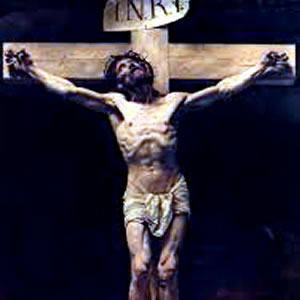 Crucifixion is a method of capital punishment in which the victim is tied or nailed to a large wooden beam. The victim is left to hang for several
days until eventual death from exhaustion and asphyxiation. The crucifixion of Jesus is a central narrative in Christianity, and the cross (sometimes depicting Jesus nailed onto it) is the main religious symbol for many Christian churches. The English term cross derives from the Latin word crux. The Latin term crux classically referred to a tree or any construction of wood used to hang criminals as a form of execution. The term later came to refer specifically to a cross.
Frequently Asked Questions
1.How important was Jesus' crucifixion to Apostle Paul?
In his surviving epistles, the Apostle Paul demonstrates almost no interest in the day-to-day earthly life, chronological career, or specific moral parables of Jesus of Nazareth. Instead, his extensive theology is completely fixated on the cosmic, atoning meaning of the crucifixion and subsequent resurrection of the figure he addresses as "the Lord". Secular historians analyze this focus to illustrate how early Christian theology transformed from an inward-looking Jewish prophetic movement into a universal savior faith.
2.Who replaced Jesus after his crucifixion?
Following the crucifixion, leadership of the primary community of believers in Jerusalem fell to Jesus' biological brother, James the Just. Mainstream historical and biblical scholarship confirms that James directed the mother church as an observant Jew, maintaining that followers must continue upholding traditional Mosaic customs and temple practices.
3.Who instigated the crucifixion of Jesus?
Jewish religious leaders in Israel instigated the process, while Roman authorities under Pontius Pilate carried out the execution.
4.What did James do after Jesus' crucifixion?
In Jerusalem, the disciple James, who acted as the primary leader of Jesus' immediate followers, strongly believed that their movement's future lay as a distinct religious group operating firmly within the confines of the traditional Judaism religion.