1:32:50
117 views
·
Last viewed: 9 hrs ago
Uploaded: 03 Apr 2019 (7 years ago) · Shared: 21 Jul 2026
Video Description (from Youtube)
The traditional narrative of Islam’s origins centers on the career of the prophet Muhammad (d. 632 CE) in Arabia and the rapid spread of his movement throughout the Near East immediately after hisdeath. Over the past half-century, however, scholars have come to realize that this picture is the product of the Islamic community of the eighth, ninth, and later centuries and that its goal of providing a satisfying narrative may not accurately reflect how Islam actually began and grew into the major world religion we know today. In this lecture, Fred M. Donner argues that a more historically accurate view of Islam’s origins has been hindered by the scarcity of documentary evidence from the seventh century and considers some of the key sources that may help us understand these momentous events in Islamic history.
DISCLAIMER
All videos are shared for educational and information purposes only. All videos are hosted and viewable on Youtube servers. Video titles are generated using the original video title; overall content theme including actual dialogue and speech (Transcript); and A.I-based recommendations with a focus on SEO, keyword density, and internal search functions. The video title does not represent the views held by the Youtube video uploader, or any individual, organisation or business.
If you spot any mistake, omission or give feedback, kindly Contact Us with details
EXPLORE TOPICS :
FRED DONNER |
4
THE QURAN |
303
CHRISTIANITY |
236
CHRISTIAN |
883
JEWISH |
224
JEWS |
140
JUDAISM |
74
ISLAM |
448
EARLY ISLAM |
16
MUSLIM |
305
Overview & Key Concepts
Who is Fred Donner?
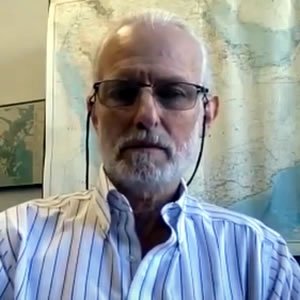 Fred McGraw Donner (born 1945) is a scholar of Islam and Professor of Near Eastern History at the University of Chicago. He has published several
books about early Islamic history. Donner received his PhD in Near Eastern Studies from Princeton in 1975. He taught Middle Eastern history in the History Department at Yale University from 1975-1982 before taking his position at the University of Chicago in 1982. Donner's main argument is that what came to be called Islam began as a monotheistic "Believers' movement" inaugurated by Muhammad which included righteous Christians and Jews as well as those monotheists who followed the teachings of the Quran.
What is The Quran?
 Quran, literally meaning "the recitation" is the central religious text of Islam, which Muslims believe to be a revelation from God (Allah). It is
widely regarded as the finest work in classical Arabic literature. The Quran is divided into chapters (surah in Arabic), which are then divided into verses (ayah). Muslims believe that the Quran was verbally revealed by God to Muhammad through the angel Gabriel (Jibril), gradually over a period of approximately 23 years, beginning on 22 December 609 CE, when Muhammad was 40, and concluding in 632, the year of his death. Muslims regard the Quran as the most important miracle of Muhammad, a proof of his prophethood, and the culmination of a series of divine messages that started with the messages revealed to Adam and ended with Muhammad.
What is Christian?
 Christianity is a global religion centered on the life and teachings of Jesus Christ, who followers believe is the Son of God. It's a monotheistic
faith, meaning Christians believe in one God who exists in three co-equal persons: God the Father, God the Son (Jesus Christ), and the Holy Spirit. Christianity is based on the Bible, with the Old Testament and New Testament serving as sacred texts.
What is Muslim?
 Early Islam or the history of Islam is believed, by most historians to have originated with Muhammad's mission in Mecca and Medina at the start of the
7th century CE. Although Muslims regard this time as a return to the original faith passed down by the Abrahamic prophets, such as Adam, Noah, Abraham, Moses, David, Solomon, and Jesus, with the submission (Islam) to the will of God. According to the traditional account, the Islamic prophet Muhammad began receiving what Muslims consider to be divine revelations in 610 CE, calling for submission to the one God, preparation for the imminent Last Judgement, and charity for the poor and needy.
What is Jews?
 Judaism is an Abrahamic, monotheistic, ethnic religion that comprises the collective spiritual, cultural, and legal traditions of the Jewish people
Religious Jews regard Judaism as their means of observing the Mosaic covenant, which they believe was established between God and the Jewish people. The religion is considered one of the earliest monotheistic religions. Jewish religious doctrine encompasses a wide body of texts, practices, theological positions, and forms of organization. Among Judaism's core texts is the Torah - the first five books of the Hebrew Bible - and a collection of ancient Hebrew scriptures. The Tanakh, known in English as the Hebrew Bible, has the same books as Protestant Christianity's Old Testament, with some differences in order and content.
Frequently Asked Questions
1.Why should we believe the Quran if it comes 600 years after Jesus?
The Quran may have come 600 years after Jesus, but does that make it false? Jesus came 1600 years after Moses, does that make Jesus false? The underlying or main argument here is the time between one person and another, but as we can see, if time is a problem then Christians should reject the other Prophets and Messengers since they have a greater number of years between them.
The complete manuscript collections of the New Testament and Old Testament date to the 4th and 5th century, within 100 years of the Qur'an, if Christians want to reject the Qur'an because it is 600 years after Jesus then they must be consistent and also reject the New Testament.
It should be noted that the Church itself did not ordain or make it canon (law) that the New Testament should be scripture until 393 and 397 CE in the Carthaginian councils. With all of these evidences, and centuries between Jesus and the New Testament, then they must reject the New Testament first. If not, then they are admitting that their argument is weak, unintelligent and absurd.
2.What is the Quran?
The Quran is the scripture revealed to Muhammad via the Angel Gabrial
3.How was the Quran revealed?
The Quran was revealed to Prophet Muhammad through the Angel Gabrial. Muhammad would repeat the exact words Gabrial gave him and they were written down and memorised.
4.What does the Quran say about Jews and Christians?
The Jews say "The Christians have nothing [true] to stand on," and the Christians say, "The Jews have nothing to stand on," although they [both] recite the Scripture. Thus the polytheists speak the same as their words. But Allah will judge between them on the Day of Resurrection concerning that over which they used to differ.
[Quran 2:113]
5.How authentic is the Quran historically?
Thanks to its undisputed authenticity, the text of the Quran holds a unique place among the books of Revelation, shared neither by the Old nor the New Testament.
6.How was the Quran text kept authentic?
As the Quran was revealed, the Prophet and the believers following him recited the text by heart and it was also written down by the scribes in his following.
It therefore starts off with two elements of authenticity that the Gospels do not possess. This continued up to the Prophet's death.
At a time when not everybody could write, but everyone was able to recite, recitation afforded a considerable advantage because of the double-checking possible when the definitive text was compiled.
7.How was the Quran revealed?
The Quranic revelation was made by Archangel Gabriel to Muhammad. It took place over a period of more than 23-years of the Prophet's life up to his death in 632 AD
8.How was the Quran preserved?
Whenever a fragment of the Quran was revealed, the Prophet called one of his literate companions and dictated it to him, and setting the exact position of the new fragment in the fabric of what had already been received.
Muhammad then asked the scribe to repeat back what he dictated so that he could correct any deficiencies.
Another famous story tells how every year in the month of Ramadan, the Prophet would recite the whole of the Quran (so far revealed) to Gabriel.
Since that day, Muslims recite the whole Quran during the month of Ramadan. The head scribe of the Quran was Zaid Ibn Thabit who was present at the final compilation of the Quran text.
Extremely diverse materials were used when recording: parchment, leather, wooden tablets, camels' scapula, soft stone for inscriptions, etc.
At the same time however, Muhammad encouraged the faithful to learn the Quran by heart. Many memorized the entire Quran by heart and helped to spread it abroad.
By preserving the Quran text both in writings (on materials) and by human memorization proved invaluable in the preservation of the entire text.
9.After the death of Muhammad, the Quran was changed?
This is false. The first three Caliphs, especially Uthman completed a critical analysis of the entire Quran text.
This was due to the rapid expansion of Islam in the first decade amongst people whose native language was not Arabic. So it was deemed essential the text retained its original purity.
Uthman sent copies of the standardized Quran text to the centre of the Islamic Empire. Today, copies attributed to Uthman exist can be found in Tashkent and Istanbul.
Apart from a few dialect variations in copying, the oldest documents known to the present day found throughout the Islamic world are identical; the same is true for documents preserved in Europe (fragments in the Bibliothèque Nationale in Paris which, according to the experts date from the 8th Century AD).
The minor dialect variations do not change the general meaning of the text. For example, the absence of diacritical marks could make a verb either active or passive and in some instances, masculine or feminine. This is a minor issue since the context indicated the meaning in many instances.
Therefore the Quran has been fully preserved since its revelation.
10.Is Muhammad mentioned in the Quran?
The Bible speaks about a prophet who cannot read Gods word
11.Does the Quran tell Jews and Christians to refer to their Scriptures (Torah and Bible)?
When the Quran refers to the previous Scriptures (Torah, Gospel etc.), this is understood to mean the original revelations sent to Moses and Jesus, and not the 'corrupted' versions we have today
12.Does the Quran encourage violence against the disbelievers (non-Muslims)?
The historical context is that this Quran verse was revealed at the Battle of Badr, a battle in which the pagans of Makkah traveled over 200 miles to destroy the Muslims of Madinah. The Pagans of Makkah had an army of about 1000 while the Muslims were only 300 followers. Muhammad and his followers had suffered severe persecutions and torture for 13 years in the city of Makkah. Having fled from Makkah to the safety of Madinah, they found that they were once again threatened.
It is obvious from historical and textual context therefore that this Quran verse does not promote the killing of innocents.
13.Are Muslims told to kill polytheists in the Quran?
This Quran verse is often quoted out of context. The preceeding Quran verses inform us there was a war treaty between the Muslims and pagan Arabs, which the pagans of Arabia broke.
Therefore this verse applies to a very specific historical event and applied only to those who broke the agreement.
Naturally, in war violence is expected. If country A declares war with country B because a peace treaty was violated, then both countries will expect their soldiers to kill or be killed.
14.Does the Quran promote killing?
This Quran verse is often misquoted. The previous verses clearly state the command is to fight those who fight you, and not to overstep the limits. This verse does not promote the killing of innocents, Muslim or non-Muslim, and only allows for fighting in self-defence (when attacked).
15.Does the Quran promote violence?
This verse was revealed by God to Muhammad at a time when Muslims were being attacked by the enemy from Makkah on a regular basis. The verse only allows for self-defence fighting against those who 'withdraw not from you nor give you (guarantees) of peace besides restraining their hands'. So the guarantee of a peace treaty or agreement is required for the war and fighting to completely stop.
16.Does the Quran encourage Muslims to kill non-Muslims?
This verse was revealed about the Battle of Badr. The pagans of Mecca travelled more than 200 miles to Madinah with an army of about 1000 to kill the Muslims who numbered around 300. The Prophet Muhammad and fellow Muslims had suffered severe persecution, torture and even murder of their brethren for 13 years in the city of Mecca at the hands of these very same pagans.
And once the Muslims had fled Mecca and found a sanctuary in the city of Madinah, they were followed by the pagans of Mecca. By this verse God gave the order to Muslims to fight to defend their lives and faith, as they had previously been forbidden from defending themselves.
17.Is their violence in the Quran?
This verse is applicable to the Muslims during the time of Muhammad – historical Muslims – who were terrified of fighting in the battles to defend themselves because they were out numbered.
God bolstered their bravery by assuring them that they would be rewarded.
18.Does the Quran encourage ill-treatment of non-Muslims?
The 'disbelievers' in this verse refers to those who persecuted and attacked the Muslims. This is not a verse directing Muslim to just go out and be awful to non-Muslims.
In fact there is a lot in the Quran and hadith collections that command Muslims to be compassionate and kind to all of God's creation. One such hadith states: Whoever is deprived of gentleness is deprived of all good. (Muslim, Abu Dawood)
It is also reported by Abu Dawood (a hadith collection) that Muhammad said, 'Beware! Whoever is cruel and hard on a non-Muslim minority, or curtails their rights, or burdens them with more than they can bear, or takes anything from them against their free will; I (Muhammad) will complain against the person on the Day of Judgement.'
19.Why does the Quran discourage the asking of questions?
This is in reference to those who asked useless questions about revelation. If all their questions were answered, it would have made the duties of faith more specific and, therefore, more difficult to perform. There is mercy in leaving questions alone and specifics unspecified. 7
In Chapter 2 of the Quran, when the Children of Israel were told to slaughter a cow, they began to ask useless questions about what type of cow. All the questions were answered to the point that it became very difficult for them to find such a cow. If they had not asked, any cow would have been acceptable.
Useless, petty questions are just a stalling tactic; ask any mother or teacher. But asking honest, sincere questions to clarify matters of faith is, in fact, encouraged.
20.How did the Early Jewish-Christians practise their religion?
The Jewish-Christians practised three daily prayers, male circumcision, ritual washing for purity, fasting, attention to clean/unclean foods, giving charity and pilgrimage to a central temple.
21.Did Jesus claim to be 'King of the Jews'?
A placard where Jesus was accused of claiming to be 'King of the Jews' was nailed to his cross. Today this placard can be found at the Church of Santa Croce in Rome.
22.How was Jesus Jewish?
In many ways, Jesus was Jewish:
He did not preach a new religion
He taught people to do the Will of God; not a new God
He never went to Church
He fully observed the Jewish Law
His followers continued attending and meeting at the Temple
His followers observed the dietary regulations of the Torah and continued the practise of circumcision
Therefore, the early Jewish-Christians did not give up Judaism, nor did Jesus every ask them to do so.
23.What did early Jewish-Christians think of Apostle Paul?
Paul's popularity was in decline between 55-66 CE because missionaries from the Church of Jerusalem publicly rejected his innovation and claim to be an Apostle.
24.Were the early Christians Jews?
Yes. Jesus himself and his immediate followers observed all Jewish law, customs and practise.
25.Did Saul kill the early Jewish-Christians?
Prior to becoming a Christian, Saul of Tarsus hated Christians. He made it his goal to capture, then bring Christians to public trial and execution.
1 And Saul was consenting unto his death. And at that time there was a great persecution against the church which was at Jerusalem; and they were all scattered abroad throughout the regions of Judaea and Samaria, except the apostles.
2 And devout men carried Stephen to his burial, and made great lamentation over him.
3 As for Saul, he made havock of the church, entering into every house, and haling men and women committed them to prison.
(Acts 8:1-3)
2 And devout men carried Stephen to his burial, and made great lamentation over him.
3 As for Saul, he made havock of the church, entering into every house, and haling men and women committed them to prison.
(Acts 8:1-3)
Saul believed that he was serving God by finding Christians, throwing them into prison, and even executing them when possible.
26.How did the Jews view Apostle Paul?
Paul's salvation theory was considered blasphemy by faithful Jews. The Jews knew Pauls teachings ridiculed all previous revelations from God as expressed through the Torah.
The Jews after all, were the one race of people in the world who were taught God was One, without form or substance, and did not bear the likeness of anything in the universe.
27.According to Apostle Paul, why did God give Jews the Torah?
Paul claimed God gave Jews the Torah so that they could be saved later on by believing in Jesus Christ. This was God's divine plan.
28.How did Apostle Paul differ with the Jewish Rabbis?
The Jewish Rabbis preached a person was saved so long as their intention was to remain within the covenant, and one truly repented and seek forgiveness for their sins.
Paul preached that every person was 'damned' until they was offered salvation. Mans problem was that he was 'in the flesh' in bondage to the Law, sold under Sin, enslaved by the fundamental spirits of the universe (ie. dead).
Paul preached the only cure was liberation from slavery and death by union with Christ, who had conquered death and sin.
29.How did the early Jewish-Christians view Jesus' resurrection?
Ye men of Israel, hear these words; Jesus of Nazareth, a man approved of God among you by miracles and wonders and signs, which God did by him in the midst of you, as ye yourselves also know:
Him, being delivered by the determinate counsel and foreknowledge of God, ye have taken, and by wicked hands have crucified and slain:
Whom God hath raised up, having loosed the pains of death: because it was not possible that he should be holden of it.
(Acts 2:22-24)
The early Christians assumed Jesus had been raised by God, and not that he was God.
Him, being delivered by the determinate counsel and foreknowledge of God, ye have taken, and by wicked hands have crucified and slain:
Whom God hath raised up, having loosed the pains of death: because it was not possible that he should be holden of it.
(Acts 2:22-24)
30.Who seperated Christianity from Judaism?
It was Paul's dramatic conversion to Christianity that resulted in the seperation of Christianity from Judaism. Within months of his disappearing, Jesus' teachings were changed.
31.Why Jews do not accept Jesus as the Messiah?
The Bible claims the Messiah will accomplish certain signs:
A. Build the Third Temple (Ezekiel 37:26-28).
B. Gather all Jews back to the Land of Israel (Isaiah 43:5-6).
C. Usher in an era of world peace, and end all hatred, oppression, suffering and disease. As it says: "Nation shall not lift up sword against nation, neither shall man learn war anymore." (Isaiah 2:4)
D. Spread universal knowledge of the God of Israel, which will unite humanity as one. As it says: "God will be King over all the world—on that day, God will be One and His Name will be One" (Zechariah 14:9).
The historical fact is that Jesus fulfilled none of these messianic prophecies.
Christians counter that Jesus will fulfill these in the Second Coming, but Jewish sources show that the Messiah will fulfill the prophecies outright, and no concept of a second coming exists.
Read More
32.What does the Quran say about Jews and Christians?
The Jews say "The Christians have nothing [true] to stand on," and the Christians say, "The Jews have nothing to stand on," although they [both] recite the Scripture. Thus the polytheists speak the same as their words. But Allah will judge between them on the Day of Resurrection concerning that over which they used to differ.
[Quran 2:113]
33.How was Apostle Paul viewed by the Jews?
Although, Paul was of the Jewish background, the Jewish-Christian followers of Jesus rejected Paul and wanted to kill him.
34.Does the Quran tell Jews and Christians to refer to their Scriptures (Torah and Bible)?
When the Quran refers to the previous Scriptures (Torah, Gospel etc.), this is understood to mean the original revelations sent to Moses and Jesus, and not the 'corrupted' versions we have today
35.In the time of Jesus, what qualities would identify the Messiah, to the Jews?
A human empowered by God. Not a God-man, a person of the Godhead or part of a Triune God (Trinity)
From the lineage of Abraham (Gen. 22:18)
From the tribe of Judah (Gen. 49:10)
A descendant of David (2 Sam. 7:12)
A Lord under Yahweh, the God of Israel (Ps. 110:1)
From amongst their own people (Jer. 30:21)
36.How did the 1st century Jews view the Holy Spirit?
First century Jews believed the Holy Spirit was another name for God, similar to Yahweh, Elohim or El Shaddai - not a separate Person in the Trinity!
There is no record of Jesus ever trying to correct the Jews and prove the Holy Spirit was a third Person in the Trinity.
37.How was Apostle Paul viewed by the Jews?
The Jews and early Jewish-Christians who observed Mosaic Law constantly harassed Paul. They even followed him around and stirred the people against him. To the extent he was often beaten and threatened with death.
38.Jesus claimed to be God. The Jews must have understood this, as they accused him of blasphemy and were ready to stone him?
The Jews were mistaken. Jesus did not claim to be God, claim divinity or commit blasphemy. In the next verse (John 10:34), Jesus tells the Jews to read their own books, Psalm 82:6 where men in power, eminence, dignity, government, judges, magistrates, in high office posts are called Gods too. i.e. the term God does not literally mean GOD.
39.Why do Jews let the hair grow on the sides of there head?
In the Torah, God forbids the cutting of the hair on the sides and the beard
40.How did Jews view the Greek Bible (Septuagint)?
For the Jews, the Septuagint would always be a translation of the Hebrew bible.
41.In the time of Jesus, how were the Jews viewed by the Greeks?
Judaism was views as an inward looking, demoralized by centuries of Roman occupation, declining economic fortunes and ongoing emigration.
Videos on The Quran (90)
 55:58
55:58
525
1424908800
1787066047
Jesus in the Quran & Conflict Among His Early Followers
003358
1
351 views
9:35
351
1441324800
1786968379
On reading the Quran - Lesley Hazleton
000575
2
 8:34
8:34
377
1441324800
1787061874
Oldest Bible confirms the Quran. Jesus is a servant of God
000514
3
366 views
5:25
366
1441324800
1786960938
Mathematical Miracle Of The Quran
000325
4
 43:56
43:56
591
1441324800
1786987363
Jesus of the Holy Bible vs Jesus of the Quran (Islam) - Charles Lawson
002636
5
 2:17:40
722
1452384000
1787064725
Baby Jesus: His Birth in the Bible & the Quran - Shabir Ally vs Dean Canonico
008260
6
 3:29
3:29
1006
1456185600
1787010184
Were There Multiple Versions of the Quran? - Shabir Ally
000209
7
 7:25
7:25
312
1456185600
1787068458
Amazing Structure of The Quranic text, divine speech of God
000445
8
 10:50
10:50
714
1456185600
1786832773
Patterns of Numerical Values in the Quran - Shabir Ally
000650
9
 15:34
15:34
612
1480896000
1787062928
Why does the Quran call the Jews 'Apes'? - Tovia Singer
000934
10
 4:48
4:48
615
1482192000
1787003899
In the Quran, why does God call Mary, the Sister of Aaron? - Shabir Ally
000288
11
 10:51
10:51
746
1482192000
1787051383
Is the Quran REALLY The Word Of God? - Shabir Ally
000651
12
 11:08
11:08
581
1482192000
1787022299
Jesus' Birth in the Quran and Bible - Shabir Ally
000668
13
 41:38
41:38
797
1483401600
1786883773
Is the Quran revealed in 26 different Arabic versions? - Radush Shubuhaat
002498
14
 36:26
36:26
914
1483401600
1786806751
In the Quran, why does God say Jews are more hostile towards Muslims than Christians? - Tovia Singer
002186
15
 57:06
57:06
572
1487808000
1787008317
The Quran Explained to School Kids - Nouman Ali Khan
003426
16
 2:12:31
587
1487808000
1786932310
The Quran or Bible: Which is the Word of God? - Zakir Hussain vs Samuel Green
007951
17
 19:37
19:37
655
1487808000
1786988764
Can you explain the violence in the Quran? - Mohammed Hijab vs Lizzie 2/2
001177
18
 1:54:56
609
1490659200
1786914144
Is the Quran the word of God or Man? - Shadid Lewis vs Tony Costa
006896
19

1045 views
6:50
1045
1490659200
1786889415
The Quran on the Crucifixion? - Shabir Ally
000410
20
 3:02
3:02
1194
1490659200
1786978228
The Torah and Gospel (Injeel) in the Quran - Shabir Ally
000182
21
 1:49:49
863
1493856000
1787033256
The Bible or the Quran? - Sadat Anwar vs Tony Costa
006589
22
 8:53
8:53
1433
1493856000
1787007935
The Quran on the Christian Trinity - Shabir Ally
000533
23
 30:04
30:04
848
1493856000
1787013331
The devil gave the Quran to Muhammad - Hamza Myatt vs Christian
001804
24
 1:32:52
607
1493856000
1786845222
The Quran: Eternal Living Miracle of God - Yasir Qadhi
005572
25
 47:42
47:42
837
1501895853
1786847092
The different 'Textual Variants' in the Quran - Mansur Ahmad vs Christian Preacher
002862
26
 9:43
9:43
1269
1508408027
1787066373
Ring Composition: Miracle Structure of the Quran
000583
27
 8:04
8:04
1133
1509201244
1786872649
What is worse, believing the Quran or living in Agnosticism? - Mohammed Hijab vs Atheists 3/3
000484
28
 20:00
20:00
1035
1509322320
1787014729
Can you explain the violence in the Quran? - Mohammed Hijab vs Lizzie 1/2
001200
29
 51:49
51:49
753
1509371117
1786979349
The Quran in Abrahamic Religions - Angelika Neuwirth
003109
30
 31:01
31:01
745
1509375504
1786917318
The Quran: An Historical, Literary and Theological Study - Angelika Neuwirth
001861
31
 10:44
10:44
531
1513042574
1786867844
Women's Rights in the Quran - Omar Suleiman
000644
32
 8:46
8:46
840
1514850621
1787009114
Ezekiel and Jethro in the Quran - Shabir Ally
000526
33
 54:29
54:29
481
1520100415
1786988211
Prove a single verse is corrupt in the Quran - Hamza Myatt vs Lizzie
003269
34
 29:19
29:19
933
1520421753
1787056794
Inheritance in the Quran is confusing. 1 man with 1 mother, 3 daughters and a poor grandad who gets nothing - Mohammed Hijab vs Atheist
001759
35
 35:05
35:05
680
1525150481
1786877876
Different Versions of the Quran Myth - Yasir Qadhi
002105
36
413 views
9:12:22
413
1527426547
1786923805
The Quran (English Translation) 1/2
033142
37

452 views
8:51:43
452
1527426538
1786864723
The Quran (English Translation) 2/2
031903
38
 2:42
2:42
573
1528480499
1787056627
Preservation of the Quran - Quran Miracle
000162
39
 16:14
16:14
674
1536780105
1787056961
I want to convert to Islam. Let me read the Quran first - Shamsi vs Bo
000974
40
 1:58:28
660
1540555842
1786839536
Which is more violent, the Quran or Bible? - Shabir Ally vs Douglas Jacoby
007108
41
 12:10
12:10
542
1544171132
1787055722
How the Quran was preserved for 1400 years? - Shabir Ally
000730
42
 20:22
20:22
980
1545161564
1786892349
Does the Quran insist on a Virgin Birth for Jesus? Early Christians did not believe it - Abu Layth
001222
43
 15:28
15:28
953
1550014609
1786988551
Does the Quran have Syriac or Aramaic Origins? - Hamza Tzortzis
000928
44
 14:57
14:57
874
1551644896
1787066666
God 'spoke' to me in the Quran and confirmed my Christian beliefs, not the Bible - Saajid Lipham
000897
45
 8:03
8:03
663
1554734194
1787026087
How the Quran was accurately preserved over 1400 years - OnePath
000483
46
 50:54
50:54
505
1554904392
1787058244
The Quran - Garry Wills (Chicago Humanities Festival)
003054
47
 3:51
3:51
546
1555582022
1787042142
What is the Quran? - Garry Wills (Emir-Stein)
000231
48
 26:02
26:02
667
1556073837
1786884667
Story of Moses and Khidr in the Quran - Nouman Ali Khan 1/6
001562
49
 25:37
25:37
714
1556074113
1787053694
Story of Moses and Khidr in the Quran - Nouman Ali Khan 2/6
001537
50
 19:53
19:53
461
1556074062
1786837015
Story of Moses and Khidr in the Quran - Nouman Ali Khan 3/6
001193
51
 20:32
20:32
562
1556076445
1786875366
Story of Moses and Khidr in the Quran - Nouman Ali Khan 4/6
001232
52
 23:14
23:14
543
1556074385
1787062085
Story of Moses and Khidr in the Quran - Nouman Ali Khan 5/6
001394
53
 18:21
18:21
656
1556074131
1786866187
Story of Moses and Khidr in the Quran - Nouman Ali Khan 6/6
001101
54
 14:13
14:13
791
1556139116
1786854579
Is the Quran really from God? - Shabir Ally
000853
55
 12:54
12:54
950
1556568047
1787026466
Mathematical Miracles in the Quran - Shabir Ally
000774
56

468 views
28:10
468
1558349276
1787044294
What the Quran Meant - Garry Wills
001690
57
 4:32
4:32
652
1564509337
1786892093
Must I follow the Quran to be Saved? - Leo Muhammad (NOI)
000272
58
 10:39
10:39
845
1566027471
1787061030
In Quran 2:23, the Challenge of the Quran was about overall Impact, not language, poetic eloquence or style - Abu Layth
000639
59
 1:21
1:21
549
1566004685
1786984382
Is the Quran Created or Uncreated? - Abu Layth
000081
60

698 views
42:40
698
1567373279
1786827565
27 Miracles in the Quran (Anime)
002560
61
 24:59
24:59
854
1570474099
1786852755
Prophet Moses & Al-Khidr: Story from the Quran
001499
62
421 views
3:20
421
1583925069
1787052628
The Quran: Primary Source of Islam
000200
63
 5:28
5:28
551
1585308159
1786972773
Did a Sheep eat part of the Quran? - Farid Responds
000328
64
 6:22
6:22
630
1602172917
1786878799
Creation of the Universe in The Quran - Khalid Yasin
000382
65
 2:44
2:44
875
1603789888
1786856399
Jesus' Crucifixion is Unclear in the Quran - Adnan Rashid
000164
66
 30:03
30:03
788
1609160468
1786881518
The Quran, Moses, Pharaoh and the Secrets of Egypt - ManyProphetsOneMessage
001803
67
 1:04:48
761
1617277875
1786831612
Stories of Prophets: Prophets in The Quran - Yasir Qadhi 4
003888
68
 13:54
13:54
744
1629301571
1787013357
Importance of Jerusalem in the Quran - PfanderFilms
000834
69
 56:20
56:20
356
1652363349
1787067657
Exploring the Origins of The Quran - Gabriel Reynolds
003380
70
 32:06
32:06
691
1652399407
1786938348
Allah, God of The Quran - Gabriel Reynolds
001926
71
 1:07:04
756
1728782211
1787062181
Evolution of Arabic Language in The Quran | Munther Younes | Gabriel Reynolds
004024
72
 7:48
7:48
770
1749779644
1787052909
Is The Quran an Early Text? | Sean Anthony | MythVision
000468
73
2:02
910
1749784347
1786962356
Is the Quran 100% preserved perfectly? | Sean Anthony | MythVision
000122
74
9:50
798
1749787965
1786863880
How is Jesus presented in The Quran? | Sean Anthony | MythVision
000590
75
 21:33
21:33
194
1770901075
1786870111
Who wrote the Quran? What sources were used? | UsefulCharts
001293
76
 1:37:53
743
1771423436
1787033131
Relationship between Islam, Christianity and Judaism using The Quran | Gabriel Reynolds | Skepsislamica
005873
77

284 views
45:10
284
1772712705
1787056462
Adam, Eve and the 72 Virgins of Paradise in The Quran | Ana Davitashvili | Exploring Quran Bible
002710
78
 22:59
22:59
552
1773114450
1786856888
Moses Before the Quran and in the Bible | Gabriel Reynolds | Hassan Ahmad | Moses Series 2/2
001379
79
 48:35
48:35
177
1773772203
1786981070
Miracles of The Quran Explained | Religion Camp
002915
80
 1:13:26
987
1776190586
1787004385
Islamic Dilemma - Does The Quran confirm New Testament Bible? | Khalil Andani | History Valley
004406
81
 18:08
18:08
267
1776248447
1786979043
History behind the Compilation of The Quran | Hythem Sidky | Exploring-Quran-Bible
001088
82
 2:23:02
313
1777484461
1787039033
Development of The Quran's linguistics in Pre-Islam Arabia | Suleyman Dost | Skepsislamica
008582
83
 38:59
38:59
109
1777484490
1786970928
Early Development of The Quran | Lets Talk Religion
002339
84

107 views
18:48
107
1777506695
1787013441
Key Themes of the Quran | Peter Bolland
001128
85
 1:26:42
425
1778084814
1786878107
Modern Challenges in The Quran | Javad Hashmi | InspiringPhilosophy
005202
86
 45:30
45:30
919
1778084927
1786987367
Early Islam focused on GOD, not Muhammad or The Quran | Fred Donner
002730
87
 2:22
2:22
287
1778499967
1786567730
Importance of reading The Quran in chronological order (revelation order) | James Howard-Johnston | Skepsislamica
000142
88
 1:32:50
117
1784599551
1787037921
Early Muslims, Jews and Christians were called BELIEVERS in The Quran | Fred Donner
005570
89
 1:08:31
106
1785156025
1787067679
THE QURAN - Exploring Authorship, Chronology, Textual Variants, Transmission, Manuscripts, Authenticity, Muhammad and more | Gabriel Reynolds
004111
90
EXPLORE TOPICS :
FRED DONNER |
4
THE QURAN |
303
CHRISTIANITY |
236
CHRISTIAN |
883
JEWISH |
224
JEWS |
140
JUDAISM |
74
ISLAM |
448
EARLY ISLAM |
16
MUSLIM |
305