636 views
·
Last viewed: 1 hr ago
Uploaded: 24 Mar 2026 (7 months ago) · Shared: 27 Mar 2026
Duration: 7:19
Uploaded: 24 Mar 2026 (7 months ago) · Shared: 27 Mar 2026
Duration: 7:19
Youtube Description
What if the chaos we see in the Middle East, the push for AI surveillance, and the collapse of economies aren't accidental? This video exploreseschatology, the study of the end of days, questioning if current global events are part of a predetermined script. We discuss how modern surveillance technology, including AI CCTV cameras, plays into these theories, and connect it to broader world news.
Prof Jiang YouTube Channel: Predictive History
👉 https://www.youtube.com/@UC11aHtNnc5bEPLI4jf6mnYg
Prof Jiang Substack: Predictive History
👉 https://substack.com/@predictivehistory
#profjiang #predictivehistory #whoisjiang
⚠️ FAIR USE & TRANSFORMATIVE COMMENTARY DISCLAIMER:
This video is a highly edited, transformative educational documentary. It features original voiceover commentary, structural re-editing, and added visual context to analyze the geopolitical theories of Professor Jiang Xueqin. Under Section 107 of the Copyright Act 1976, allowance is made for 'fair use' for purposes such as criticism, comment, news reporting, teaching, scholarship, and research. This video adds significant new narrative and educational value to the original lectures.
👇 Let us know your thoughts in the comments: Is this predetermined, or just chaos?
Explore More
Pax Americana Jiang Xueqin Surveillance Digital ID Biometric Cashless SinSearch Google Search Explore Topics
 What is Pax Americana?
Pax is the Latin word for 'peace' denoting a state of harmony, tranquility, or the absence of hostility. In historical and political contexts, it refers to a lasting, often enforced, period of stability within a large area or empire under a dominant power. PAX ROMANA ('ROMAN PEACE'), 27 BC-180 AD This was the period of international peace where the world was subservient to the dominance of the Roman Empire. Definition: A roughly 200-year period of relative stability in the Mediterranean world initiated by Augustus, following the transition from Republic to Empire. Characteristics: Built on the overwhelming military power of the legions (gladii), it was enforced through direct territorial occupation and Roman law. Dark Side: Involved the brutal crushing of enemies, high taxes, and the assimilation of local identities into the Roman state. PAX BRITANNICA ('BRITISH PEACE'), 1815-1914 This was the period of international peace where the world was subservient to the dominance of the British Empire. Definition: The period of British dominance between the end of the Napoleonic Wars (1815) and World War I (1914), sometimes extended to 1956. Characteristics: Modeled on Pax Romana, this era was defined by the Royal Navy's control of the seas, free trade, and the expansion of the British Empire. Dark Side: It was an imperial project that facilitated colonial exploitation, often justified by a "civilizing" mission. PAX AMERICANA ('AMERICAN PEACE'), 1945-PRESENT This is the current period of international peace where the world is subservient to America USA. Definition: The period of US hegemony following World War II (1945), characterized by global relative stability overseen by the US. Characteristics: Maintained through alliances (NATO), international institutions (UN, IMF), economic superiority, and technological/military superiority. Dark Side: Described by some as more subtle than Rome's, yet it involves surveillance and, at times, unilateral intervention. It is currently seen as increasingly unstable. PAX JUDAICA ('JEWISH PEACE') This is a hypothetical period of future international peace based on submission to Israeli/Jewish dominance over international affairs. Definition: A concept, often discussed within Islamic eschatological studies or as a theoretical future, referring to an Israeli-led world order, often labeled the "Zionist World Order". Characteristics: Proposed as a successor to Pax Americana, it is conceptualized as a shift from direct military occupation to control via proxy power, AI, and intelligence-driven surveillance. Context: It is often portrayed as a dystopian or, conversely, a prophetic, centralized rule emanating from Jerusalem.
 Who is Jiang Xueqin?
Jiang Xueqin (born 1976) is a Chinese-Canadian educator, writer, historian, and geopolitical theorist based in Beijing, China. He is known for his contributions to education reform in China. In particular promoting creativity, critical thinking, and global citizenship, as well as for his YouTube channel Predictive History, where he applies structural historical analysis, game theory, and concepts inspired by Isaac Asimov's fictional psychohistory to interpret and forecast major geopolitical developments.
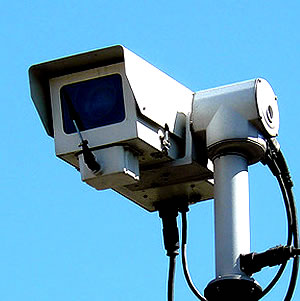 What is Surveillance?
Surveillance is the monitoring of behavior, activities, or information for the purpose of influencing, managing or directing. This can include observation from a distance by means of electronic equipment, such as closed-circuit television (CCTV), or interception of electronically transmitted information, such as Internet traffic. Surveillance is used by governments for intelligence gathering, prevention of crime, the protection of a process, person, group or object, or the investigation of crime. Surveillance can be viewed as a violation of privacy, and as such is often opposed by civil liberties activists.
 What is Digital ID?
A digital identity or digital ID is data stored on computer systems relating to an individual, organization, application, or device. For individuals, it involves the collection of personal data that is essential for facilitating automated access to digital services, confirming one's identity on the internet, and allowing digital systems to manage interactions between different parties. It is a component of a person's social identity in the digital realm, often referred to as their online identity. Digital identities are composed of the full range of data produced by a person's activities on the internet, which may include usernames and passwords, search histories, dates of birth, social security numbers, and records of online purchases. When such personal information is accessible in the public domain, it can be used by others to piece together a person's offline identity. Furthermore, this information can be compiled to construct a 'data double' - a comprehensive profile created from a person's scattered digital footprints across various platforms. These profiles are instrumental in enabling personalized experiences on the internet and within different digital services.
 What is Biometric?
Biometrics is the technical term for body measurements and calculations. It refers to metrics related to human characteristics. Biometrics authentication is used in computer science as a form of identification and access control. It is also used to identify individuals in groups that are under surveillance. Examples of biometric include fingerprint scan, palm veins, face recognition, DNA, palm print, hand geometry, iris recognition, retina and odour/scent.
 What is Cashless?
A cashless society describes an economic state whereby financial transactions are not conducted with money in the form of physical banknotes or coins. Transactions are through the transfer of digital information (usually an electronic representation of money) between the transacting parties. Cashless societies have existed from the time when human society came into existence, based on barter and other methods of exchange, and cashless transactions have also become possible in modern times using digital currencies such as bitcoin.
 What is Sin?
In Abrahamic contexts, sin is the act of violating God's will. Sin can also be viewed as anything that violates the ideal relationship between an individual and God; or as any diversion from the ideal order for human living. To sin has been defined as "to miss the mark". Sins fall in a spectrum from minor errors to deadly misdeeds. Catholicism regards the least corrupt sins as venial sins which are part of human living and carry immediate consequences on earth, and, if unrepented for, more painful purgation, assuming the person is destined to heaven, as it is written in the formation letter "Purgatory", "most of the early Fathers of the Church speak of a cleansing fire, though we cannot tell whether this means actual or spiritual fire." Conversely, sins of great evil are mortal sins which bring the consequence of hell if they are not addressed either through an act of perfect contrition or going to confession about them.