2:53
125 views
·
Last viewed: 22 hrs ago
Uploaded: 04 Jul 2026 (2 months ago) · Shared: 04 Jul 2026
Video Description (from Youtube)
Solomon's Pools is the latest flashpoint for illegal Israeli settlers trying to take over Palestinian areas. Israel claims it's a Jewish heritage site, as more Palestinians rally to defend the landMohammed Elwan reports.
DISCLAIMER
All videos are shared for educational and information purposes only. All videos are hosted and viewable on Youtube servers. Video titles are generated using the original video title; overall content theme including actual dialogue and speech (Transcript); and A.I-based recommendations with a focus on SEO, keyword density, and internal search functions. The video title does not represent the views held by the Youtube video uploader, or any individual, organisation or business.
If you spot any mistake, omission or give feedback, kindly Contact Us with details
EXPLORE TOPICS :
PALESTINE |
136
GAZA |
143
PALESTINIAN |
197
WEST BANK |
14
PROPHET |
397
MESSENGER |
8
TRT WORLD |
92
SETTLER |
26
 SOLOMON
SOLOMON
Overview & Key Concepts
Where is Palestinian?
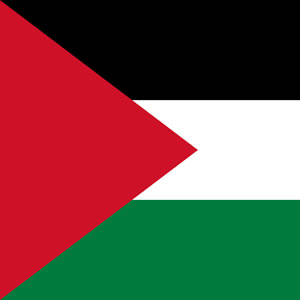 Palestine is a geographic region in Western Asia. It is usually considered to include the Gaza Strip, the West Bank, Israel, and in some definitions
some parts of western Jordan. The name was used by ancient Greek writers, and it was later used for the Roman province Syria Palaestina, the Byzantine Palaestina Prima, and the Islamic provincial district of Jund Filastin. The region comprises most of the territory claimed for the biblical regions known as the Land of Israel, the Holy Land or Promised Land. Historically, it has been known as the southern portion of wider regional designations such as Canaan, Syria, ash-Sham, and the Levant. Situated at a strategic location between Egypt, Syria and Arabia, and the birthplace of Judaism and Christianity, the region has a long and tumultuous history as a crossroads for religion, culture, commerce, and politics.
Who are TRT World?
 At TRT World we are building a global community focused around change. We are looking beyond the headlines to drive meaningful conversations that
empower. We want to connect people across the globe to issues that matter. We explore the reality behind the hashtags and the people behind the statistics. We will seek to unpack the issues behind each story.
By placing the human at the heart of each story we hope to promote a global conscience that provokes moral reactions - revealing a deeper understanding of the diversity of the lives around us.
What is a Prophet?
 In religion, a prophet is an individual who is regarded as being in contact with a divine being and is said to speak on that entity's behalf. They
claim to be serving as an intermediary with humanity by delivering messages or teachings from the supernatural source to other people. The message that the prophet conveys is called a prophecy. In Islam, all prophetic messengers are prophets (such as Adam, Noah, Abraham, Moses, Jesus, and Muhammad) though not all prophets are prophetic messengers. The primary distinction is that a prophet is required to demonstrate God's law through his actions, character, and behavior without necessarily calling people to follow him, while a prophetic messenger is required to pronounce God's law (i.e. revelation) and call his people to submit and follow him.
What is Settler?
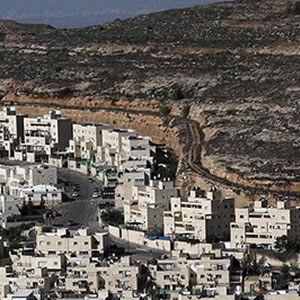 A settler or colonist is a person who establishes or joins a permanent presence that is separate to existing communities. The entity that settlers
establish is a settlement. A settler is called a pioneer if they are among the first settling at a place that is new to the settler community. While settlers can act independently, they may receive support from the government of their nation or its colonial empire, or from a non-governmental organization, as part of a larger campaign.
The process of settling land can be, and has often been, controversial; while human migration is itself a normal phenomenon, it has not been uncommon throughout human history for settlers to have arrived in already-inhabited lands without the intention of living alongside the native population. In these cases, the conflict that arises between the settlers and the natives, or Indigenous peoples, may result in warfare and possibly the dispossession of the latter within the contested territory desired, usually violently.
The lifestyle of a native population is often disturbed or destroyed if they come into contact with a settler population, particularly when the settler population seeks to mostly replace them. Settlers may also engender a change in culture, or alteration of the existing culture, among the natives.
Frequently Asked Questions
1.What is a Prophet?
A prophet is an individual chosen by God to guide humanity with spiritual and moral direction.
2.Were all Prophets Muslim?
Yes, because they all consistently preached the worship of one absolute God and prohibited the worship of false deities.
3.How many prophets were their?
While exact numbers vary with estimates ranging from 124,000 to over a million. They were systematically sent to every land, nation, and period.
4.What message have the prophets brought?
All prophets delivered a consistent, unified message focusing on submitting to the Creator, providing instructions for daily life, and finding peace through divine guidance.
5.Why did God send so many prophets?
Thousands were sent to constantly redirect humanity to the worship of the one true Creator, preventing the worship of created entities, such as people, nature, or material objects.
6.Do Muslims believe in Prophets?
A Muslim is strictly required to believe in, honour, and respect each and every prophet sent by God without exception.
7.Did a prophet ever commit a sin?
Islam teaches all prophets were of high moral character and did not succumb to the sins their people committed. Although prophets were humans and capable of human errors of judgment, but such errors does not diminish their superiority or the respect Muslims are obliged to have for them.
8.Why choose the name MuslimProphets.com?
The name reflects that all prophets taught monotheism and the worship of one God, making them all "in-essence" considered Muslim.
9.If all prophets taught Islam, what was so different about Muhammad?
Over time, previous teachings had been altered or lost, so Muhammad was sent as the final prophet to restore, update, and unify the foundational principles of faith into a complete religion.
10.What is a prophet or messenger of God?
A prophet or messenger of God is a human being to whom God gives His guidance and whom He charges with the task of conveying that guidance to the people, so that they may do good and avoid evil.
11.In which countries of the world did Prophets arise?
God did not limit His guidance to a single geographic territory or chosen group of people.Prophets were systematically sent to every single nation across the earth throughout various stages of human history.
12.Which prophets do Muslims have to believe in?
Muslims are strictly required to maintain belief in every single prophet and messenger sent by God. This belief must be completely equal, meaning no distinctions or hierarchies of validity are made between them. This universal recognition applies regardless of the specific country or historical era in which they appeared.
13.What are the names of some prophets?
The Quran mentions multiple prophets by name, including Biblical figures such as Noah, Abraham, Moses, David, and Jesus, alongside non-Biblical prophets like Luqman, Eber, and Ezekiel.
14.What did the Prophets teach?
All prophets gave the same basic teaching: that man should worship God, and God alone, and do good to his fellow beings. Ofcourse, the details of the teachings differed according to the nation and the time in which a Prophet appeared. In the Quran, the teachings of all Prophets are called Islam, and the Prophets and their true followers are labelled Muslims. This refers to the fact that the fundamental teachings given by all of them were the same - submission to God.
15.Since Muslims believe in all the Prophets equally, why is Muhammad special?
All Prophets were equally from God, and equally true, but the scope of their missions varied. The messengers before Muhammad were each given teachings limited to their respective nations, because in those times a nation did not have much to do with other nations.
Furthermore, the teachings of each Prophet applied for a limited period of time only, after which God would raise another Prophet to revise some of the teachings for the new circumstances.
The time came to unite all the nations upon a single religion so that mankind may live in peace as one nation. Muhammad, to whom God gave teachings for the whole world for all time to come fulfilled this purpose.
16.Could there be a Prophet after Muhammad?
No, Muhammad is explicitly defined as the final prophet from God, and the divine teachings given to him are intended to permanently unite the entire world in one brotherhood.
17.How are Noah, Abraham, Moses and Jesus considered Muslim Prophets, when Islam came 600-years after Jesus?
A Muslim is essentially defined as anyone who believes in and submits to one God; because all of these historical prophets consistently preached the message of pure Monotheism and called people to worship the Creator alone, they are considered to be Muslim in-essence regarding their foundational theological beliefs.
18.How many prophets did God send?
While exact figures vary across tracking traditions, historical records note that God sent thousands of guides to humanity, with traditional sources citing an estimate of 124,000 prophets.
19.Were any prophets of Arab background?
While God has sent thousands of prophets throughout human history whose names and specific identities remain entirely unknown to us today, historical and scriptural records explicitly identify four specific prophets who came from an Arab background, namely Hud, Saleh, Shuaib, and the final prophet, Muhammad.
20.Did people believe Jesus was a Prophet?
Yes, contemporary crowds and close followers frequently identified Jesus as a prophet mighty in word and deed. This status is explicitly preserved in the New Testament gospels, including verses like Matthew 21:11 and Luke 24:19.
21.How did the prophets Moses, Jesus, Abraham etc. call out to God?
Historical and linguistic evidence shows that these prophets spoke ancient Semitic languages, meaning they addressed God using linguistic cognates tightly linked to the Arabic word Allah. Abraham and Moses historically used the Hebrew names El or Elohim, while Jesus addressed God in Aramaic using Elah or Alaha, all of which share identical ancient roots across the Semitic language family tree.
Videos on Settler (22)
 4:14
4:14
317
1517211673
1786569941
Genocide of the Australian Blacks (Aborigines) by British Settlers
000254
1
 3:18
3:18
309
1770947308
1787044618
Israeli Settlers attack Palestinian school girls in the West Bank | TRT World
000198
2
 3:22
3:22
237
1771420793
1786552874
Israeli police 'look away' as Settlers murder Palestinians | TRT World
000202
3
 16:43
16:43
203
1771958550
1787037683
'I gave you Life, you chose Death', Israeli settler claims | The Guardian AGL 3/3
001003
4
 19:38
19:38
247
1771958537
1786567233
Extremist Israeli settlers make living in Gaza impossible | The Guardian ISP 1/2
001178
5
 3:26
3:26
300
1772064188
1787033443
Israeli Settlers attack Italian Activists for protecting West Bank Palestinians | Middle East Eye
000206
6
 18:40
18:40
243
1772207947
1786913601
Israeli Settlers destroy what the Palestinians build | The Guardian ISP 2/2
001120
7
 2:18
2:18
305
1774634578
1787040292
IDF-backed Israeli settlers kill 3 Palestinians | TRT World
000138
8
 2:40
2:40
117
1778779118
1787045712
Israeli Settlers force son to excavate his dead, buried father's grave | TRT World
000160
9
 9:31
9:31
125
1778805337
1787102977
Greater Israel: How a settler fantasy went mainstream | Al-Jazeera
000571
10

110 views
2:41
110
1782166471
1786543341
Illegal Israeli settlers spread fear amongst Palestinian neighbors, UN inquiry finds | TRT World
000161
11
 17:49
17:49
85
1782176483
1786535109
Israeli Settlers in West Bank talk candidly of their takeover | RocaNews
001069
12
 2:53
2:53
125
1783199940
1787039429
Palestinians rally to protect Prophet Solomon pools from illegal settlers | TRT World
000173
13

212 views
5:17
212
1783208213
1787028310
Christian population in East Jerusalem reduced to 2% from 10% due to Israeli settler violence | TRT World
000317
14
 2:51
2:51
297
1783206971
1786914211
Armenian Christians in East Jerusalem targeted by Israeli settlers | TRT World
000171
15
 13:47
13:47
181
1783208064
1786758645
Israeli Settlers attack Palestinian Christians in West Bank and Gaza | Tucker Carlson
000827
16
 6:47
6:47
140
1783207943
1786841842
'Leave or We will kill you': Extremist Israeli Settlers warn Palestinians in Old City, Jerusalem | ABC News
000407
17
 9:10
9:10
232
1783323634
1786750712
Israeli Settlers chant 'DEATH TO ARABS' on Jerusalem Day | Wally Rashid
000550
18
 20:20
20:20
126
1784250524
1787052611
Sayfollah, a Palestinian American KILLED by Israeli Settlers | Young Turks
001220
19
 2:37
2:37
134
1785196541
1787074434
Israeli Settlers from Illegal Settlements violate Settled Palestinians in Nablus Village, Palestine | TRT World
000157
20
 17:02
17:02
23
1786314216
1787066542
'Tech Zionist' Settlers Expand into Muslim Countries | CJ Werleman Show
001022
21
 2:38
2:38
9
1786983482
1787097306
Mohammad Mtour, shot and paralyzed by Israeli Settlers for trying to live a normal life | TRT World
000158
22
EXPLORE TOPICS :
PALESTINE |
136
GAZA |
143
PALESTINIAN |
197
WEST BANK |
14
PROPHET |
397
MESSENGER |
8
TRT WORLD |
92
SETTLER |
26
SOLOMON
SOLOMON