402 views
·
Last viewed: 2 days ago
Uploaded: 30 Oct 2024 (2 years ago) · Shared: 23 Sep 2025
enlightenment.'
Read the book for FREE at:
worldhistorybook.com
Or buy it on Amazon:
https://www.amazon.com/Search-Sublime-relentless-scientific-enlightenment/dp/B0D28FVM8T
Kind regards,
Stephan P. Dinkgreve
MSc Theoretical Physics
Amsterdam
Correction:
15:18 And it requires us to pick the earliest date for Zarathustra's life, namely the 15th century BC. In the 14th century, the Egyptian pharaoh Akhenaten also established a short-lived monotheistic faith based on the sole worship of Aten, the sun disk.
Uploaded: 30 Oct 2024 (2 years ago) · Shared: 23 Sep 2025
Video Description (from Youtube)
This is a lecture about a chapter of my world history book called: 'In Search of the Sublime - A world history of humanity's relentless pursuit of scientific truth, moral excellence, andenlightenment.'
Read the book for FREE at:
worldhistorybook.com
Or buy it on Amazon:
https://www.amazon.com/Search-Sublime-relentless-scientific-enlightenment/dp/B0D28FVM8T
Kind regards,
Stephan P. Dinkgreve
MSc Theoretical Physics
Amsterdam
Correction:
15:18 And it requires us to pick the earliest date for Zarathustra's life, namely the 15th century BC. In the 14th century, the Egyptian pharaoh Akhenaten also established a short-lived monotheistic faith based on the sole worship of Aten, the sun disk.
Search Results on 'Zoroaster, the first Monotheist Prophet from 1500 BC | Stephans History'
SCROLL TO :TOPICS | 4NEWS | 8ARTICLES | 3FAQ | 3VIDEO | 238LINKS | 2TOPICS #MONOTHEISM MONOTHEIST PROPHET ZOROASTRIAN ZOROASTER STEPHANS HISTORY
Topics include Monotheism, Monotheist, Prophet, Zoroastrian, Zoroaster, Stephans History (4)
What is Monotheism? Monotheism has been defined as the belief in the existence of only one god. A god that created the world, is all-powerful and intervenes in the world. A broader definition of monotheism is the belief in one god. A distinction may be made between exclusive monotheism, and both inclusive monotheism
and pluriform (panentheistic) monotheism which, while recognising various distinct gods, postulate some underlying unity. |
What is a Prophet? In religion, a prophet is an individual who is regarded as being in contact with a divine being and is said to speak on that entity's behalf. They claim to be serving as an intermediary with humanity by delivering messages or teachings from the supernatural source to other people. The message that
the prophet conveys is called a prophecy. In Islam, all prophetic messengers are prophets (such as Adam, Noah, Abraham, Moses, Jesus, and Muhammad) though not all prophets are prophetic messengers. The primary distinction is that a prophet is required to demonstrate God's law through his actions, character, and behavior without necessarily calling people to follow him, while a prophetic messenger is required to pronounce God's law (i.e. revelation) and call his people to submit and follow him. |
What is Zoroastrian? Zoroastrianism is an Iranian religion and one of the world's oldest organized faiths, based on the teachings of the Iranian-speaking prophet Zoroaster. It has a dualistic cosmology of good and evil within the framework of a monotheistic ontology and an eschatology which predicts the ultimate
conquest of evil by good. Zoroastrianism exalts an uncreated and benevolent deity of wisdom known as Ahura Mazda (Lord of Wisdom) as its supreme being. Historically, the unique features of Zoroastrianism, such as its monotheism, belief in free will and judgement after death, conception of heaven, hell, angels, and demons, among other concepts, may have influenced other religious and philosophical systems, including the Abrahamic religions. |
Who are Stephans History? Stephan's History of the World. Reclaim the foundational thoughts and deeds of the great ancestors of humanity.
|
News on Monotheism, Monotheist, Prophet, Zoroastrian, Zoroaster, Stephans History (8)
Articles on Monotheism, Monotheist, Prophet, Zoroastrian, Zoroaster, Stephans History (3)
Muhammad in Bible: Prophet like unto Moses - Deuteronomy 18:18

34,011 views
|
Jesus the Jewish Prophet

22,550 views
|
Monotheism vs Polytheism

19,788 views
|
FAQ on Monotheism, Monotheist, Prophet, Zoroastrian, Zoroaster, Stephans History (3)
| 1.What is a Prophet? |
| 2.Could there be a Prophet after Muhammad? |
| 3.Did people believe Jesus was a Prophet? |
Youtube Videos on Monotheism, Monotheist, Prophet, Zoroastrian, Zoroaster, Stephans History (238)

 Life of

 Story of
 Story of
  Jesus A
  Lessons from the Life of
  Muhammad: A
  Jesus: A
 Noah [Longest Serving
  Was Muhammad a true
  The Trials of
  My turning point was when I discovered the Kabah was built by
 Jesus, Son of God or
  Prayers of
  Is Jesus a
  If Mohammad was the last
  Story of
  Story of
  Story of
  Story of
  Story of
  Story of
  Story of
  Story of
  Story of
  Story of
  Story of
  Story of
  Story of
  Story of
 Who is the
 Jesus:
  Story of
  Story of
  Story of
 Is David and Muhammad a
  Muhammad: Fake or True
  Evidence Muhammad is a
  Evidence Muhammad is a
  Evidence Muhammad is a
  Evidence Muhammad is a
  Evidence Muhammad is a
  Did Haile Selassie claim to be a
  You're not a
  Quran tells me Jesus was a
  Pray like
 In John 14:16, Jesus said no
  After Jesus, the Early Christians followed James. They Hated Apostle Paul the Liar, Heretic and False
  Show me Trinity in the Bible. Why show me
  Show me Trinity in the Bible. Why show me
  You believe Man landed on the Moon. I believe Muhammad is a
  You believe Man landed on the Moon. I believe Muhammad is a
 It suited Muhammad to make himself the last



 Story of
  Jesus the Jew was a Unitarian.
  In Genesis 1:26, One God created Man (
 In Luke 13:33, no
  Isaiah 53 is about
  Lessons from
  Ezekiel The
  Story of
  Jewish Rabbis admit Islam is a
  In Deuteronomy 18:18, a '













 Was Imam Ali of higher status than
  NT Gospels ordered so baby Jesus the Jewish
  Jesus was a Unitary
  Jesus was a Jew on Unitarian
  Muhammad met 5-points qualifying as a
  Muhammad met 5-points qualifying as a
  Who made Guru Nanak a
  Pope Francis is a Catholic
 Life of
  The Call of
  The Oneness of God ('
 In Luke 24:19, Jesus of Nazareth is called a man who was a 'Jewish
  Trinity is 'veiled' Tri-theism (Three Gods). Combining of Jewish
 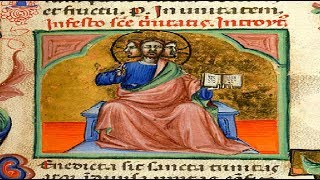 James Dunn: Jesus is not Yahweh. Jesus is a
 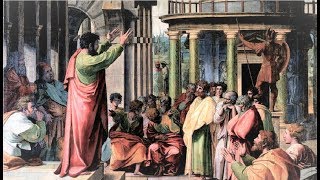 Jesus was a Unitarian
 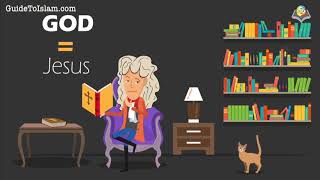 Newton's Law: Isaac Newton, a follower of Arius was a Christian
 Is Muhammad a true

 Jewish Tanakh has Muhammad as a
  Islam raises all Prophets to Jesus' status AND lowers the Christian Jesus-God to Jewish-
 The Story of
  The Story of
  The Story of
  The Story of
  The Story of
  The Story of
  The Story of
  The Story of
  The Story of
  The Story of
  The Story of
  Angel Gabrial: A
  Elijah the Gentile
  Muhammad: A
 Adam, the First Human and First
 Thamud: The People of

 Madyan: The People of

 Speciality of





 Christian Trinity is based on 'Unclear, Ambiguous' verses. Why reject the simple,
  Who is Muhammad,
  Proof of Muhammad as the Final
  Buddha a
  All previous Scriptures (Torah, Psalms, Injeel, Quran) preached
 Jesus was a
  Historical Understanding of God and gods in
  Jesus was a
  How was
  Was Buddha a Muslim
  Proof Muhammad was a true
  The Case for Ancient
  Muhammad The
 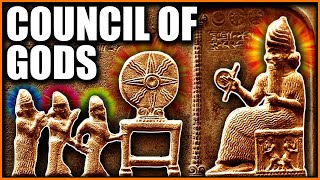 Polytheism to Yahweh-Only
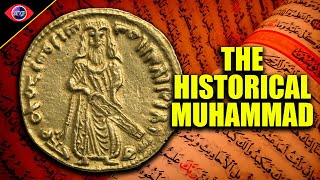 Muhammad & The Empires of Faith: The Making of The
  Elijah the
 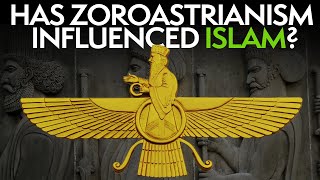 Did Arabs copy into Islam
 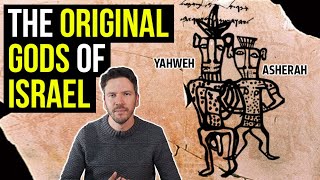 The Gods of Israel (El, Baal, Yahweh, Asherah) |
 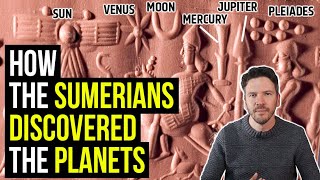 Ancient Mesopotamia studied Planets to Understand the Will of The Gods |
 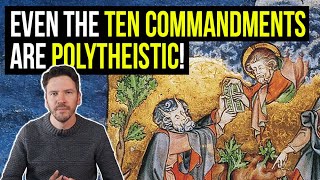 The Evolution of
  Mesopotamia created all 12 Zodiac Astrology Constellations |
  Comparing Flood Stories from Israel, Babylon, India, Greece and Aztecs |
  The Epic of Gilgamesh and the oldest Flood story |
 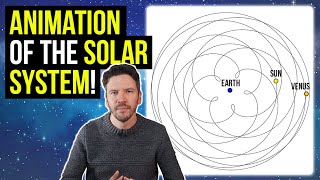 Ptolemy's Geocentric Model of Solar System Animation in 3-Minutes |
 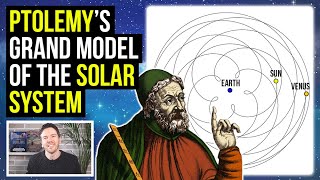 Ptolemy's Almagest - How the Sun, Moon and Planets move in the Solar System |
  Biblical differences in Creation Story and Noah's Flood |
 Life of
  The
The 
 Abraham, the Grandfather of
  Moses, the Model
 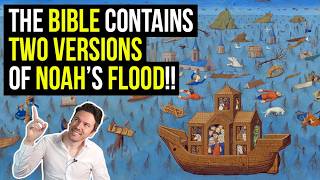 Different Versions of Noah's Flood story in Bible |
  Elijah - The
  Pre-Islam Arabian Evidences point to
  Elijah the
  Israel seize land around
  Malachi, the Last
  Palestinians rally to protect
  Every Abrahamic
  Why is Jesus a
  Was Samuel just a
  Who was Samuel in the
  Did Jesus Teach He is God or
  Zechariah - The Minor
  Zechariah - The
  Elisha - A
  Elisha - The
  Micaiah - The
  Virgin Births of Plato, Dionysus, Romeus, Augustus,
  Elisha - The
  Elisha - How God defended His
  Isaiah - The
  Deborah, Barak & Jael | The Fearless Female
  Jonah and The Whale - The
  Hosea - The
 Links on Monotheism, Monotheist, Prophet, Zoroastrian, Zoroaster, Stephans History (2)
| 1.Prophet Lot |
| 2.Story of Prophet Lot |
DISCLAIMER
All videos are shared for educational and information purposes only. All videos are hosted and viewable on Youtube servers. Video titles are generated using the original video title; overall content theme including actual dialogue and speech (Transcript); and A.I-based recommendations with a focus on SEO, keyword density, and internal search functions. The video title does not represent the views held by the Youtube video uploader, or any individual, organisation or business.
If you spot any mistake, omission or give feedback, kindly contact us with details
All videos are shared for educational and information purposes only. All videos are hosted and viewable on Youtube servers. Video titles are generated using the original video title; overall content theme including actual dialogue and speech (Transcript); and A.I-based recommendations with a focus on SEO, keyword density, and internal search functions. The video title does not represent the views held by the Youtube video uploader, or any individual, organisation or business.
If you spot any mistake, omission or give feedback, kindly contact us with details