Video Description:
In this insightful video, Robert Price delves into the fascinating parallels between the stories of pagan dying and rising gods and the narrative of Prophet Jesus . This exploration offers a deeper understanding of the shared themes across different religious traditions, including Christianity, Judaism, and Islam. By examining these historical and mythological connections, viewers can gain a richer perspective on the early history and development of religious narratives. Whether you are a follower of Islam, Christianity, or Judaism, this video provides valuable insights that can enhance your spiritual journey and deepen your faith. Join Robert Price as he uncovers the intricate links between ancient myths and the teachings found in the Bible and the Quran.
Explore More
 Who is Robert Price?
Robert McNair Price (born July 7, 1954) is an American theologian and writer, known for arguing against the existence of a historical Jesus (the Christ myth theory). He taught philosophy and religion at the Johnnie Colemon Theological Seminary. He is
a professor of biblical criticism at the Center for Inquiry Institute, and the author of a number of books on theology and the historicity of Jesus. Price is a fellow of the Jesus Seminar, a group of 150 writers and scholars who study the historicity of Jesus, the organizer of a Web community for those interested in the history of Christianity, and sits on the advisory board of the Secular Student Alliance. He is a religious skeptic, especially of orthodox Christian beliefs, occasionally describing himself as a Christian atheist.
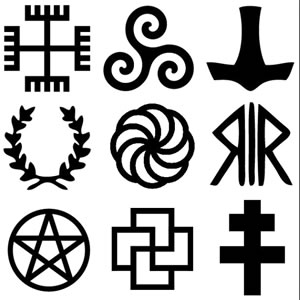 What is Pagan?
Paganism is a term first used in the fourth century by early Christians. It was applied on populations of the Roman Empire who practiced polytheism, either because they were increasingly rural and provincial relative to the Christian population or
because they were not milites Christi (soldiers of Christ). Alternate terms in Christian texts for the same group were hellene, gentile, and heathen. Pagan and paganism were pejorative terms for the same polytheistic group, implying its inferiority. Paganism has broadly connoted the "religion of the peasantry", and for much of its history was a derogatory term. Both during and after the Middle Ages, pagan was a pejorative term that was applied to any non-Abrahamic or unfamiliar religion, and the term presumed a belief in false god(s).
 Who is GOD?
In monotheism and henotheism, God is conceived as the Supreme Being and principal object of faith. The concept of God as described by theologians commonly includes the attributes of omniscience (infinite knowledge), omnipotence (unlimited power)
omnipresence (present everywhere), omnibenevolence (perfect goodness), divine simplicity, and eternal and necessary existence.
In theism, God is the creator and sustainer of the universe
In deism, God is the creator, but not the sustainer, of the universe
Monotheism is the belief in the existence of one God or in the oneness of God
In pantheism, God is the universe itself
In atheism, God is purported not to exist, while deemed unknown or unknowable within the context of agnosticism.
What is Sin?In Abrahamic contexts, sin is the act of violating God's will. Sin can also be viewed as anything that violates the ideal relationship between an individual and God; or as any diversion from the ideal order for human living. To sin has been defined
as "to miss the mark".
Sins fall in a spectrum from minor errors to deadly misdeeds. Catholicism regards the least corrupt sins as venial sins which are part of human living and carry immediate consequences on earth, and, if unrepented for, more painful purgation, assuming the person is destined to heaven, as it is written in the formation letter "Purgatory", "most of the early Fathers of the Church speak of a cleansing fire, though we cannot tell whether this means actual or spiritual fire."
Conversely, sins of great evil are mortal sins which bring the consequence of hell if they are not addressed either through an act of perfect contrition or going to confession about them.