26:02
888 views
·
Last viewed: 8 hrs ago
Uploaded: 13 Oct 2019 (7 years ago) · Shared: 19 Oct 2019
Video Description (from Youtube)
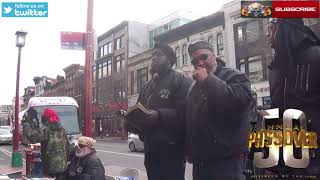
Today we are going over 5 sources that don't prove that Jesus existed in history. The guy in the video seems to think that these prove Jesus existed historically but we will soon find that he iswrong. First, we have Tacitus, which is one of the banes of my existence since I debated InspiringPhilosophy. I didn't lose that debate btw because I even said at best it only shows that Christians lived in Rome in 64 AD. That is the best that it can do. This guy also brings up Lucian, Suetonius, Pliny the Younger, and Thallus. None of these historical figures mention Jesus. They only mention common Christian beliefs of the second century. They could have cited sources that date to the first century and were actually eyewitnesses if there were any, but they don't do that. They only reference information that was common knowledge.
For more in-depth information: https://chrest.us
Original Video: https://www.youtube.com/watch?v=vQKxoBpV2NE
Subscribe to this channel: http://SubToGE.com
Join the Skeptic Mafia: http://JoinSkepticMafia.com
Discord Server: http://bit.ly/JoinGodlessDiscord
Intro by 'Gonna Go For it': https://goo.gl/1Ay1Q3
DISCLAIMER
All videos are shared for educational and information purposes only. All videos are hosted and viewable on Youtube servers. Video titles are generated using the original video title; overall content theme including actual dialogue and speech (Transcript); and A.I-based recommendations with a focus on SEO, keyword density, and internal search functions. The video title does not represent the views held by the Youtube video uploader, or any individual, organisation or business.
If you spot any mistake, omission or give feedback, kindly Contact Us with details
EXPLORE TOPICS :
GODLESS ENGINEER |
15
TACITUS |
4
PLINY |
4
LUCIAN |
4
THALLUS |
4
SUETONIUS |
3
GOD |
0
 JESUS
JESUS
JESUS
Search Results on 'Tacitus (56-120 AD), Suetonius (69-126), Pliny (61-113), Lucian (120-192) & Thallus do NOT prove an Historical Jesus ever Existed in 33 AD - Godless Engineer'
SCROLL TO:TOPICS | 6NEWS | 0ARTICLES | 0FAQ | 0VIDEO | 21LINKS | 0Topics include Godless Engineer, Tacitus, Pliny, Lucian, Thallus, Suetonius (6)
Who are Godless Engineer?
|
Who was Tacitus?
Gaius Cornelius Tacitus (56-120 AD), known as 'Tacitus', was a senator and a historian of the Roman Empire. The surviving portions of his two major works: the Annals and the Histories, examine the reigns of the emperors Tiberius, Claudius, Nero, and those who reigned in the Year of the Four
Emperors (69 AD). These two works span the history of the Roman Empire from the death of Augustus, in 14 AD, to the years of the First Jewish-Roman War, in 70 AD. <br><br> Tacitus is considered to be one of the greatest Roman historians. |
Who was Pliny?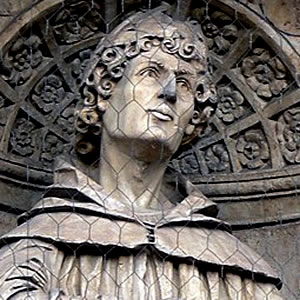 Pliny the Elder (23-79 AD) was a Roman author. Also, he was a naturalist and natural philosopher, a naval and army commander of the early Roman Empire, and friend of emperor Vespasian.
|
Who was Lucian?
Lucian of Samosata (125-180 AD) was a Syrian satirist and rhetorician. He is best known for his characteristic tongue-in-cheek style, with which he frequently ridiculed superstition, religious practices, and belief in the paranormal. Although his native language was probably Syriac, all of his
extant works are written entirely in Ancient Greek (mostly in the Atticized dialect popular during the Second Sophistic period). |
Who was Thallus?
Thallus was an early historian who wrote in Koine Greek. He wrote a three-volume history of the Mediterranean world from before the Trojan War to the 167th Olympiad, c. 112-109 BC. Most of his work, like the vast majority of ancient literature, has been lost, although some of his writings were
quoted by Sextus Julius Africanus in his History of the World.<br><br> The works are considered important by some Christians because they believe them to confirm the historicity of Jesus and provide non-Christian validation of the Gospel accounts: a reference to a historical eclipse, attributed to Thallus, has been taken as a mention of the darkness described in the Synoptic gospels account of the death of Jesus, although an eclipse could not have taken place during Passover when this took place. A common view in modern scholarship is that the Crucifixion darkness is a literary creation rather than a historical event. |
Who was Suetonius?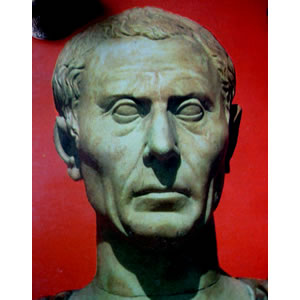 Gaius Suetonius Tranquillus, commonly known as Suetonius (69-122 AD). Suetonius was a Roman historian belonging to the equestrian order who wrote during the early Imperial era of the Roman Empire. His most important surviving work is a set of biographies of 12 successive Roman rulers, from Julius
Caesar to Domitian, entitled De Vita Caesarum. He recorded the earliest accounts of Julius Caesar's epileptic seizures. Other works by Suetonius concern the daily life of Rome, politics, oratory, and the lives of famous writers, including poets, historians, and grammarians. A few of these books have partially survived, but many have been lost. |
Youtube Videos on Godless Engineer, Tacitus, Pliny, Lucian, Thallus, Suetonius (21)
|
545 views
7:10
|
|
380 views
9:29
|
|
789 views
21:47
|
|
376 views
23:55
|
|
360 views
13:11
|
|
407 views
14:28
|
|
251 views
15:27
|
|
656 views
17:39
|
|
399 views
28:11
|
|
1189 views
2:38
|
|
1034 views
8:23
|
|
1042 views
23:21
|
|
1130 views
11:01
|
|
541 views
4:40
|
|
489 views
4:50
|
|
855 views
2:40
|
|
452 views
1:53
|
|
888 views
26:02
|
|
624 views
26:39
|
|
467 views
4:29
|
|
220 views
14:10
|
 Mark is the most reliable Gospel. Matthew, Luke and John are later 'corrections' of Mark -
  I am a Jesus Mythicist due to: Philo of Alexandria; Prophecies; and Bible Parallels -
  Jesus' Resurrection: Deny the Historical Evidence and trust Apostle Paul - Tony Costa (
 Jesus' Resurrection: Where is the Evidence? - Gene Kim (
 Jesus' Birth Narrative contradictions in the Bible -
  Josephus (37-100 AD) proves Jesus existed? - Brittany Valadez (
 Homosexuality, Sodom-Gomorrah and Lot in the Bible |
  Sumerian goddess, Inanna similarities with Jesus -
  In 1807, 'The Slave Bible' published by Christian Slave masters was used to control obedient Black Slaves -
 Christianity is Progressing. Is Homosexuality still wrong? - Ductin (
 Secular Christian history is Unreliable. Josephus,


 The Talmud (400 AD), Mara Bar-Serapion (73), Celsus (175) & Josephus (37-100) do NOT prove an Historical Jesus ever Existed in 33 AD -
 5 Reasons why Jesus' Good Friday is wrong -
EXPLORE TOPICS :
GODLESS ENGINEER |
15
TACITUS |
4
PLINY |
4
LUCIAN |
4
THALLUS |
4
SUETONIUS |
3
GOD |
0
JESUS
JESUS