1049 views
·
Last viewed: 2 days ago
Uploaded: 14 Jul 2017 (9 years ago) · Shared: 06 Feb 2019
fascinating!
Uploaded: 14 Jul 2017 (9 years ago) · Shared: 06 Feb 2019
Video Description (from Youtube)
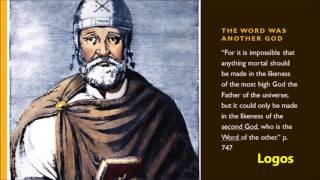
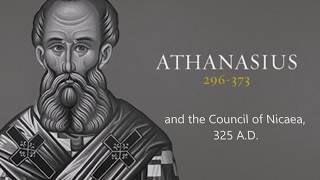
This video explains simply the origin of 'God from God, Light from Light' that is found in the Nicene Creed. How did this idea come into the Council of Nicaea? Who brought it in? The information isfascinating!
Search Results on 'Eusebius, an early Church Father loyal to Philo of Alexandria, who added the 'God From God' pagan idea to the Nicene Creed in 325 AD - approvedofGod'
SCROLL TO :TOPICS | 11NEWS | 91ARTICLES | 12FAQ | 5VIDEO | 168LINKS | 1TOPICS #CHURCH FATHER NICENE CREED APPROVEDOFGOD EUSEBIUS PHILO CHURCH
Topics include Church Father, Nicene Creed, approvedofGod, Eusebius, Philo, Church (11)
Who are Catholic Church Crimes?
|
What is Church Father?
The Church Fathers, Early Church Fathers, Christian Fathers, or Fathers of the Church are ancient and influential Christian theologians and writers. There is no definitive list. The era of these scholars who set the theological and scholarly foundations of Christianity largely ended by AD 700. In
the past, the Church Fathers were regarded as authoritative, and more restrictive definitions were used which sought to limit the list to authors treated as such. |
What is Nicene Creed?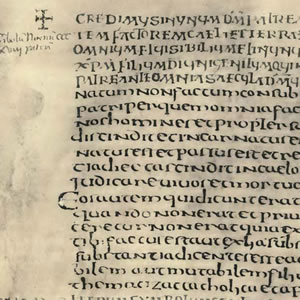 The Nicene Creed is a statement of belief widely used in Christian liturgy. It is called Nicene because it was originally adopted in the city of Nicaea (present day Iznik, Turkey) by the First Council of Nicaea in 325 CE. In 381, it was amended at the First Council of Constantinople, and the amended
form is referred to as the Nicene or the Niceno-Constantinopolitan Creed. |
What is Church Council? A Council, Church Council or Synod is a council of a church, usually convened to decide an issue of doctrine, administration or application. The word synod means "assembly" or "meeting", and it is synonymous with the Latin word concilium meaning "council". Originally, synods were meetings of
bishops, and the word is still used in that sense in Catholicism, Oriental Orthodoxy and Eastern Orthodoxy. In modern usage, the word often refers to the governing body of a particular church, whether its members are meeting or not. |
Who was Philo Alexandria?
Philo of Alexandria (20 BC - 50 AD), was a Hellenistic Jewish philosopher who lived in Alexandria, in the Roman province of Egypt. Philo used philosophical allegory to harmonize Jewish scripture, mainly the Torah, with Greek philosophy. His allegorical exegesis was important for some Christian
Church Fathers, but he had very little reception history within the Rabbinic Judaism. Philo adopted allegorical instead of literal interpretations of the Hebrew Bible. |
Who are approvedofGod?
I am here to teach all people, but especially the "body of Christ" (the Church), that the bible is sufficient for what we believe. Throughout the centuries, men have brought many doctrines into the church that have caused confusion and separation. My desire and goal is to clarify some of these
errors and bring all Christians back to the basics of the Bible. |
Who are the Church England?
The Church of England (C of E) is the established church of England. The Archbishop of Canterbury is the most senior cleric, although the monarch is the supreme governor. The Church of England is also the mother church of the international Anglican Communion. It traces its history to the Christian
church recorded as existing in the Roman province of 3rd century Britain. The governing structure of the church is based on dioceses, each presided over by a bishop. Within each diocese are local parishes. The General Synod of the Church of England is the legislative body for the church and comprises bishops, other clergy and laity. Its measures must be approved by both Houses of Parliament. |
Who was Eusebius? Eusebius of Caesarea (260-340 AD) was a historian of Christianity, exegete, and Christian polemicist. He became the bishop of Caesarea Maritima about 314 AD. Together with Pamphilus, he was a scholar of the Biblical canon and is regarded as an extremely learned Christian of his time. During the
Council of Antiochia (325) he was excommunicated for subscribing to the heresy of Arius (Arianism), and thus withdrawn during the First Council of Nicaea where he accepted that the Homoousion referred to the Logos. Never recognized as a saint, he became counselor of Constantine the Great, and with the bishop of Nicomedia he continued to polemicize against Saint Athanasius of Alexandria, Church Fathers, since he was condemned in the First Council of Tyre in 335. |
Who was Philo? Philo of Alexandria (20 BC-50 AD) was a Hellenistic Jewish philosopher who lived in Alexandria, in the Roman province of Egypt. Philo used philosophical allegory to harmonize Jewish scripture, mainly the Torah, with Greek philosophy. His method followed the practices of both Jewish exegesis and
Stoic philosophy. His allegorical exegesis was important for some Christian Church Fathers, but he had very little reception history within the Rabbinic Judaism. He adopted allegorical instead of literal interpretations of the Hebrew Bible. Some scholars hold that his concept of the Logos as God's creative principle influenced early Christology. |
Who are Northlake Church?
Northlake strives to be a Community of Believers Committed to Growing in Christ and Caring for Others.
The mission of Northlake Baptist Church is to exalt the Savior, evangelize the sinner, equip the saints, and encourage the soul.
|
What is the Church? A church is a building used for Christian worship services and Christian activities. The earliest identified Christian church is a house church founded between 233 AD and 256 AD. The word church also describes a body or assembly of Christian believers, while "the Church" refers to the worldwide
Christian religious community. |
News on Church Father, Nicene Creed, approvedofGod, Eusebius, Philo, Church (91)
Articles on Church Father, Nicene Creed, approvedofGod, Eusebius, Philo, Church (12)
| Nicene Creed - Council of Nicaea 325 AD
23,263 views
|
Church Councils

21,053 views
|
| Church Fathers on Jesus Divinity
21,840 views
|
| Catholic Church Inventions
2,036 views
|
Nicene Creed - Foundation of Christianity

19,491 views
|
Bible OT Canons - Church Fathers, Councils & Apocrypha

19,850 views
|
| Bible NT Canons - Church Fathers, Councils & Apocrypha
20,046 views
|
| Timeline of Church Councils
22,642 views
|
Church Fathers - Quotes from 18 Men of God
22,687 views
|
Christian: 32 Church Denominations

18,171 views
|
| Church Fathers
76 views
|
| Church Councils
107 views
|
FAQ on Church Father, Nicene Creed, approvedofGod, Eusebius, Philo, Church (5)
Youtube Videos on Church Father, Nicene Creed, approvedofGod, Eusebius, Philo, Church (168)
 In Psalm 22:16, how did the
  How did the
  Jesus' birthplace (
 How the Early Christian
  Catholic
  Catholic
  Catholic
  In 1 John 5:8, the
  Spanish Inquisition - How the Catholic
  The Roman Catholic
  Irenaeus,
  False
False  1 John 5:7 added the Trinity to the Bible. Why did the
  Why the
  Early
Early  Crusades: Roman Catholic
  Jesus' brother, James was leader of Early
  Who was
  The Catholic
  Christianity is over and
  Constantine, Mithras and Paganism of the
  Paganism in Today's Christian
  Early
Early 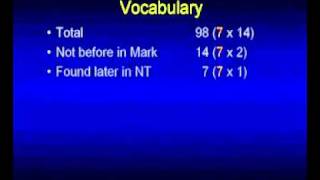 Jesus' Resurrection: Mark 16:9-20 was quoted by Early
 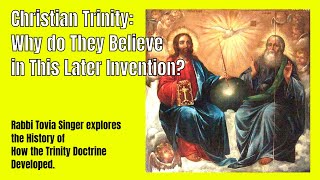 Why do Christians believe Jesus is God, when this was a lie invented by the later
  In 325 AD, Constantine imposed his vision of the Imperial
  Persecution in the Early
  Orthodox Christian
  Rome: Constantine & The Early Roman
  Creeds and
  Early
Early  Pornography ruins our Childhood. The Amish
  Pornography ruins our Childhood. The Amish
  Pornography ruins our Childhood. The Amish
  The Crucifixion of Truth by Tony Bushby (Reading) - Hidden
  Origins of Christmas: Early
  Prophet Haggai: Straight Talk to the
 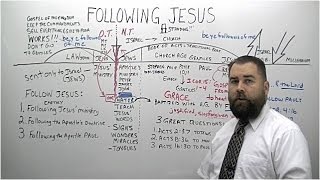 Many follow Jesus, do Works, yet will go to Hellfire. Follow the Risen Jesus, have Faith, obey the
  Secret Societies - History of the Roman Catholic
 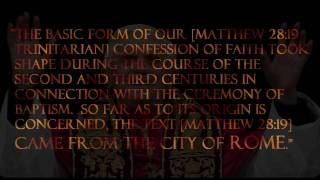 In Matthew 28:19, the Trinity text was a later insertion and corruption, after 200 AD, by the Catholic
  In Matthew 28:19, is not a Trinitarian verse. Trinity came through evolution and Early
  Russian Orthodox
  Holding The Key: Jerusalem's
  Inside The Vatican: The Catholic
 Early
Early  In 325 AD, Trinity became Official
  Christmas, 25th December was Ancient Pagan festival.
  The Christian
  In 601 AD, Pope Gregory I adopted Pagan customs and festivals into Christian
  Apostle Paul disrespects Jesus' disciples, Jesus' family and Jerusalem
  Paul was 'Apostle to Gentiles' and claimed superiority over Jewish-Christians in Jerusalem
  In the Early
 Fullness of truth is in the Catholic Apostolic
 After Nicaea 325 AD, Constantine had
  Early
Early  After 100 years,
  Papias (d. 163 AD), a Proto-orthodox
  21 Ecumenical
  In 382 AD, Council of Rome was earliest
 Apostolic Fathers (75-200 AD) put context to the Early
 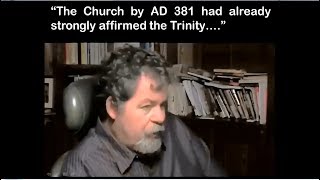 By 381 AD, the
  Greek: Iesous is not a translation of Hebrew: Yeshua, claimed Josephus,
  It's Time to Quit the Catholic
 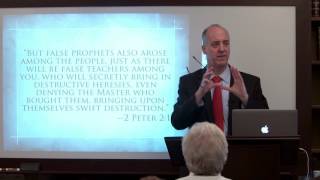 Heresy in the Early
  Prove the
  Which Early
  I am a Jesus Mythicist due to:
  History of
 Pauline Christianity came to dominate the early
  Trinity took 400 years to develop with
 History of The Roman Catholic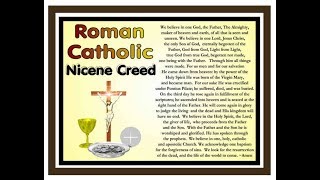
 Greek Apostate Fathers: Clement, Ignatius, Justin Martyr, Shepherd of Hermas & Polycarp founded the Catholic 'cult' of Rome -
 Trinity (Triune Gods) are found in Gnostic and Kabbalah beliefs dating to Ancient Babylon -
  Early
Early  Jesus, a 'Begotten God' contradicts an Eternal, Everlasting God -
  In 180 AD, Theophilus of Antioch borrowed Greek philosophy to first define 'Trinity'; not Tertullian -
 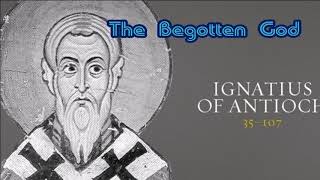 Athanasian
 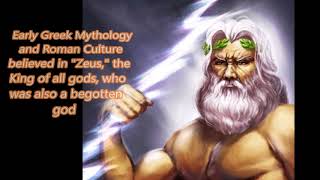 Jesus, the 'Begotten God' of the Eternal
 On John 1:18, this verse contradicts the Old Testament -
  From Proverbs 8:22,
 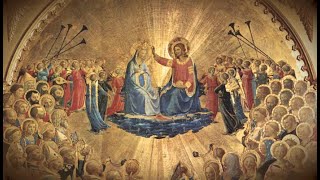 In Council of Ephesus (431 AD), Roman Catholics elevated Mary, to 'Mother of God' aka 'Queen of Heaven' -
 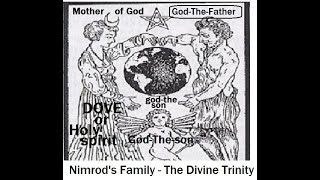 Trinity is based on the Babylonian Trinity (2700 BC) of Nimrod, Tammuz and Semiramis -
  Nobody knows what Jesus or Mary looked like -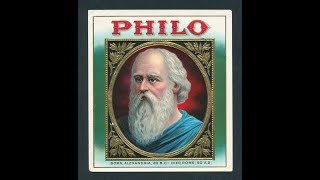
 Is Mark's Gospel based on writings of
 Absolute Equality forced the
  Jesus was a Jew, not a Trinitarian -
  God is One. He moves by Spirit. He creates through Spoken Word (Trinity is from Pagan philosophy) -
  Which
Which  Origen, an Early
 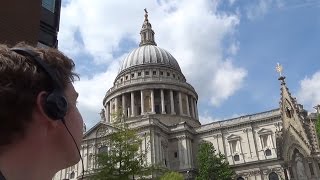 Historically, St Paul's Cathedral was not a Christian
  Book of Revelation was rejected by many early
  Christian
  Greek philosophy, John's gospel and
  In 1646, the
  Jesus is not a Trinity? Get out of my
  Catholic
  Biggest challenges facing the
  Role of Israel in the Christian
  Role of Israel in the Christian
  Homosexuality cause of conflict in Christian
  Homosexuality cause of conflict in Christian
  Ignatius' Letter to Smyrnaeans (110 AD) is earliest mention of 'Catholic' or 'Universal
  Why I left the
  Homoousios ('same substance') was a confusing and theologically Ambiguous word used by Athanasius,
  Rise of the Atheist/Godless
  Child Abuse is everywhere, not just the Catholic
 Early
Early  Thallus, quoted by Africanus, then
  Were Ignatius, Polycarp, Clement, Tertullian & Origen followers of God or the Antichrist? -
  Both Apostle Paul and
  Theophilus of Antioch (d. 183 AD) first wrote of the 'mystery' Trinity, taken from
  In 70 AD, Rome destroyed the Jerusalem
  Respect the Jewish Right to not worship a Man as God - Tovia Singer vs Jerusalem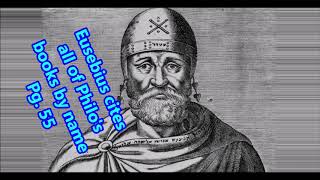
 Catholic
 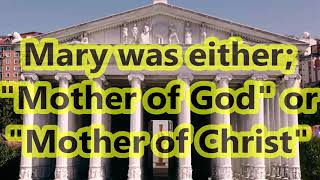 In 431 AD, Council of Ephesus voted on Goddess worship. Mary became the 'Mother of God' -
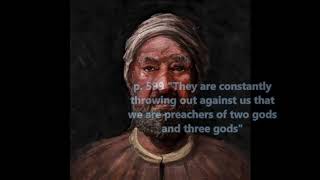 Majority rejected Tertullian's Trinity (240 AD), based on Greek philosophy -
  Dennis, Glendale, disabled, divorced at 60 years, spent savings, sleeping homeless on
 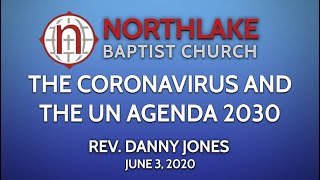 Jesus and Apostle Paul warned of the UN Agenda 2030 'Antichrist System' - Northlake
 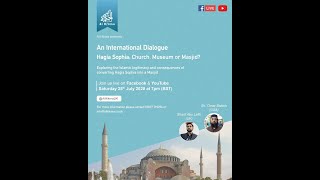 Hagia Sophia conversion into Mosque from Museum or Imperial
  California, USA: Our
 NWO and Vatican Catholic
  Why Christian
  Jesus crucifixion, burial tomb, resurrection in Golgotha, Calvary.
  Climate Change is the NWO Religion of Urban Atheists | Northlake
  Let Women keep Silent in the
  Tour of First
  Passion City
  Israeli Zionists demand Christians and Catholic
  Jesus Never Claimed to Be God. The
  Fear of Losing My Daughter in the Israeli
  The
The  Christian
  Israel recruits Christian
  Hellfire does not exist in Christianity. Did your
  Israel blocks Catholic Christians from Holy Sepulchre
 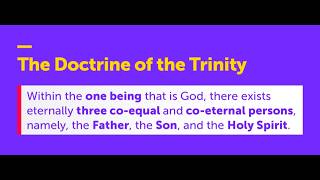 Early Christians rejected the Trinity Doctrine |
  Black Man told to act like White Jesus. Forgive everyone except his Own People | Umar Johnson vs
  Emperor Constantine and Augustine influence over the Early
 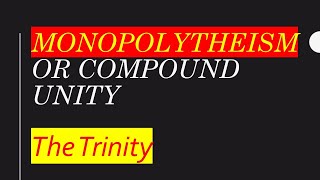 Christian Trinity is Mono-Polytheism adopted from Greek Philosophy |
  Christian
  PRIDE LAND 2026, 4-day 'largest ever' LGBTQ festival at Dead Sea, Israel | Rock Harbor
  Christian
  Tour of Ephesus, the City where Apostle Paul established a
  Israel Attacks Zawtar's
 Links on Church Father, Nicene Creed, approvedofGod, Eusebius, Philo, Church (1)
| 1.The Church at Antioch (Acts 11:19-30) |
DISCLAIMER
All videos are shared for educational and information purposes only. All videos are hosted and viewable on Youtube servers. Video titles are generated using the original video title; overall content theme including actual dialogue and speech (Transcript); and A.I-based recommendations with a focus on SEO, keyword density, and internal search functions. The video title does not represent the views held by the Youtube video uploader, or any individual, organisation or business.
If you spot any mistake, omission or give feedback, kindly contact us with details
All videos are shared for educational and information purposes only. All videos are hosted and viewable on Youtube servers. Video titles are generated using the original video title; overall content theme including actual dialogue and speech (Transcript); and A.I-based recommendations with a focus on SEO, keyword density, and internal search functions. The video title does not represent the views held by the Youtube video uploader, or any individual, organisation or business.
If you spot any mistake, omission or give feedback, kindly contact us with details
![Video: Noah [Longest Serving Prophet]](https://img.youtube.com/vi/L_nRLj6Hzls/mqdefault.jpg)