Uploaded: 25 Jun 2026 (2 months ago) · Shared: 03 Jul 2026
Video Description
The discussion explores major scholarly tensions:
- Did the Gospel authors engage in myth-making or historical reporting?
- Are parallels with pagan gods like Dionysus meaningful or overstated?
- What are “undesigned coincidences,” and do they actually support reliability?
- How should we compare Christianity with traditions like Islam and its later Hadith development?
- Can historians truly separate bias from evidence when studying ancient texts?
Both guests challenge each other on how theology, psychology, and historical method shape conclusions about Jesus and the origins of Christianity.
If you’re interested in:
Biblical scholarship, historical Jesus research, mythology comparisons, or debates between skeptics and Christian apologists—this conversation goes straight into the core arguments.
👉 Inspiring Philosophy: / @inspiringphilosophy
📺 Our second channel
@mythvisionTV
============================
FIND ALL LINKS HERE 👉 https://linktr.ee/mythvision
============================
RECOMMENDED ONLINE COURSES HERE
👉👉 Checkout MVP Courses to find new and upcoming online courses:
https://mvp-courses.com/
Sign up for Dr. James Tabor’s Course, “The Quest for the Historical Paul: Apostle or Apostate?” - -
https://mythvisionpodcast.com/histori...
Sign up for Dr. Kara Cooney’s Course, “Ancient Egyptian Cosmogony and Cosmology” - -
https://mythvisionpodcast.com/egyptia...
Sign up for Dr. Robyn Faith Walsh’s Course, “The Gospel Masterclass” - -
https://mythvisionpodcast.com/gospels
Sign up for Dr. James Tabor’s Course, “Jesus and The Dead Sea Scrolls” - -
https://mythvisionpodcast.com/dss
Sign up for Dr. Robyn Faith Walsh’s Course, “Unforgettable Footprints of the Pauline Legacy” - -
https://mythvisionpodcast.com/paulsle...
Sign up for Dr. Dennis MacDonald’s Course, “Reading the Gospels with One Eye on Greek Poetry” - -
https://mythvisionpodcast.com/homeric...
Sign up for Dr. James Tabor’s Course, "Creating Jesus: Why Mark’s Gospel Was Forgotten?" - -
https://www.mythvisionpodcast.com/fir...
Sign up for Dr. Dale C. Allison Jr's Course, “The Quest for The Historical Jesus” - -
https://www.mythvisionpodcast.com/jes...
============================
GET RECOMMENDED BOOKS HERE: 👉 https://amzn.to/35FqNYf
============================
Please consider supporting MythVision's work by joining our Patreon or contributing a one-time donation:
Patreon: 👉 / mythvision
Paypal: 👉 https://www.paypal.me/dereklambert7 - - @dereklambert7
Cashapp: 👉 $rewiredaddiction
Venmo: 👉 www.venmo.com/Derek-Lambert-9 - - @Derek-Lambert-9
Facebook Stars: fb.com/stars
============================
CONTACT ME
Website: 👉 https://mythvisionpodcast.com/
Email MythVision: 👉 mythvisionpodcast@gmail.com
Facebook Page: 👉 / mythvision
Facebook Group: 👉 / thewaterboyzradio
Twitter X: 👉 https://x.com/DerekPodcast - - @DerekPodcast
TikTok: 👉 / mythvision
Instagram: 👉 / dereklambert_7
Discord: 👉 / discord
===========================
LISTEN TO THE PODCAST HERE:
🎧 Spotify: https://open.spotify.com/show/4gf3XMe...
🎧 Apple Podcast: https://podcasts.apple.com/us/podcast...
🎧 Castbox: https://castbox.fm/vh/6551369
🎧 Pocket Casts: https://pca.st/61670kid
🎧 iHeartRadio: https://iheart.com/podcast/271777389/DISCLAIMER
All videos are shared for educational and information purposes only. All videos are hosted and viewable on Youtube servers. Video titles are generated using the original video title; overall content theme including actual dialogue and speech (Transcript); and A.I-based recommendations with a focus on SEO, keyword density, and internal search functions. The video title does not represent the views held by the Youtube video uploader, or any individual, organisation or business.
If you spot any mistake, omission or give feedback, kindly Contact Us with details
Overview & Key Concepts
What is Christianity?
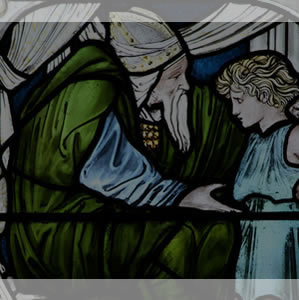 Christianity is a global religion centered on the life and teachings of Jesus Christ, who followers believe is the Son of God. It's a monotheistic faith, meaning Christians believe in one God who exists in three co-equal persons: God the Father, God the Son (Jesus Christ), and the Holy Spirit. Christianity is based on the Bible, with the Old [...]
What is Philosophy?
 Philosophy is the study of general and fundamental problems concerning matters such as existence, knowledge, values, reason, mind, and language. The term was probably coined by Pythagoras (c. 570-495 BCE). Philosophical methods include questioning, critical discussion, rational argument, and systematic presentation. Classic philosophical questions [...]
Who is MythVision?
 MythVision Podcast (MVP) brings you some of the finest information surrounding Mythology. Knowledge from a variety of people in search of a better understanding of ancient text. We discuss mythology, syncretism, astrotheology, gematria, sacred geometry, secret societies, ancient languages, history, prophecy, scholarship, conspiracies, heretical [...]
What is Pagan?
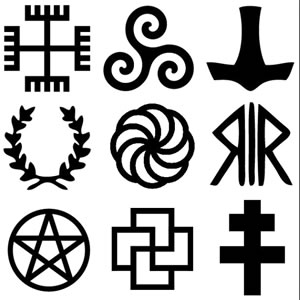 Paganism is a term first used in the fourth century by early Christians. It was applied on populations of the Roman Empire who practiced polytheism, either because they were increasingly rural and provincial relative to the Christian population or because they were not milites Christi (soldiers of Christ). Alternate terms in Christian texts for [...]
Frequently Asked Questions
1.How was Christianity made appealing to pagan idol worshippers?
In order to increase the number of Christian converts, Christian
missionaries deliberately adopted pre-existing pagan holy places,
shrines, special days and even pagan statues of God.
Pope Gregory I (540-604 CE), a famous Christian leader encouraged
accomodating pagan customs and beliefs. So if pagans worshipped a
Tree or Spirit abiding in it, rather than shun the pagan worship,
he urged priests to somehow link the worship to Jesus Christ, and
allow them to continue their Tree or pagan idol worship.
2.How was 25th December celebrated by pagans?
December 25th was the most important of Sun Festivals, the new
birth of the God, rising three days after 'dying' at the winter
solstice. Today, the celebration continues and its many features
can be witnessed. A few of these include:
* Excessive eating, drinking and merry was commin in Saturnalia
festival
* Father Christmas (Red Man) - who was originally Apollo, the
Sun-God or Thor God depicted as an elderly man, jovial or
friendly, of heavy build with a long white beard who drove a
chariot through the sky
* Fireplace - the fireplace in pagan homes was sacred to Thor
God which he would descend though the chimney
* Giving of gifts - a feature of Saturnalia festival
* Christmas card bearing the cheeky robin bird (with its chest
bearing the flame symbol)
* Snowman - who melts when the Sun comes out (is defeated by
the Sun)
* Fir-tree trinkets and decorations, symbolising life in the
'dead' parts of the world
* Holly - to deflect evil goblins in winter solstice
* Ivy - the female version of the 'male' holly
* Mistletoe - used by pagan druids in their worship
* Yule Log - sacred to the Thor God which is symbolised today
as a chocolate cake
3.How were the Triadic or 'Trinity-like' Pagan Gods presented?
The pagan Triadic dieties were shown as a single-head with 3 faces, 3 mouths but only 4 mouths. Such images were preserved across the Roman Empire.
4.Does the Christian Trinity come from pagan Triadic dieties?
Does the Christian Trinity come from pagan Triadic dieties?
Yes. The core teachings of the Trinitarian Christian churches
today do not come from Jesus.
The three-in-one Gods are pagan concepts that existed long before
Jesus arrived. Later on, Christians adopted this concept and
instantly made Christian doctrine an appealing alternative to the
pagan God worshipping masses.
5.Why are their so many similarities between Jesus Christ and all the pagan Gods?
It is highly likely the reason why the Church priests burned and destroyed the earlier records of pagan Gods was to hide the evidence for the real origins of their own Christian mythology.
6.Christianity and Hinduism revere their religious figures as gods or incarnations of God
According to Islam, all these righteous persons were mortal, human prophets of God, like Muhammad, having the same needs that every human being has. They all eventually died, as everyone must.
There are several reasons why they have come to be revered by their followers as 'gods'. One is that their words were misunderstood by the later generations, who mistook their figurative expressions in a literal sense. Another is that the details of their lives were not preserved accurately, and therefore a great many myths have grown up around them, and their works and deeds have been much exaggerated.
7.What is Christianity?
Christianity is a religion which was originally preached by Jesus, but today is based entirely on Paul's teachings.
8.How did the Early Jewish-Christians practise their religion?
The Jewish-Christians practised three daily prayers, male circumcision, ritual washing for purity, fasting, attention to clean/unclean foods, giving charity and pilgrimage to a central temple.
9.Why did Christians turn away from the original message of Jesus?
By the time the New Testament (Mark, Matthew, Luke, John) was written their was a strong trend towards showing how Jewish beliefs were inadequate and no longer valid; reinforced by the wish to break free of strict Jewish laws especially circumcision, ritual purity and dietary code.
Judaism had to be shown as 'the inferior enemy' if the new Christianity was to succeed.
10.What did early Jewish-Christians think of Apostle Paul?
Paul's popularity was in decline between 55-66 CE because missionaries from the Church of Jerusalem publicly rejected his innovation and claim to be an Apostle.
11.When was Christianity born?
After 70CE, Christianity became a new movement. Western Christian
writings after 70CE are a product of that transformation. Christianity became a Mithras-type saviour cult whose hero was not a myth but a real man.
Anyone who questioned Jesus' divinity were viewed as ignorant and inferior, including early Jewish-Christians, Jews, Jesus' closest friends and even family.
12.Were the early Christians Jews?
Yes. Jesus himself and his immediate followers observed all Jewish law, customs and practise.
13.Did Saul kill the early Jewish-Christians?
Prior to becoming a Christian, Saul of Tarsus hated Christians. He made it his goal to capture, then bring Christians to public trial and execution.
2 And devout men carried Stephen to his burial, and made great lamentation over him.
3 As for Saul, he made havock of the church, entering into every house, and haling men and women committed them to prison.
(Acts 8:1-3)
Saul believed that he was serving God by finding Christians, throwing them into prison, and even executing them when possible.
14.How did the early Jewish-Christians view Jesus' resurrection?
Him, being delivered by the determinate counsel and foreknowledge of God, ye have taken, and by wicked hands have crucified and slain:
Whom God hath raised up, having loosed the pains of death: because it was not possible that he should be holden of it.
(Acts 2:22-24)
15.Who seperated Christianity from Judaism?
It was Paul's dramatic conversion to Christianity that resulted in the seperation of Christianity from Judaism. Within months of his disappearing, Jesus' teachings were changed.
16.What happened after Apostle Paul converted to Christianity?
After his conversion, Paul who was the enemy to Christians suprisingly did not go back to Jerusalem to meet learn from, or even apologise to the Apostles.
Instead he went to Arabia, and then returned to Damascus, Syria. After three years, Paul returned to Jerusalem when he spent fifteen (15) days with Peter and met James. He did not meet any of the other Apostles.
17.What dramatic experience made Apostle Paul convert to Christianity?
Their are a number of varying versions of Paul’s vision as he describes it to various different people of different races.
Acts 9:4
Acts 26:14
Acts 9:7
Acts 22:9
2. ACTS 26:14 says they ALL fell to the ground.
3. ACTS 9:7 states that the people who journeyed with Paul didn't see anyone but heard a voice.
4. ACTS 22:9 says that those who were with Paul saw the light but DID NOT hear the voice of the speaker.
18.How did Matthew (Gospel) support Apostle Pauline Christian doctrine?
It did not! Matthew (85 CE) was written for Jewish-Christians who observed the Law and did not wish to break away from Judaism. Matthew is in complete opposition to Pauline doctrine.
19.Where is Pauline Christianity today?
Pauline Christianity forms the majority of Christians today. It is
the dominant and acknowledged mainstream Christian doctrine
upheld.
In recent developments, many Christian scholars are considering
the disturbing possibility the early Jewish-Christian church was
actually correct and the Pauline 'Trinitarian' Christian theology
is error and heresy.
20.How was Christianity made appealing to pagan idol worshippers?
In order to increase the number of Christian converts, Christian
missionaries deliberately adopted pre-existing pagan holy places,
shrines, special days and even pagan statues of God.
Pope Gregory I (540-604 CE), a famous Christian leader encouraged
accomodating pagan customs and beliefs. So if pagans worshipped a
Tree or Spirit abiding in it, rather than shun the pagan worship,
he urged priests to somehow link the worship to Jesus Christ, and
allow them to continue their Tree or pagan idol worship.
21.Should Christians celebrate Jesus on 25th December?
Celebrating the birth of Jesus Christ on 25th December is a good example of pagan practise which has been adopted or 'Christenized'. Any believing Christian would avoid the Christmas celebration given its Sun-Baal connections, as 'Jehovah Witness' Christians do.
22.Does the Christian Trinity come from pagan Triadic dieties?
Does the Christian Trinity come from pagan Triadic dieties?
Yes. The core teachings of the Trinitarian Christian churches
today do not come from Jesus.
The three-in-one Gods are pagan concepts that existed long before
Jesus arrived. Later on, Christians adopted this concept and
instantly made Christian doctrine an appealing alternative to the
pagan God worshipping masses.
23.How did Christianity start?
The road from Jesus to the Christian religion that finally emerged in the fourth century, with its myth of Jesus as the son of God solidly in place, is a very long and twisty path.
Christianity was not born of an immaculate conception. It was the product of myriad moments of intellectual labor and negotiated social agreements by the people investing in the experiment.
This discovery has been difficult for many Christians to accept. That is because the traditional picture of Christian beginnings starts with a Jesus who knows in advance what is required of him and his disciples in order to establish the Christian religion.
- Who Wrote the New Testament, Burton Mack, p45
24.Who were the early Christians?
Many scholars object to using the term 'Christian' for the early followers of Jesus. They were still fully Jews who believed that Jesus was the Messiah.
Christianity was a later development, when the believers in Jesus developed their own religion with distinctive Christian beliefs and practices (such as baptism, eucharist, weekly meetings, and so on).
25.What does the Quran say about Jews and Christians?
The Jews say "The Christians have nothing [true] to stand on," and the Christians say, "The Jews have nothing to stand on," although they [both] recite the Scripture. Thus the polytheists speak the same as their words. But Allah will judge between them on the Day of Resurrection concerning that over which they used to differ.
[Quran 2:113]
26.Do Christians worship Mary?
Yes. Some Christians do worship Mary. Even today, the abstract of that is found in churches where she is called upon as THEOTOKOS in Greek which means "Mother of God", God bearer, one who give birth to God.
There was an idea that Mary was not the mother of God and counsels tried to change her name from THEOTOKOS to CHRISTOTOKOS, or from "Mother of God" to "Mother of Christ" - but this change was rejected.
27.What did Apostle Paul achieve by his Christian conversion?
1. Paul managed to defeat Jesus' Jewish-Christian followers whom he was persecuting by establishing a new version of Christianity which preached exactly what the high priest suggested; that murdering Jesus was not a bad idea after all
2. He defeated Jesus and Peter, the rock on whom Jesus promised to build his church and so became himself the rock of a new church (and Christianity later)
28.I am a Christian and I know my sins are forgiven and I am going to Heaven
29.How did the Christian Trinity come about?
The concept of a dual human and divine nature in the person of Jesus is known as the Hypostatic Union, an essential component of modern Trinitarianism.
Yet it wasn’t until the Council of Chalcedon that we see the emergence of an official doctrine of the Trinity in a form that is recognisable with what Christian Trinitarians believe in today. This took place in the fifth century, over 400 years after Jesus!
The evangelical theologian and Professor Wayne A. Grudem sums this up as follows:
"A precise understanding of how full deity and full humanity" argues Grudem, "could be combined together in one person was formulated only gradually in the church and did not reach the final form until the Chalcedonian Definition in 451 AD
Source: [Grudem, Systematic Theology: Chapter 26 – The Person of Christ, 1994, p. 554.]
30.Does the Quran tell Jews and Christians to refer to their Scriptures (Torah and Bible)?
When the Quran refers to the previous Scriptures (Torah, Gospel etc.), this is understood to mean the original revelations sent to Moses and Jesus, and not the 'corrupted' versions we have today
31.Do all Christians believe Jesus was God or Son of God?
The early Jewish-Christians such as the Ebonites, the Cerinthians, the Basilidians, the Capocratians, and the Hypisistarians. The Arians, Paulicians and Goths also accepted Jesus as a prophet of God.
Even in the modern age there are churches in Asia, in Africa, the Unitarian church, the Jehovah's witnesses, and even the majority of todays Anglican Bishops do not worship Jesus as God.
32.Why did early Christians have church synods and councils?
Priests and bishops would often come together and vote on Christian theological matters due to the disunity, differences and conflict within the Christian denominations.
33.There is only one Bible with one Christian doctrine?
Bible versions translate verses with different explanations. For example, in JUDE 1:5, who saves and then destroys the people of Egypt?
17 Bible versions state the "Lord" did
7 Bibles state "Jesus"
1 Bible claims "God" did
These differences give rise to different Christian theological views.
The Bible verse is at
http://biblehub.com/jude/1-5.htm
34.Does the Old Testament teach the Christian Trinity?
The Old Testament does not teach the Trinity, or even set forth the Messiah would be God. There is no evidence of anyone knowing about, or believing in, the Trinity in all the Jewish literature before Christ, including the Old Testament, the Jewish targums and commentaries, the Apocrypha or other apocryphal literature, or the Dead Sea Scrolls.
35.What is the Christian Trinity?
Orthodox Christian theologians define the doctrine of the Trinity is that the Father is God, the Son is God, the Holy Spirit is God, and together these 'three Persons' make one God; and these three are co-equal and co-eternal, the Son having been 'eternally begotten' of the Father, and Jesus being simultaneously 100% God and 100% man.
Today, many Christians think they are Trinitarians simply because they believe in the Father, Son, and the Holy Spirit - but that is not the Trinity!
36.What do Christian 'Trinity' scholars say about the Old Testament?
The distinguished Trinitarian scholar Bertrand de Margerie in his book The Christian Trinity in History (p.3) writes:
"…contemporary exegetes [Bible teachers] affirm unanimously that the Old Testament did not bring to the Jewish people a clear and distinct Revelation of the existence of a plurality of persons in God. In this they agree with the clear and frequent affirmation of Fathers such as Irenaeus, Hilary, and Gregory of Nazianzus: that the doctrine of the Trinity is revealed only in the New Testament."
So any person who lived before Jesus' ministry did not have to believe in the Trinity to be saved because the Trinity is not mentioned in the Old Testament.
37.What do Christian scholars say about the Trinity?
Scholars freely admit that the Trinity is never presented as a complete doctrine in the New Testament, but rather is built from scattered Bible verses.
In the NT there is no explicit statement of the doctrine….
Evangelical Dictionary of Theology (p. 1112)
…it is not a Biblical doctrine in the sense that any formulation of it can be found in the Bible….
New Bible Dictionary (p.1221)
The New Testament does not present a systematic presentation of the Trinity. The scattered segments from various writers that appear throughout the New Testament reflect a seemingly accepted understanding that exists without a full-length discussion.
Holman Bible Dictionary (p.1372)
Theologians admit the New Testament does not define the Trinity. Furthermore, there is no clear teaching that salvation depends on the belief in the Trinity.
38.When did Catholic Christianity become official religion of Rome?
In 380 AD, Catholicism became the state religion of Rome. A calendar of feast days was set: Christmas - to mark the birth of Jesus; Easter - to mark the death and resurrection.
39.What happened to Christians who questioned their creed?
- Porphyry (3rd century philosopher) wrote a 15-volume refutation of Christianity, the gospels and resurrection
- Celsus (2nd century philosopher) rejected the impossible concept of the resurrection
The imperialistic power of the church, and its stranglehold on intellectual endeavours was such that the above books and many more perished in the pious book burnings in the 4th century. Today, our knowledge of these books is limited and known through the refutation books which had to quote the destroyed books.
Once Christianity was established as the state religion, it became dangerous, as a subject of Rome, to question the doctrinal version of events.
40.Can Christians eat swine and pork?
Many Christians believe that Jesus abolished the Old Testament dietary laws. The dietary interpretation of Jesus' words (i.e. swine pig consumption) does not exist in the Textus Receptus Bible, the authoritative Greek New Testament text that was accepted by the Christian Church until about 100 years ago.
This parenthetic interpretation of Jesus words was obviously a comment that some Bible scribe wrote in the margin of the text. Later scribes accidentally or deliberately incorporated the marginal comment into the text itself, so the statement appears only in corrupted texts.
But the statement does not appear in the Textus Receptus, so the KJV says nothing about Jesus "declaring all foods clean."
God had clearly prohibited pig, swine and pork in the Old Testament. This verse was over whether or not 'unwashed hands' caused clean food to become unclean.
41.Many Christians believe that Jesus abolished the Old Testament dietary laws
Many Christians believe that Jesus abolished the Old Testament dietary laws. The dietary interpretation of Jesus' words (i.e. swine pig consumption) does not exist in the Textus Receptus Bible, the authoritative Greek New Testament text that was accepted by the Christian Church until about 100 years ago.
This parenthetic interpretation of Jesus words was obviously a comment that some Bible scribe wrote in the margin of the text. Later scribes accidentally or deliberately incorporated the marginal comment into the text itself, so the statement appears only in corrupted texts.
But the statement does not appear in the Textus Receptus, so the KJV says nothing about Jesus "declaring all foods clean."
God had clearly prohibited pig, swine and pork in the Old Testament. This verse was over whether or not 'unwashed hands' caused clean food to become unclean.
42.Can Christians eat pork?
Christians claim that God told Peter, many years after Jesus' crucifixion, that established thousand year old dietary laws no longer applied.
At the time, Peter understood that the vision had nothing at all to do with a change in the dietary laws; but applied to the Gentile men.
43.Can Christians eat pork?
Which creatures did God create to be received as food? Did God create swine, shellfish, rats, maggots, lizards, bats, and moles to be received as food?
Obviously this verse refers to every creature which God created to be received as food (kosher and clean) as established in Old Testament law and other Bible verses.
44.Can Christians eat pork?
The above verse when read in context with previous verses re-affirms God's dietary laws and not abolish them. Even if this verse applies to dietary law it means "do not worry about man-made regulations concerning food and drink." The entire passage is dealing with man-made regulations of human origin.
45.Can Christians eat pork?
Jesus said these words when he sent out seventy Torah-observant Jews.
Should we understand that Jesus allowed his disciples to eat non-kosher, unclean meat? Ofcourse not!
Jesus' disciples would be lodging in Torah-observant Jewish homes, where kosher laws were observed. The disciples understood Jesus when he said, "eat such things as are set before you." He simply meant to be content with the food your host provides.
46.What life did Apostle Paul lead before his miraculous conversion to Christianity?
Paul was known as Saul was a prosecutor and law enforcer for the Romans, the Caiaphas. He was hostile towards Judaism.
47.Who was the founder of Christianity?
Jesus was not the founder of Christianity as we know it today. Most of the New Testament does not even concern the historical Jesus. Paul defines what has became known as Christianity today.
48.What did Apostle Paul do after his miraculous conversion to Christianity?
After his vision, Paul in his own words went into the desert of Arabia for a period, seeking no instruction. These accounts reflect a change in Paul's status: in his own view, he had received a revelation from Jesus/God directly and that elevated his status far higher than Jesus' twelve disciples.
49.What happened when Rome chose Christianity as the state religion?
The Romans adopted the Roman Catholic version of Christianity; and chose the teachings of Paul over Jesus.
50.Did Jesus ever preach Christianity?
No. Neither Jesus or his twelve disciples had any intention of founding a new religion. They believed in maintaining their new faith within the confines of Judaism.
51.What are the origins of Christian church music?
Saint Ambrose (334-397), a keen advocate of church music is credited with introducing it into christian worship.
52.How did early Catholics learn about Christianity?
Early Catholics were taught Christianity by the priests, nuns and at Catholic schools - and not through Bible study. The priests role was to pass on Christian beliefs and practise to his congregation. The priest acted as an intermediary between God and the people; as mankind was regarded as inherently sinful.
Catholics were discouraged from individual Bible study and pushed towards conforming with traditional Church teachings.
53.When was the word 'Christian' first ever used?
When Paul was joined in his missionary by Peter, Antioch became the first outreach centre for the Gentiles; it was here the term 'Christian' was first used.
The author of Acts (Luke, the companion of Paul) is assigning the term Christian to the disciples, all of whom were observant and respectful of Jewish Law.
54.What did Apostle Paul do after he converted to Christianity, on the road to Damascus?
According to historical records, Paul converted to Christianity between 1 to 3 years after Jesus' crucifixion. Following this mystical encounter, Paul disappeared from the scene to emerge 13 years later (47-60 CE) as Paul, a missionary to the gentiles.
55.Was Jesus a Catholic Christian?
Jesus was a Jew and the origins of Christianity are as a reform movement within Judaism. In contrast to this, the Catholic Church believes Jesus' mission was not only for Jews but the whole world.
56.How did Early Christians view the Old Testament?
The superior authority of Christ meant that while the authors of the NT embraced the OT as 'God-breathed' and thus would never feel free to reject any portion of it, they were equally convinced that the ultimate God-intended meaning of any given passage, and of the OT as a whole, was only found when seen in relation to Christ.
For example, for one or more of the Gospel authors, Jesus's birth fulfills Israel's longing for a messiah, his exodus out of Egypt fulfills Israel's exodus out of Egypt, his temptations in the desert fulfills Israel's trials in the desert, his twelve disciples fulfill the mission of the twelve tribes of Israel, his five sets of teachings in Matthew fulfill Moses’s Pentateuch, his sufferings fulfill the call of Israel to be a suffering servant, and his resurrection is the fulfillment of Israel's calling and longing for restoration.
57.In the past, how were the Christians viewed?
Paul's Christianity had a universal ambition; it aspired to bring salvation to the world.
Christianity had to reject the Hebrew representation of scripture, written in the obscure, provincial tongue only the Jews spoke, and to announce the miraculous new revelation of Septuagint, the eternal bible reincarnated in a language that everyone understood.
Videos on Pagan (111)
 2:03
2:03
1224
1493856000
1786712937
In 200 years, Christianity lost Jesus' Jewish teachings; adopting Greek and Roman Paganism - Yahweh Ministry
000123
1

 24:14
24:14
268
1493856000
1786556453
Pagan Gods In The Bible (Polytheist 'Confusion') - Andrea Salbego 1/3
001454
3
 27:30
27:30
510
1493856000
1786504824
Pagan Gods In The Bible (Polytheist 'Confusion') - Andrea Salbego 2/3
001650
4
 15:46
15:46
372
1493856000
1786671516
Pagan Gods In The Bible (Polytheist 'Confusion') - Andrea Salbego 3/3
000946
5
 3:00:00
793
1493856000
1786905031
Pagan Origins of Jesus and Christian Trinity
010800
6

 8:40
8:40
1257
1496793600
1786992648
Trinity is from Paganism; not found in New Testament - Yahweh Ministry
000520
8
 59:26
59:26
575
1496793600
1786846848
Pagan Origins of Christmas Exposed - Yahweh Ministry
003566
9
 41:59
41:59
722
1496793600
1786904429
Pagan Origins of New Years Day Exposed - Yahweh Ministry
002519
10
 5:35
5:35
684
1496793600
1786629992
Pagan Origins of Easter Exposed - Yahweh Ministry
000335
11
 9:05
9:05
1038
1501545600
1786940567
Mithras: Pagan Origins of Christianity - Robert Beckford
000545
12
 52:57
52:57
938
1501545600
1786820423
Resurrection was common amongst many Pagan Gods: Osiris, Horus, Dionysus etc. - Richard Carrier
003177
13
 5:45
5:45
768
1501545600
1786721238
Constantine's Pagan Influence on Christianity - Greg Boyd
000345
14
 40:53
40:53
794
1501545600
1786984784
Constantine, Mithras and Paganism of the Church Exposed - Simcha Jacobovici
002453
15
 34:30
34:30
629
1501545600
1786749073
Paganism in Today's Christian Church - Jim Staley
002070
16
 1:56:00
633
1501545600
1786700163
Pagan Origins of Easter and Christmas - Jim Staley
006960
17
676
1502911975
1786855933
In 321 AD, Emperor Constantine, a confirmed pagan Sun Worshipper changed the Sabbath from Saturday to Sunday
000177
18
 8:02
8:02
838
1504459837
1786818782
Halloween: Pagan or Christian? | ReligionForBreakfast
000482
19
747
1504441914
1786753027
Constantine worshipped Sol Invictus, the pagan Sun God. Christians today worship the same invincible Sun God - Richard Rives
000158
20
 32:48
32:48
789
1505867188
1786506081
Julius Caesar, Romans and Pagan Worship - Ryan Reeves
001968
21
 13:40
13:40
1158
1506873867
1786846491
Christianity adopted Graeco-Roman Pagan Gods: Mithras and Apollonius - Peleh Ben Avraham
000820
22
222
1506871464
1786550873
Pagan Origins of The Cross (Crux)
000973
23
 27:01
27:01
819
1510775486
1786521557
Archaeology proves the Israelites worshipped pagan Gods and Goddesses - William Dever
001621
24
 22:39
22:39
1136
1510830469
1786993862
Pagan Origins of Judaism: Evidence for Israelite Gods, El, Asherah, Adonai, Baal, Elohim and Yahweh
001359
25
 8:41
8:41
686
1511414822
1786990637
In Matthew 2:1, the three Kings (Magi) from the East followed a Star to baby Jesus were Pagans? - Tovia Singer
000521
26
 8:02
8:02
412
1512437608
1786833028
Mithraism, like other Ancient Near East pagan religions believed in Dying & Rising Gods - NT Wright
000482
27
 11:25
11:25
516
1512434184
1786563551
The Bible is not Scripture. Jesus is modelled on Dying & Rising pagan Gods like Osiris, Adonis and Addis - Gary Habermas vs Tim Callahan
000685
28
 1:39:02
314
1512437623
1786302011
Did the author of Mark copy pagan Homer's Odyssey?
005942
29
 28:26
28:26
889
1513217179
1786874916
Christmas on 25 December was a Pagan festival. Early Christians never knew Jesus' exact birth date - BeyondTV
001706
30
 6:18
6:18
435
1513414893
1786531357
Origin of the Christmas Tree - Is it Pagan?
000378
31
 1:07:48
626
1513437594
1786245405
Christmas and Pagan Influences - Robert Breaker
004068
32
 1:07:58
494
1513338671
1786897581
Easter and Pagan Influences - Robert Breaker
004078
33
 28:06
28:06
855
1514115570
1786729394
Christianity and its Pagan Origins - David Brett & John Fisher
001686
34
 28:32
28:32
430
1514115566
1786525370
Easter Worship is Pagan Worship - David Brett
001712
35

1341
1514550020
1786946860
Secret Societies - History of the Roman Catholic Church, Pope, Jesuits, Freemasonry, Idolatory and Paganism - Amazing Discoveries - Walter Veith
005271
36
 18:22
18:22
587
1514850805
1786946637
Jesus evolved from Mithras, the Roman pagan God - Fishers Evidence
001102
37
 1:02:08
562
1515151321
1786630812
Did You Know Christmas is Pagan? - Yahweh Ministry
003728
38
 1:00:35
928
1515117940
1786655268
Mythical Jesus, Catholics and Engineering of Dates, Events, Gospels and Epistles (Clement & Barnabas) affirming pre-existant pagan Christ cults - Mike Lawrence (NotoriUK)
003635
39
 3:52
3:52
1041
1516193776
1786992648
Apostle Paul, Paganism and New Testament - Luke Timothy Johnson
000232
40
 6:56
6:56
1123
1516193676
1786682828
Was Christianity influenced by Graeco-Roman Paganism? - Luke Timothy Johnson
000416
41
 2:27
2:27
810
1516193676
1786760378
Paganism, Christianity and Today's Christians - Luke Timothy Johnson
000147
42
 14:59
14:59
864
1520724453
1786945830
Tertullian (240 AD), first used 'Trinity' to mean 3 distinct persons, influenced by Pagan Greek Philiosophy
000899
43
 6:30
6:30
847
1524784592
1786870706
Academics acknowledge Pagan Influences on Christianity | Hamza Yusuf
000390
44

462
1528459769
1786766972
Christian origins in pagan Sun worship
000178
45
 3:06
3:06
882
1528561274
1786754383
Christmas, 25th December was Ancient Pagan festival. Church absorbed it into Christian theology - Doug Michael
000186
46
 1:10
1:10
717
1528563500
1786980102
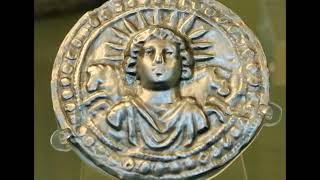
The Christian Church adopted the 'Sun God' Mithras and pagan festivals from Mithraism - Doug Michael
000070
47
 1:13
1:13
831
1528496826
1786985069
In 601 AD, Pope Gregory I adopted Pagan customs and festivals into Christian Church - Doug Michael
000073
48
 1:51
1:51
998
1528562458
1786730854
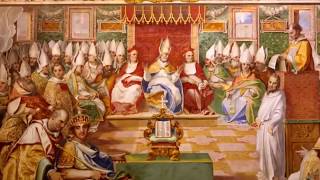
In 325 AD, Council of Nicaea created Jesus and Christianity by unifying pagan Gods and beliefs - Doug Michael
000111
49
 2:10
2:10
1290
1528565579
1786966847
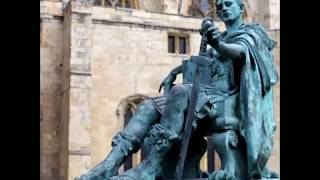
Arguing Bishops at Council of Nicaea voted Pagan rituals into Christianity i.e. Trinity - Doug Michael
000130
50

1079
1528567051
1786982777
Early Christianity developed as a Jewish version of various pagan, mystery faiths - David Fitzgerald
000028
51
698
1528567049
1786529413
Emperor Constantine was a Pagan who praised Sol Invictus throughout his life - David Fitzgerald
000148
52
 1:24
1:24
965
1529235897
1786953325
Christian Gospels are Symbolic Fiction; mythical narratives mined from Jewish texts and Pagan myths. Gospels are not history - Richard Carrier
000084
53
 3:33
3:33
1172
1529332039
1786907474
93% of Romans were polytheist pagans with many Gods. Christians had a 'more powerful' God - Bart Ehrman
000213
54
643
1529623234
1786569994
In the ancient world, Jews and pagans believed in many divine beings and Gods - Bart Ehrman
000064
55
 1:08
1:08
840
1529793130
1786549901
Paul preached to majority, gentiles, pagans and idolators, who had no interest in Judaism or a Jewish Jesus - Bart Ehrman
000068
56

1261
1530141634
1786821762
Apostle Paul established Churches, and converted Gentiles, Polytheists and Pagans to Christianity - Bart Ehrman
000036
57
 1:13
1:13
815
1531349804
1786745280
Pagans gave up their Gods, and turned to the one Christian, all-powerful, Jealous God - Bart Ehrman
000073
58
1300
1531349842
1786940158
Apostle Paul taught new Christians, ex-pagans, did not have to convert to Judaism - Bart Ehrman
000058
59
 0:49
0:49
763
1532142574
1786862355
Gospels are anonymous, 'romantic', religious propaganda texts, not Historical realities - Charles Hedrick
000049
60
 46:34
46:34
504
1535099640
1786670464
In 391 AD, Roman Emperor Theodosius outlawed Paganism and destroyed the Library of Alexandria
002794
61
 22:53
22:53
588
1535662687
1786171404
Pagan Origins of Christmas - Abdullah Hakim Quick
001373
62
420
1536830452
1786759585
Origins of Christmas, Bible & Pagan Gods
001542
63
 46:30
46:30
959
1539172311
1786971556
Christianity stole from Black, Egyptian Pagans - John G Jackson
002790
64
 9:28
9:28
718
1539172300
1786756183
Easter: A Christian festival or Pagan? - DM Murdock
000568
65
 4:46
4:46
1283
1545341604
1786883768
In Jeremiah 10:3, the Christmas Tree is symbolic of the Christian Trinity, not Paganism - Tony Costa
000286
66
 34:14
34:14
646
1545834832
1786792569
Christmas, December 25th is under the control of the Devil Satan and Pagan Culture
002054
67
 3:05
3:05
889
1546174318
1786963019
Jesus Christ: A pagan Sun God turned into a Jewish Man - Caesar Messiah
000185
68
 19:21
19:21
906
1546568161
1786975856
Jesus is too similar to Mythical Pagan Gods: Mithras, Osiris and Heracles. It's no coincidence - Steve Shives
001161
69
 6:40
6:40
1132
1548507279
1786602425
Trinity is 'veiled' Tri-theism (Three Gods). Combining of Jewish Monotheism with Pagan Polytheism
000400
70
 50:28
50:28
539
1548891029
1786922718
The Jesus Story is more Pagan-God, than Historical Truth - Timothy Freke (MythVision) 1/2
003028
71
 37:27
37:27
555
1548891026
1786635320
The Jesus Story is more Pagan-God, than Historical Truth - Timothy Freke (MythVision) 2/2
002247
72
 2:23
2:23
1042
1549451023
1786538781
Eusebius, an early Church Father loyal to Philo of Alexandria, who added the 'God From God' pagan idea to the Nicene Creed in 325 AD - approvedofGod
000143
73
 3:26
3:26
375
1549453507
1786919885
Jesus, the 'Begotten God' of the Eternal Father. This is Paganism - approvedofGod
000206
74
 8:04
8:04
1062
1552936904
1786681891
God is One. He moves by Spirit. He creates through Spoken Word (Trinity is from Pagan philosophy) - approvedofGod
000484
75
 7:46
7:46
1314
1553797607
1786892307
Pre-Islam Pagan Arabs made idols of Hubal (Moon god), Lat, Uzza, and Manat, but never Allah - Yasir Qadhi
000466
76
 8:34
8:34
650
1554111725
1786943671
Yeshua, Yesous, Iesous, Jesus are not derived from Zeus, the Greek pagan God - Michael Heiser
000514
77
 8:07
8:07
441
1556568050
1786794407
Many Christian rituals have origins in Pagan customs - Zachary Bauer
000487
78
 26:40
26:40
835
1562635420
1786971391
The Black Stone and Safa-Marwa 'most likely' originate from pre-Islam, pagan Arab rituals - Abu Layth
001600
79
 11:00
11:00
503
1565341378
1786980260
Political Correctness went Global using Edward Bernays 'Propaganda' techniques - Alan Watt
000660
80
 12:32
12:32
665
1565341360
1786773166
Public Mind Control using Edward Bernays propaganda theories
000752
81
 8:55
8:55
809
1565341353
1786693847
Edward Bernays: Organizing People using Propaganda and Technology. People ready for common action
000535
82

946
1566426652
1786846794
Emperor Constantine merged Pagan and Christian values to define Christianity - Kegan Chandler
000077
83
1:57
669
1566426671
1786976935
Homoousios ('same substance') first appeared in Poimandres, a 1st century Egyptian Pagan text - Kegan Chandler
000117
84
2:14
986
1566426618
1786504230
At Council of Nicaea, Constantine quoted Plato, a Pagan philosopher to justify Homoousios ('same substance') - Kegan Chandler
000134
85
2:29
1215
1566426608
1786783190
Lucius Lactantius, advisor to Constantine, harmonized Christianity with Paganism - Kegan Chandler
000149
86

705
1566862408
1786667448
Gnostic 'secret knowledge' of God features in Pagan, Christian & Spiritual teachings - Kegan Chandler
000125
87
1:27
609
1566862363
1786833400
Hermeticism, a pagan form of Gnosticism, believed God is within us all - Kegan Chandler
000087
88
2:13
901
1566862357
1786543841
Poemandres (Heremetic, Pagan text, c. 50 AD) bears striking textual similarities to John's Gospel - Kegan Chandler
000133
89
9:00
871
1566862352
1786564979
Evidence that John's Gospel used Poemandres (Hermetic, Pagan, c. 50 AD) as a Source - Kegan Chandler
000540
90
10:06
1750
1566862339
1786956478
John's Gospel parallels Gnostic-Pagan-Hermetic ideas (dualism, oneness/son of God, trinity, Father etc.) to promote his Jewish-Christianity - Kegan Chandler
000606
91
 4:13
4:13
674
1568332790
1786579099
Pagan Rome invented Jesus based on ancient Celestial and Astrotheology - Robert Sullivan IV
000253
92
 32:15
32:15
454
1570473427
1786770483
Pagan Dying & Rising Gods parallel the Jesus' story - Robert Price 1/2
001935
93
 30:23
30:23
430
1570473438
1786515760
Pagan Dying & Rising Gods parallel the Jesus' story - Robert Price 2/2
001823
94
 5:23
5:23
1291
1574294142
1786759280
In 70 AD, Rome destroyed the Jerusalem Church, establishing 'Pagan' Trinitarian Christianity - Hamza Saudi
000323
95

786
1590442498
1786577412
Virgin Births were common in pagan, Graeco-Roman Mythology. Jesus the God-Man was no different! - Tovia Singer
000737
96
 11:49
11:49
911
1606875072
1786569316
COVID Vaccines lack medical scrutiny, forced on us like Russian Government propaganda - Tanya Klymenk
000709
97

719
1616418698
1786739700
Pagan Origins of Christianity
001225
98
 20:34
20:34
387
1638715962
1786952859
Is the Christmas Tree Pagan? - Tony Costa
001234
99
 1:16:22
970
1663070584
1786695701
Christianity, a collection of Pre-Christian Pagan Beliefs - David Madison / MythVision
004582
100
 3:32
3:32
668
1663073769
1786979698
Pantheon, Roman Temple to the Gods and Idols of pagan Rome
000212
101
 23:08
23:08
756
1744073277
1786259010
Ancient Gods and Paganism in Pre-Islam Arabia | Gabriel Reynolds | Ahmad Al-Jallad
001388
102
 24:33
24:33
612
1747422303
1786756946
Ancient Pagan Myths Behind Biblical Stories | MythVision
001473
103
 25:57
25:57
559
1749747431
1786871500
Hajj at Kabah is a Pagan Ritual? | Al Hakam
001557
104
 15:46
15:46
4079
1771269335
1786923006
Christianity is a Pagan Mystery Religion | Tovia Singer
000946
105
 22:46
22:46
303
1771427120
1786984867
Apostle Paul preached of Jesus The God to Pagans | Paula Fredriksen | History Valley
001366
106
 6:56
6:56
357
1772834837
1786575198
Palestinian Children tortured and sacrificed for a Zionist Pagan War Cult | Jason Jones | John-Henry Westen
000416
107
 10:10
10:10
296
1776282372
1786731742
Evolution of The Allah God from Pre-Islam Pagan Arab Gods | Ahmad Al-Jallad
000610
108
 20:11
20:11
151
1777508463
1786959911
Muslim Leaders promote Pagan Earth Worship and The Great Reset | Leo Hohmann | aminutetomidnite
001211
109
 28:27
28:27
179
1783081446
1786648230
Did Christianity borrow from Pagan Myths? | Inspiring Philosophy vs MythVision
001707
110
 8:41
8:41
23
1785773991
1786979303
King Cyrus, a Pagan who built God's Temple | Red Lamb Stories
000521
111