1:42:19
97 views
·
Last viewed: 4 days ago
Uploaded: 20 May 2026 (3 months ago) · Shared: 04 Jul 2026
Video Description (from Youtube)
What if the Apostle Paul we think we know never actually existed in history the way scholars assumed? In this explosive conversation, MythVision sits down with biblical scholar Dr. Nenah E. Livzy todiscuss one of the most controversial theories in New Testament studies: the possibility that Paul’s letters were not authentic first-century correspondence at all.
From the history of Pauline scholarship to Marcion, Acts, rhetoric, fictive letter collections, and the origins of Christianity itself — this interview completely reframes the debate around the Apostle Paul.
Topics include:
The “7 authentic letters” controversy
Why scholars trusted Paul for over 200 years
The Dutch Radicals and forgotten scholarship
Marcion and second-century Christianity
Whether Acts influenced Paul’s letters
Why Galatians may not be historical
Paul vs Peter
Fictional letter collections in antiquity
Could Paul himself be literary?
What this means for Christian origins
This is one of the most mind-bending discussions MythVision has ever hosted.
Watch until the end — this changes the way you read the New Testament forever.
👉📚Grab a copy of Dr. Nina Livsesey's book - https://amzn.to/3SovaS9
#MythVision #Christianity #Jesus #Mythical #JesusMythTheory #HistoricalJesus #JesusDebate #BiblicalCriticism #ReligiousHistory #JesusMyth #ChristMythTheory #Skepticism #SecularScholarship #CriticalThinking #AtheistPerspective #FaithVsFact #BeliefQuestions #HistoricalJesus #ApocalypticProphet #Eschatology #BiblicalStudies #NewTestament #MythVision #MythVision
#Mítico #JesusHistórico #DebateSobreJesus
============================
CONTACT ME
Website: 👉 https://mythvisionpodcast.com/
Email MythVision: 👉 mythvisionpodcast@gmail.com
Facebook Page: 👉 / mythvision
Facebook Group: 👉 / thewaterboyzradio
Twitter X: 👉 https://x.com/DerekPodcast - - @DerekPodcast
TikTok: 👉 / mythvision
Instagram: 👉 / dereklambert_7
Discord: 👉 / discord
===========================
Join this channel to get access to perks:
https://www.youtube.com/channel/UCgLZ5SDuR1W_xO8y3A_4VVw/join
DISCLAIMER
All videos are shared for educational and information purposes only. All videos are hosted and viewable on Youtube servers. Video titles are generated using the original video title; overall content theme including actual dialogue and speech (Transcript); and A.I-based recommendations with a focus on SEO, keyword density, and internal search functions. The video title does not represent the views held by the Youtube video uploader, or any individual, organisation or business.
If you spot any mistake, omission or give feedback, kindly Contact Us with details
Overview & Key Concepts
Who was Apostle Paul?
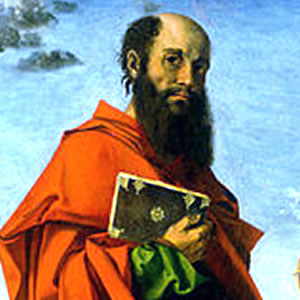 Paul the Apostle (Latin: Paulus), commonly known as Saint Paul and also known by his Jewish name Saul of Tarsus was an apostle (though not one of the
Twelve Apostles) who taught the gospel of Christ to the first century world. Paul is generally considered one of the most important figures of the Apostolic Age and in the mid-30s to the mid-50s AD he founded several churches in Asia Minor and Europe. He took advantage of his status as both a Jew and a Roman citizen to minister to both Jewish and Roman audiences. According to writings in the New Testament and prior to his conversion, Paul was dedicated to persecuting the early disciples of Jesus in the area of Jerusalem. In Acts, Paul was traveling on the road from Jerusalem to Damascus on a mission to 'arrest them and bring them back to Jerusalem' when the resurrected Jesus appeared to him in a great light. He was struck blind, but after three days his sight was restored by Ananias of Damascus and Paul began to preach that Jesus of Nazareth is the Jewish Messiah and the Son of God.
Who is MythVision?
 MythVision Podcast (MVP) brings you some of the finest information surrounding Mythology. Knowledge from a variety of people in search of a better
understanding of ancient text. We discuss mythology, syncretism, astrotheology, gematria, sacred geometry, secret societies, ancient languages, history, prophecy, scholarship, conspiracies, heretical ideas, myth interpretations and much more.
Frequently Asked Questions
1.Why did Apostle Paul preach a new religion?
2.What did early Jewish-Christians think of Apostle Paul?
3.How did Saul become Apostle Paul?
4.How was Apostle Paul's message different to Jesus?
5.How did Apostle Paul view Jesus?
6.How did the Jews view Apostle Paul?
7.How did Apostle Paul become the authority?
8.According to Apostle Paul, why did God give Jews the Torah?
9.How did Apostle Paul differ with the Jewish Rabbis?
10.What was the core message of Apostle Paul's teachings?
11.What happened after Apostle Paul converted to Christianity?
12.What about Apostle Paul's writings?
13.What books did Apostle Paul write?
14.Why is believing in Apostle Paul so wrong?
15.What did Apostle Paul think of his fellow Gospel writers?
16.How did Apostle Paul break Gods Law?
17.How was Apostle Paul viewed in his time?
18.Was Apostle Paul an Apostle?
19.What dramatic experience made Apostle Paul convert to Christianity?
20.How did Matthew (Gospel) support Apostle Pauline Christian doctrine?
21.Why was Apostle Paul superior to other Apostles?
22.Did Apostle Paul face any opposition. If so how?
23.What was the message preached by Apostle Paul?
24.Why did Apostle Paul choose to preach to the Gentiles?
25.How was Apostle Paul viewed by the Jews?
26.What did Apostle Paul achieve by his Christian conversion?
27.What did Apostle Paul say about the other gospels?
28.How important was Jesus' crucifixion to Apostle Paul?
29.Was Apostle Paul a disciple of Jesus?
30.What life did Apostle Paul lead before his miraculous conversion to Christianity?
31.Why did James allow Apostle Paul to preach a new religion?
32.How did Apostle Paul view Jesus' teachings?
33.What did Apostle Paul do after his miraculous conversion to Christianity?
34.What was the main difference between Apostle Paul's religion and the message of Jesus?
35.How did Apostle Paul convince the Gentiles?
36.How did James, leader of the Jerusalem Church, view Apostle Paul?
37.What was Apostle Paul's view on circumcision?
38.What did Apostle Paul do after he converted to Christianity, on the road to Damascus?
Videos on MythVision (85)
 50:28
50:28
543
1548891029
1787201254
The Jesus Story is more Pagan-God, than Historical Truth - Timothy Freke (MythVision) 1/2
003028
1
 37:27
37:27
556
1548891026
1787091094
The Jesus Story is more Pagan-God, than Historical Truth - Timothy Freke (MythVision) 2/2
002247
2
 39:15
39:15
278
1569622095
1787176049
74 Reasons Jesus is a copy of Joseph - MythVision
002355
3
 10:53
10:53
970
1597493444
1787233226
Apostle Paul proclaimed Jewish Law insignificant (dietary, circumcision, divinity etc.) insignificant - James Valliant (MythVision)
000653
4
10:03
1019
1597493164
1787105289
Apostle Paul interpreted Torah in Hellenist, Allegorical, Philosophical ways; free Gentiles from 'burden of Jewish Law' - James Valliant (MythVision)
000603
5
 39:49
39:49
1004
1617607691
1787232490
Apostle Paul and his New Testament fantasy adventures - Ken Humphreys / MythVision 1/2
002389
6
 33:07
33:07
1068
1617607695
1787189512
Apostle Paul and his New Testament fantasy adventures - Ken Humphreys / MythVision 2/2
001987
7
 10:19
10:19
569
1638715951
1786220384
Do Muslims follow the true Jesus? - Bart Ehrman / MythVision
000619
8
 1:16:22
971
1663070584
1787158164
Christianity, a collection of Pre-Christian Pagan Beliefs - David Madison / MythVision
004582
9
 10:00
10:00
700
1663073776
1787172937
Polytheism to Yahweh-Only Monotheism in the Old Testament - Kipp Davis / MythVision
000600
10
 2:32:17
374
1746544354
1787217992
Jesus and The Dionysus Conspiracy | MythVision
009137
11
 27:29
27:29
408
1746529795
1786751192
Adam & Eve Story copied from Early Polytheist Myths? | MythVision
001649
12
 18:36
18:36
757
1746526946
1787223495
Jesus Resurrection Written for Greco-Roman Audience | Richard Miller | MythVision
001116
13
 18:39
18:39
726
1746526942
1787225850
Before Noah: Alternative Mythical Flood Stories | MythVision
001119
14
 47:55
47:55
418
1747326547
1787043200
Origins of Hellfire - A Social Tool for Population Control? | MythVision
002875
15
 24:33
24:33
613
1747422303
1787162065
Ancient Pagan Myths Behind Biblical Stories | MythVision
001473
16
 43:58
43:58
331
1747932266
1786849831
Critical Insight into Origins of Islam | MythVision
002638
17
 27:10
27:10
894
1748655769
1787164445
Goddess Asherah, the Secret Wife of God Yahweh | MythVision
001630
18
 14:30
14:30
340
1748670558
1787014923
Adam And Eve's Origins Stolen from Mesopotamia? | MythVision
000870
19
 1:26:52
656
1749179908
1787066531
History of Female Gods: Asherah, Ishtar and Cannabis | Edward Dodge | MythVision
005212
20
 18:39
18:39
746
1749747606
1787092725
Origins of Cain & Abel in Ancient Mesopotamia | MythVision
001119
21
784 views
1:58:18
784
1749787033
1787230304
Muhammad & The Empires of Faith: The Making of The Prophet of Islam | Sean Anthony | MythVision
007098
22
14:15
556
1749785168
1787230234
Historical Evidences to prove Muhammad Existed | Sean Anthony | MythVision
000855
23
7:48
772
1749779644
1787229775
Is The Quran an Early Text? | Sean Anthony | MythVision
000468
24
2:02
914
1749784347
1787222319
Is the Quran 100% preserved perfectly? | Sean Anthony | MythVision
000122
25
9:50
913
1749787965
1787226624
How is Jesus presented in The Quran? | Sean Anthony | MythVision
000590
26
9:29
650
1749787157
1787226477
Develop of Muhammad's Hadith Tradition | Sean Anthony | MythVision
000569
27
9:25
502
1749787970
1787228676
Was Muhammad a Shepherd or a Trader? | Sean Anthony | MythVision
000565
28
6:05
856
1749783155
1787222053
The Quraysh Arab Tribe placed The Kabah into Islam? | Sean Anthony | MythVision
000365
29
848 views
5:45
848
1749786907
1787226891
Archaeology indicates Polytheism did not exist in Pre-Islamic Mecca | Sean Anthony | MythVision
000345
30
4:21
671
1749780513
1787226433
Alexander The Great in Quran | Sean Anthony | MythVision
000261
31
7:10
625
1749787596
1787222258
Muhammad preached an Apocalyptic End Times message? | Sean Anthony | MythVision
000430
32
7:50
497
1749780713
1787227260
Islam needs Reformation? | Sean Anthony | MythVision
000470
33
 1:24:25
752
1752789681
1787093316
Origins of Islam and the Hidden connections to Judaism | Reuven Firestone | MythVision
005065
34
 11:26
11:26
1202
1754956207
1787186559
Did Muhammad borrow from Christianity & Judaism? | Shady Nasser | MythVision
000686
35
 1:53:47
434
1770901077
1787188878
Early Developments in Quran Compilation, Islam & Kabah, Mecca | Shady Nasser | MythVision
006827
36
 1:48:11
177
1770911145
1787082463
Who wrote the Bible? Contradictions in the Torah | Joel Baden | MythVision
006491
37
 1:14:59
366
1770959211
1787191193
Did Rome Create the New Testament Bible? | James Valliant | MythVision
004499
38
 12:20
12:20
161
1770947293
1786560339
Why did David collect 100 Foreskins? | MythVision
000740
39
 1:54:48
409
1771261961
1787157906
The Old Testament drove me AWAY from Christianity | MythVision
006888
40
 19:02
19:02
144
1771431191
1787084070
The REAL Flood Story Was NOT in the Bible | Irving Finkel | MythVision Reacts
001142
41
 32:26
32:26
109
1771431173
1786533733
What happened before Jesus defeated Death? | MythVision
001946
42
 15:08
15:08
213
1771431189
1787196132
Jesus is GOD in Gospel of John only? | Robert Price | MythVision
000908
43
 55:13
55:13
424
1771431196
1787196536
Early Quran Manuscripts | Daniel Brubaker | MythVision
003313
44
 4:31
4:31
242
1772054231
1787055850
Child Sacrifice in The Old Testament | Robert Price | MythVision
000271
45
 24:44
24:44
271
1772081129
1787070515
Raglan Hero themes shared by Mythical characters: Romulus, Hercules, Dionysus, Zeus, Moses, Elijah and Jesus | Richard Miller | MythVision
001484
46
 1:49:41
216
1773870128
1786561201
Jesus was copied from Osiris and Egyptian, North-African Mystery Cults? | Kara Cooney | MythVision
006581
47
 10:19
10:19
488
1774229824
1787104644
Who Understood Jesus - Christians or Muslims? | Bart Ehrman | MythVision
000619
48
 1:36:02
290
1774546259
1786972341
Real Jesus - A Jew Preaching Judaism to Other Jews | Reza Aslan | MythVision
005762
49
 1:29:57
587
1774658478
1787240288
Caesar Messiah EXPOSED: Did Rome Create Christianity? | Joseph Atwill | MythVision TV
005397
50
 2:30
2:30
294
1774823943
1787235100
Archaeology for the worship of Shams, a Sun God in Pre-Islam Arabia | Ahmad Al-Jallad | MythVision
000150
51
5:30
191
1774826071
1787209645
Archaeology for the worship of Idols and Gods in Noah's time | Ahmad Al-Jallad | MythVision
000330
52
334 views
5:25
334
1774822129
1787239027
Arabs prayed to Shams, the Sun God in Pre-Islam Arabia. Was Shams copied into Islam? | Ahmad Al-Jallad | MythVision
000325
53
7:20
225
1774847835
1786967920
Archaeology around Muhammad and MHMD 'The Praised One' | Ahmad Al-Jallad | MythVision
000440
54
213 views
3:25
213
1774825975
1787194522
Worship of Shams, the Sun God together with MHMD 'The Praised One' | Ahmad Al-Jallad | MythVision
000205
55
19:35
335
1774823037
1787235336
MHMD 'The Praised One' as a divine title in Pre-Islam Arabia | Ahmad Al-Jallad | MythVision
001175
56
 1:10:34
117
1776120275
1787141347
Fighting intolerance and advancing understanding of Biblical Texts | Joshua Bowen | MythVision
004234
57
 39:01
39:01
131
1776121305
1787199039
4000 year Secret Behind Jacob and Esau | MythVision
002341
58
 43:58
43:58
145
1776121674
1786918393
The Mysterious, Hidden Origins of Islam | MythVision
002638
59
 52:03
52:03
120
1776164245
1786782427
Was The Jesus Story REALLY an Exercise in Mind Control? | MythVision
003123
60
 39:54
39:54
114
1776194523
1787186506
A Virgin Birth was a Common Narrative | MythVision
002394
61
 1:50:38
90
1777486752
1786588254
Jesus vs Greek Gods: The Truth No One Talks About | Daniel Glover | MythVision
006638
62
 28:44
28:44
260
1777483762
1787197320
Did Ebionites, Early Christians reject Apostle Paul? | James Tabor | MythVision
001724
63
 13:33
13:33
227
1777506690
1787219103
The Gods of Jews and Early Christians | Paula Fredriksen | MythVision
000813
64
 26:54
26:54
148
1777587294
1786963315
The Late Invention of Judaism | John Collins | MythVision
001614
65
 1:14:44
102
1778088237
1786984177
The Invention of Judaism | John Collins | MythVision
004484
66
 5:54
5:54
120
1778093164
1786994408
Quran written in mix of Arabic Dialects | Marijn Van Putten | MythVision
000354
67
 1:12:18
100
1778176609
1786169096
Comparing Adam with Earlier, Ancient Mythology | Robert Price | MythVision
004338
68
 48:30
48:30
257
1778170168
1787155780
Jerusalem, City of Islam | Paul Ellis | MythVision 1/2
002910
69
 44:44
44:44
262
1778169296
1787117121
Jerusalem, City of Islam | Paul Ellis | MythVision 2/2
002684
70
 1:14:16
213
1778352441
1787109407
Rome-Persia War (602-628 AD) set the context for Early Islam to emerge in Arabia | James Howard-Johnston | MythVision
004456
71
 11:27
11:27
672
1778408633
1787226429
The Evolution of God from Yahweh to Christian Trinity | Paula Fredriksen | MythVision
000687
72
 2:02:28
280
1782176189
1787239016
Did Early Islam emerge from Petra or Mecca? | Peter Von Sivers | MythVision
007348
73
 2:48:41
85
1782173638
1786291058
Bart Ehrman Says NO ONE Can Prove The Resurrection of Jesus | MythVision
010121
74

100 views
21:08
100
1782176111
1786974247
Did Apostle Paul even exist? Scholar DESTROYS the Mythicist Argument | Mark Goodacre | MythVision
001268
75
 28:27
28:27
183
1783081446
1787199924
Did Christianity borrow from Pagan Myths? | Inspiring Philosophy vs MythVision
001707
76
 1:42:19
97
1783208360
1786915527
Did Apostle Paul EVER Exist? Nina Livesey claims his Letters Are FICTION | MythVision
006139
77
 59:16
59:16
107
1783323697
1786763506
How Satan, Demons, Hell & Evil were found in Christianity | Derreck Bennett on MythVision
003556
78
 21:23
21:23
49
1784110756
1786655897
Jesus Existed - Just NOT in The Bible | Richard Miller on MythVision
001283
79
 13:06
13:06
119
1784246612
1787199938
12 Tribes of Israel are 12 Zodiac Signs | Robert Price on Astrotheology | MythVision
000786
80
 11:27
11:27
71
1785160292
1787224807
Was Jesus Born of a Virgin? The Earliest Gospel Say Otherwise | Elaine Pagels | MythVision
000687
81
 30:03
30:03
56
1785545103
1787217410
The Original Jesus Was Hidden in Gospel of Mark | Bart Ehrman on MythVision
001803
82
 45:29
45:29
26
1786314129
1787054936
Did Ancient Israelites Sacrifice Children to Yahweh? | MythVision
002729
83
 23:04
23:04
10
1786923555
1787101633
Did Governments Create the World's Major Religions? | Robert Price | MythVision
001384
84
 22:03
22:03
10
1786922178
1787208569
Was James the Leader of Christianity before Peter and Apostle Paul? | James Tabor | MythVision TV
001323
85