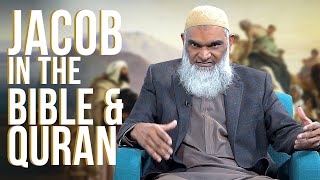
16:27
372 views
·
Last viewed: 1 hr ago
Uploaded: 03 Jun 2025 (1 year ago) · Shared: 24 Feb 2026
Video Description (from Youtube)
Since the war in Gaza and the expanding occupation of the West Bank, a peaceful resolution to the conflict between Israelis and Palestinians feels more distant than ever. Subscribe to The Guardian onYouTube ► http://bit.ly/subscribegdn
In this three-part series, the reporter Matthew Cassel travels along the 1949 Armistice border, or ‘Green Line’, once seen as the best hope for a resolution. He meets Palestinians and Israelis living just kilometres apart, but shaped by vastly different realities. This first episode begins in East Jerusalem, a city at the heart of the conflict
Chapters:
00:00 - What is the green line? The Gaza war and the two state solution
01:54 - Do you know what the green line is?
02:30 - The erasure of the green line
04:40 - Making all of Jerusalem Jewish
06:35 - Destroying the Al-aqsa mosque to build the third temple.
09:50 - The only homeland for Palestinians
11:05 - The silencing and imprisonment of Palestinians
13:18 - Palestinians feel fear living in Jerusalem
14:42 - An Israeli settler-led tour arrives on the scene
The Guardian publishes independent journalism, made possible by supporters. Contribute to The Guardian today ► https://bit.ly/3biVfwh
Sign up to the Guardian's free new daily newsletter, First Edition ► http://theguardian.com/first-edition
Website ► https://www.theguardian.com
Facebook ► https://www.facebook.com/theguardian
Twitter ► https://twitter.com/guardian
Instagram ► https://www.instagram.com/guardian
The Guardian on YouTube:
Guardian News ► https://bit.ly/guardiannewssubs
Guardian Australia ► https://bit.ly/guardianaussubs
Guardian Football ► https://bit.ly/gdnfootballsubs
Guardian Sport ► https://bit.ly/gdnsportsubs
It's Complicated ► https://bit.ly/ItsComplicatedSubs
Guardian Live ► https://bit.ly/guardianlivesubs
#alongthegreenline #thegreenline #israel #palestine #gaza #westbank #middleeast
DISCLAIMER
All videos are shared for educational and information purposes only. All videos are hosted and viewable on Youtube servers. Video titles are generated using the original video title; overall content theme including actual dialogue and speech (Transcript); and A.I-based recommendations with a focus on SEO, keyword density, and internal search functions. The video title does not represent the views held by the Youtube video uploader, or any individual, organisation or business.
If you spot any mistake, omission or give feedback, kindly Contact Us with details
EXPLORE TOPICS :
ISRAEL |
724
IDF |
15
JERUSALEM |
94
USA |
184
UNITED STATES |
9
AMERICA |
152
THE GUARDIAN |
112
JEWISH |
224
JEWS |
140
JUDAISM |
74
GOD |
0
Overview & Key Concepts
Who are The Guardian?
 The Guardian is a British daily newspaper. It was founded in 1821 as The Manchester Guardian, and changed its name in 1959. Along with its sister
papers The Observer and The Guardian Weekly, The Guardian is part of the Guardian Media Group, owned by the Scott Trust. The trust was created in 1936 to "secure the financial and editorial independence of The Guardian in perpetuity and to safeguard the journalistic freedom and liberal values of The Guardian free from commercial or political interference".
Where is Jerusalem?
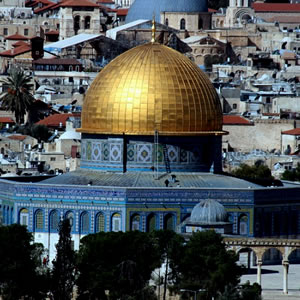 Jerusalem is a city in the Middle East. It is located on a plateau in the Judaean Mountains between the Mediterranean and the Dead Sea. It is one of
the oldest cities in the world, and is considered holy to the three major Abrahamic religions: Judaism, Christianity, and Islam. Both Israel and the Palestinian Authority claim Jerusalem as their capital, as Israel maintains its primary governmental institutions there and the State of Palestine ultimately foresees it as its seat of power; however, neither claim is widely recognized internationally.
What is Israel?
 Israel, officially the State of Israel, is a country in the Middle East. Located on the southeastern shore of the Mediterranean Sea and the northern
shore of the Red Sea. It has land borders with Lebanon to the north, Syria to the northeast, Jordan on the east, the Palestinian territories of the West Bank and Gaza Strip to the east and west, respectively, and Egypt to the southwest.
What is Jewish?
 Judaism is an Abrahamic, monotheistic, ethnic religion that comprises the collective spiritual, cultural, and legal traditions of the Jewish people
Religious Jews regard Judaism as their means of observing the Mosaic covenant, which they believe was established between God and the Jewish people. The religion is considered one of the earliest monotheistic religions. Jewish religious doctrine encompasses a wide body of texts, practices, theological positions, and forms of organization. Among Judaism's core texts is the Torah - the first five books of the Hebrew Bible - and a collection of ancient Hebrew scriptures. The Tanakh, known in English as the Hebrew Bible, has the same books as Protestant Christianity's Old Testament, with some differences in order and content.
Who is GOD?
 In monotheism and henotheism, God is conceived as the Supreme Being and principal object of faith. The concept of God as described by theologians
commonly includes the attributes of omniscience (infinite knowledge), omnipotence (unlimited power), omnipresence (present everywhere), omnibenevolence (perfect goodness), divine simplicity, and eternal and necessary existence.
<ul>
<li>In theism, God is the creator and sustainer of the universe</li>
<li>In deism, God is the creator, but not the sustainer, of the universe</li>
<li>Monotheism is the belief in the existence of one God or in the oneness of God</li>
<li>In pantheism, God is the universe itself</li>
<li>In atheism, God is purported not to exist, while deemed unknown or unknowable within the context of agnosticism. </li>
</ul>
Frequently Asked Questions
1.The first of all the commandments is, Hear, O Israel; The Lord our God is one Lord:
Mark 12:28
28 And one of the scribes came, and having heard them reasoning together, and perceiving that he had answered them well, asked him, Which is the first commandment of all?
29 And Jesus answered him, The first of all the commandments is, Hear, O Israel; The Lord our God is one Lord:
30 And thou shalt love the Lord thy God with all thy heart, and with all thy soul, and with all thy mind, and with all thy strength: this is the first commandment.
Mark 12:28-30
2.And Jesus answered him, The first of all the commandments is, Hear, O Israel; The Lord our God is one Lord:
Mark 12:29
28 And one of the scribes came, and having heard them reasoning together, and perceiving that he had answered them well, asked him, Which is the first commandment of all?
29 And Jesus answered him, The first of all the commandments is, Hear, O Israel; The Lord our God is one Lord:
30 And thou shalt love the Lord thy God with all thy heart, and with all thy soul, and with all thy mind, and with all thy strength: this is the first commandment.
31 And the second is like, namely this, Thou shalt love thy neighbour as thyself. There is none other commandment greater than these.
32 And the scribe said unto him, Well, Master, thou hast said the truth: for there is one God; and there is none other but he:
33 And to love him with all the heart, and with all the understanding, and with all the soul, and with all the strength, and to love his neighbour as himself, is more than all whole burnt offerings and sacrifices.
Mark 12:28-33
29 And Jesus answered him, The first of all the commandments is, Hear, O Israel; The Lord our God is one Lord:
30 And thou shalt love the Lord thy God with all thy heart, and with all thy soul, and with all thy mind, and with all thy strength: this is the first commandment.
31 And the second is like, namely this, Thou shalt love thy neighbour as thyself. There is none other commandment greater than these.
32 And the scribe said unto him, Well, Master, thou hast said the truth: for there is one God; and there is none other but he:
33 And to love him with all the heart, and with all the understanding, and with all the soul, and with all the strength, and to love his neighbour as himself, is more than all whole burnt offerings and sacrifices.
Mark 12:28-33
The above Bible verses show Jesus explain to his disciples that the first and most important commandment is to worship God, the Creator.
3.How did James, leader of the Jerusalem Church, view Apostle Paul?
Paul's new doctrine met with disapproval from the Jewish-Christians of the Jerusalem Church, who regarded the substitution of Jesus' atoning death for the observance of the Torah as a lapse into paganism.
Paul was duly summoned to Jerusalem by the leaders James, Peter and John to explain his doctrine in 50 AD.
4.How did the Early Jewish-Christians practise their religion?
The Jewish-Christians practised three daily prayers, male circumcision, ritual washing for purity, fasting, attention to clean/unclean foods, giving charity and pilgrimage to a central temple.
5.Did Jesus claim to be 'King of the Jews'?
A placard where Jesus was accused of claiming to be 'King of the Jews' was nailed to his cross. Today this placard can be found at the Church of Santa Croce in Rome.
6.How was Jesus Jewish?
In many ways, Jesus was Jewish:
He did not preach a new religion
He taught people to do the Will of God; not a new God
He never went to Church
He fully observed the Jewish Law
His followers continued attending and meeting at the Temple
His followers observed the dietary regulations of the Torah and continued the practise of circumcision
Therefore, the early Jewish-Christians did not give up Judaism, nor did Jesus every ask them to do so.
7.What did early Jewish-Christians think of Apostle Paul?
Paul's popularity was in decline between 55-66 CE because missionaries from the Church of Jerusalem publicly rejected his innovation and claim to be an Apostle.
8.Were the early Christians Jews?
Yes. Jesus himself and his immediate followers observed all Jewish law, customs and practise.
9.Did Saul kill the early Jewish-Christians?
Prior to becoming a Christian, Saul of Tarsus hated Christians. He made it his goal to capture, then bring Christians to public trial and execution.
1 And Saul was consenting unto his death. And at that time there was a great persecution against the church which was at Jerusalem; and they were all scattered abroad throughout the regions of Judaea and Samaria, except the apostles.
2 And devout men carried Stephen to his burial, and made great lamentation over him.
3 As for Saul, he made havock of the church, entering into every house, and haling men and women committed them to prison.
(Acts 8:1-3)
2 And devout men carried Stephen to his burial, and made great lamentation over him.
3 As for Saul, he made havock of the church, entering into every house, and haling men and women committed them to prison.
(Acts 8:1-3)
Saul believed that he was serving God by finding Christians, throwing them into prison, and even executing them when possible.
10.How did the Jews view Apostle Paul?
Paul's salvation theory was considered blasphemy by faithful Jews. The Jews knew Pauls teachings ridiculed all previous revelations from God as expressed through the Torah.
The Jews after all, were the one race of people in the world who were taught God was One, without form or substance, and did not bear the likeness of anything in the universe.
11.According to Apostle Paul, why did God give Jews the Torah?
Paul claimed God gave Jews the Torah so that they could be saved later on by believing in Jesus Christ. This was God's divine plan.
12.How did Apostle Paul differ with the Jewish Rabbis?
The Jewish Rabbis preached a person was saved so long as their intention was to remain within the covenant, and one truly repented and seek forgiveness for their sins.
Paul preached that every person was 'damned' until they was offered salvation. Mans problem was that he was 'in the flesh' in bondage to the Law, sold under Sin, enslaved by the fundamental spirits of the universe (ie. dead).
Paul preached the only cure was liberation from slavery and death by union with Christ, who had conquered death and sin.
13.How did the early Jewish-Christians view Jesus' resurrection?
Ye men of Israel, hear these words; Jesus of Nazareth, a man approved of God among you by miracles and wonders and signs, which God did by him in the midst of you, as ye yourselves also know:
Him, being delivered by the determinate counsel and foreknowledge of God, ye have taken, and by wicked hands have crucified and slain:
Whom God hath raised up, having loosed the pains of death: because it was not possible that he should be holden of it.
(Acts 2:22-24)
The early Christians assumed Jesus had been raised by God, and not that he was God.
Him, being delivered by the determinate counsel and foreknowledge of God, ye have taken, and by wicked hands have crucified and slain:
Whom God hath raised up, having loosed the pains of death: because it was not possible that he should be holden of it.
(Acts 2:22-24)
14.Who seperated Christianity from Judaism?
It was Paul's dramatic conversion to Christianity that resulted in the seperation of Christianity from Judaism. Within months of his disappearing, Jesus' teachings were changed.
15.Why Jews do not accept Jesus as the Messiah?
The Bible claims the Messiah will accomplish certain signs:
A. Build the Third Temple (Ezekiel 37:26-28).
B. Gather all Jews back to the Land of Israel (Isaiah 43:5-6).
C. Usher in an era of world peace, and end all hatred, oppression, suffering and disease. As it says: "Nation shall not lift up sword against nation, neither shall man learn war anymore." (Isaiah 2:4)
D. Spread universal knowledge of the God of Israel, which will unite humanity as one. As it says: "God will be King over all the world—on that day, God will be One and His Name will be One" (Zechariah 14:9).
The historical fact is that Jesus fulfilled none of these messianic prophecies.
Christians counter that Jesus will fulfill these in the Second Coming, but Jewish sources show that the Messiah will fulfill the prophecies outright, and no concept of a second coming exists.
Read More
16.What does the Quran say about Jews and Christians?
The Jews say "The Christians have nothing [true] to stand on," and the Christians say, "The Jews have nothing to stand on," although they [both] recite the Scripture. Thus the polytheists speak the same as their words. But Allah will judge between them on the Day of Resurrection concerning that over which they used to differ.
[Quran 2:113]
17.How was Apostle Paul viewed by the Jews?
Although, Paul was of the Jewish background, the Jewish-Christian followers of Jesus rejected Paul and wanted to kill him.
18.Does the Quran tell Jews and Christians to refer to their Scriptures (Torah and Bible)?
When the Quran refers to the previous Scriptures (Torah, Gospel etc.), this is understood to mean the original revelations sent to Moses and Jesus, and not the 'corrupted' versions we have today
19.In the time of Jesus, what qualities would identify the Messiah, to the Jews?
A human empowered by God. Not a God-man, a person of the Godhead or part of a Triune God (Trinity)
From the lineage of Abraham (Gen. 22:18)
From the tribe of Judah (Gen. 49:10)
A descendant of David (2 Sam. 7:12)
A Lord under Yahweh, the God of Israel (Ps. 110:1)
From amongst their own people (Jer. 30:21)
20.How did the 1st century Jews view the Holy Spirit?
First century Jews believed the Holy Spirit was another name for God, similar to Yahweh, Elohim or El Shaddai - not a separate Person in the Trinity!
There is no record of Jesus ever trying to correct the Jews and prove the Holy Spirit was a third Person in the Trinity.
21.How was Apostle Paul viewed by the Jews?
The Jews and early Jewish-Christians who observed Mosaic Law constantly harassed Paul. They even followed him around and stirred the people against him. To the extent he was often beaten and threatened with death.
22.Jesus claimed to be God. The Jews must have understood this, as they accused him of blasphemy and were ready to stone him?
The Jews were mistaken. Jesus did not claim to be God, claim divinity or commit blasphemy. In the next verse (John 10:34), Jesus tells the Jews to read their own books, Psalm 82:6 where men in power, eminence, dignity, government, judges, magistrates, in high office posts are called Gods too. i.e. the term God does not literally mean GOD.
23.Why do Jews let the hair grow on the sides of there head?
In the Torah, God forbids the cutting of the hair on the sides and the beard
24.How did Jews view the Greek Bible (Septuagint)?
For the Jews, the Septuagint would always be a translation of the Hebrew bible.
25.In the time of Jesus, how were the Jews viewed by the Greeks?
Judaism was views as an inward looking, demoralized by centuries of Roman occupation, declining economic fortunes and ongoing emigration.
Multipart Video ()
This video is part of a series as displayed below :Videos on Monophysitism (0)
EXPLORE TOPICS :
ISRAEL |
724
IDF |
15
JERUSALEM |
94
USA |
184
UNITED STATES |
9
AMERICA |
152
THE GUARDIAN |
112
JEWISH |
224
JEWS |
140
JUDAISM |
74
GOD |
0