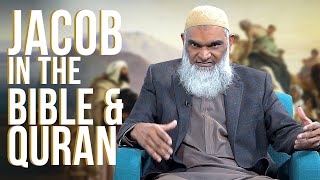
11:10
660 views
·
Last viewed: 1 week ago
Uploaded: 18 Jun 2018 (8 years ago) · Shared: 20 Jun 2018
Video Description (from Youtube)
Link to the original video: https://www.youtube.com/watch?v= WISJ_jo54oI DISCLAIMER We do NOT own the video materials and all credits belong to the respectful owners. In case of copyright issuesplease contact us immediately for further credits or clip delete.
COPYRIGHT
Under Section 107 of the Copyright Act 1976, allowance is made for 'fair use' for purposes such as criticism, comment, news reporting, teaching, scholarship and research. Fair use is a use permitted by copyright statute that might otherwise be infringing. Non-profit, educational or personal use tips the balance in favour of fair use.
DISCLAIMER
All videos are shared for educational and information purposes only. All videos are hosted and viewable on Youtube servers. Video titles are generated using the original video title; overall content theme including actual dialogue and speech (Transcript); and A.I-based recommendations with a focus on SEO, keyword density, and internal search functions. The video title does not represent the views held by the Youtube video uploader, or any individual, organisation or business.
If you spot any mistake, omission or give feedback, kindly Contact Us with details
EXPLORE TOPICS :
BART EHRMAN |
222
TRINITY |
154
TRINITARIAN |
18
DOCETISM |
6
ARIANISM |
0
GOD |
0
MODALISM |
0
 JESUS
JESUS
JESUS
Overview & Key Concepts
Who is Bart Ehrman?
 Bart Ehrman (born 1955) is an American New Testament scholar focusing on textual criticism of New Testament, historical Jesus, and development of
early Christianity. Ehrman has written and edited 30 books, including three college textbooks. He has also authored six New York Times bestsellers. He is currently the James A. Gray Distinguished Professor of Religious Studies at the University of North Carolina at Chapel Hill.
What is Trinitarian?
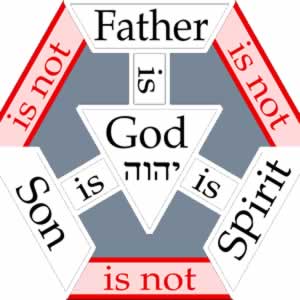 The Christian doctrine of the Trinity (Latin: trinus "threefold") holds that God is one God, but three coeternal consubstantial persons or
hypostases. These being the Father, the Son (Jesus Christ), and the Holy Spirit - as "one God in three Divine Persons". The three Persons are distinct, yet are one "substance, essence or nature" (homoousios).
What is Docetism?
 In Christianity, docetism is the doctrine that the phenomenon of Christ, his historical and bodily existence, and above all the human form of Jesus
was mere semblance without any true reality. Broadly it is taken as the belief that Jesus only seemed to be human, and that his human form was an illusion. It appears to have arisen over theological contentions concerning the meaning, figurative or literal, of a sentence from the Gospel of John: "the Word was made Flesh". Docetism was unequivocally rejected at the First Council of Nicaea in 325 AD and is regarded as heretical by the Catholic Church, Orthodox Church, Coptic Church and other Christian denominations.
What is Arianism?
Belief that, Jesus was a lesser, created being.What is Modalism?
Belief that, in God is one person in three modes.Who is GOD?
In monotheism and henotheism, God is conceived as the Supreme Being and principal object of faith. The concept of God as described by theologians
commonly includes the attributes of omniscience (infinite knowledge), omnipotence (unlimited power), omnipresence (present everywhere), omnibenevolence (perfect goodness), divine simplicity, and eternal and necessary existence.
<ul>
<li>In theism, God is the creator and sustainer of the universe</li>
<li>In deism, God is the creator, but not the sustainer, of the universe</li>
<li>Monotheism is the belief in the existence of one God or in the oneness of God</li>
<li>In pantheism, God is the universe itself</li>
<li>In atheism, God is purported not to exist, while deemed unknown or unknowable within the context of agnosticism. </li>
</ul>
Videos on Modalism (2)

660 views
11:10
660
1529454362
1786437494
Jesus progressed to God through Docetism, Separationism, Modalism and Trinitarianism - Bart Ehrman
000670
1
 1:05
1:05
471
1533124673
1786626330
In 210 AD, Modalism explained God manifest in '3 modes' as Father, Son and Holy Spirit - Lorence Yufa | Milwaukee Atheists
000065
2
EXPLORE TOPICS :
BART EHRMAN |
222
TRINITY |
154
TRINITARIAN |
18
DOCETISM |
6
ARIANISM |
0
GOD |
0
MODALISM |
0
JESUS
JESUS