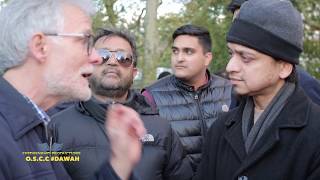
33:44
531 views
·
Last viewed: 19 hrs ago
Uploaded: 31 Mar 2019 (7 years ago) · Shared: 02 Apr 2019
Video Description (from Youtube)
» If you liked this video, please subscribe & share on your social media platforms. The Prophet said, “Whoever guides someone to goodness will have a similar reward.” [Sahih Muslim 1893] *Request toall to please not abuse or swear in comments, Dawah is to invite not to insult. Jazak Allah Khair
Disclaimer: The views and opinions of partakers in these debates and videos in no way represent the views of Sam Dawah but are a representation of what takes place at Speakers Corner.
DISCLAIMER
All videos are shared for educational and information purposes only. All videos are hosted and viewable on Youtube servers. Video titles are generated using the original video title; overall content theme including actual dialogue and speech (Transcript); and A.I-based recommendations with a focus on SEO, keyword density, and internal search functions. The video title does not represent the views held by the Youtube video uploader, or any individual, organisation or business.
If you spot any mistake, omission or give feedback, kindly Contact Us with details
EXPLORE TOPICS :
ADNAN RASHID |
48
MAIMONIDES |
3
JEWISH |
224
JEWS |
140
JUDAISM |
74
ISLAM |
448
EARLY ISLAM |
16
MUSLIM |
305
Overview & Key Concepts
Who is Adnan Rashid?
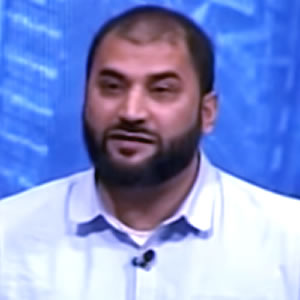 Adnan Rashid is a public figure, historian, traveller, poet, author and a philanthropist. He is also a Senior Researcher and Lecturer at the Hittin
Institute, London. Rashid has speciality in the history of Islamic civilisation, comparative religion and Quran/Hadith sciences. He also takes a keen interest in lslamic numismatics, ancient manuscripts and antiquities. He has debated many high profile figures in the field of politics, history, Muslim/Christian theology. Rashid has represented Islam and Muslims appearing on a number of radio and TV platforms such as the BBC Asia Netwrok, Press TV, Iqra TV and Islam Channel.
Who was Maimonides?
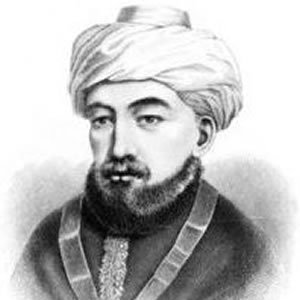 Maimonides, or Moses ben Maimon, also referred to by the acronym Rambam. He was a medieval Sephardic Jewish philosopher who became one of the most
prolific and influential Torah scholars of the Middle Ages. In his time, he was also a preeminent astronomer and physician. Born in Cordoba, Almoravid Empire (present-day Spain) on Passover Eve, 1135 he worked as a rabbi, physician, and philosopher in Morocco and Egypt. He died in Egypt on December 12, 1204, whence his body was taken to the lower Galilee and buried in Tiberias.
What is Jewish?
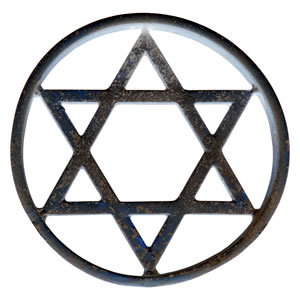 Judaism is an Abrahamic, monotheistic, ethnic religion that comprises the collective spiritual, cultural, and legal traditions of the Jewish people
Religious Jews regard Judaism as their means of observing the Mosaic covenant, which they believe was established between God and the Jewish people. The religion is considered one of the earliest monotheistic religions. Jewish religious doctrine encompasses a wide body of texts, practices, theological positions, and forms of organization. Among Judaism's core texts is the Torah - the first five books of the Hebrew Bible - and a collection of ancient Hebrew scriptures. The Tanakh, known in English as the Hebrew Bible, has the same books as Protestant Christianity's Old Testament, with some differences in order and content.
What is Muslim?
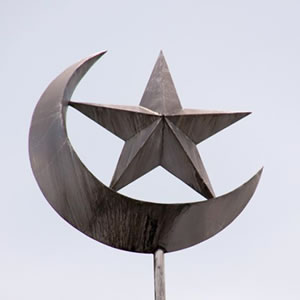 Early Islam or the history of Islam is believed, by most historians to have originated with Muhammad's mission in Mecca and Medina at the start of the
7th century CE. Although Muslims regard this time as a return to the original faith passed down by the Abrahamic prophets, such as Adam, Noah, Abraham, Moses, David, Solomon, and Jesus, with the submission (Islam) to the will of God. According to the traditional account, the Islamic prophet Muhammad began receiving what Muslims consider to be divine revelations in 610 CE, calling for submission to the one God, preparation for the imminent Last Judgement, and charity for the poor and needy.
What is Jews?
Judaism is an Abrahamic, monotheistic, ethnic religion that comprises the collective spiritual, cultural, and legal traditions of the Jewish people
Religious Jews regard Judaism as their means of observing the Mosaic covenant, which they believe was established between God and the Jewish people. The religion is considered one of the earliest monotheistic religions. Jewish religious doctrine encompasses a wide body of texts, practices, theological positions, and forms of organization. Among Judaism's core texts is the Torah - the first five books of the Hebrew Bible - and a collection of ancient Hebrew scriptures. The Tanakh, known in English as the Hebrew Bible, has the same books as Protestant Christianity's Old Testament, with some differences in order and content.
Frequently Asked Questions
1.How did the Early Jewish-Christians practise their religion?
The earliest Jewish-Christians strictly followed traditional Hebrew practices, including daily prayers, circumcision, rituals for purity, fasting, dietary laws, and temple, according to the source material.
2.Did Jesus claim to be 'King of the Jews'?
A political placard accusing Jesus of making this claim was nailed to his cross, and this historical artifact can be found today at the Church of Santa Croce in Rome.
3.How was Jesus Jewish?
Jesus fully observed the laws of the Torah, maintained kosher dietary regulations, and never asked his followers to abandon Judaism, as they continued to meet at the Temple and practice circumcision rather than establishing a separate religion or attending a church.
4.What did early Jewish-Christians think of Apostle Paul?
Between 55 and 66 CE, early Jewish-Christian leaders in Jerusalem rejected Paul's teachings and challenged his authority, leading to a significant decline in his popularity.
5.Were the early Christians Jews?
Yes, Jesus and early followers were entirely Jewish, strictly observing traditional laws and customs.
6.Did Saul kill the early Jewish-Christians?
Before his conversion, Saul actively sought to imprison and execute early Jewish-Christians. Saul believed that he was serving God by finding Christians, throwing them into prison, and even executing them.
1 And Saul was consenting unto his death. And at that time there was a great persecution against the church which was at Jerusalem; and they were all scattered abroad throughout the regions of Judaea and Samaria, except the apostles.
2 And devout men carried Stephen to his burial, and made great lamentation over him.
3 As for Saul, he made havock of the church, entering into every house, and haling men and women committed them to prison.
[Acts 8:1-3]
2 And devout men carried Stephen to his burial, and made great lamentation over him.
3 As for Saul, he made havock of the church, entering into every house, and haling men and women committed them to prison.
[Acts 8:1-3]
7.How did the Jews view Apostle Paul?
Faithful Jews viewed Paul's salvation theory as blatant blasphemy because his theological teachings explicitly ridiculed all previous revelations from God, including the sacred Torah, while teaching a doctrine that went against the absolute oneness of God.
8.According to Apostle Paul, why did God give Jews the Torah?
Paul viewed the Torah as a temporary guide, claiming it was given to the Jews until they could be saved through faith in Jesus Christ.
9.How did Apostle Paul differ with the Jewish Rabbis?
The Jewish Rabbis preached a person was saved so long as their intention was to remain within the covenant, and one truly repented and seek forgiveness for their sins.
Paul preached that every person was 'damned' until they was offered salvation. Mans problem was that he was 'in the flesh' in bondage to the Law, sold under Sin, enslaved by the fundamental spirits of the universe (ie. dead).
Paul preached the only cure was liberation from slavery and death by union with Christ, who had conquered death and sin.
10.How did the early Jewish-Christians view Jesus' resurrection?
The earliest Jewish-Christians did not believe that the resurrection meant Jesus was God, but rather that he was a righteous man approved by God through miracles, wonders, and signs. Based on texts like Acts 2:22-24, they maintained the theological view that Jesus had been raised by God, not that he was the Creator himself.
11.Who seperated Christianity from Judaism?
It was Apostle Paul's dramatic conversion and subsequent teachings that directly resulted in the permanent theological separation of Christianity from Judaism. Within mere months of Jesus' departure, the original human-centric and law-abiding message was fundamentally altered into an independent religious system.
12.Why Jews do not accept Jesus as the Messiah?
Mainstream Judaism rejects Jesus's messianic claims because he did not fulfill literal Old Testament prophecies. These expectations include rebuilding the Temple, gathering all exiled Jews back to Israel, and ushering in an era of universal world peace.
13.What does the Quran say about Jews and Christians?
The Quran recognizes Jews and Christians as "People of the Book" (Ahl al-Kitab), acknowledging that they were given previous divine revelations through prophets like Moses and Jesus. While it praises the righteous among them, it also critiques their theological developments, specifically rejecting the Christian doctrine of the Trinity and the divine sonship of Jesus.
14.How was Apostle Paul viewed by the Jews?
Paul was widely viewed by mainstream Jewish communities as a radical apostate and religious heretic because he preached that observance of the Mosaic Torah was no longer required for salvation. This fierce theological conflict frequently resulted in severe public opposition, legal charges before Roman authorities, and physical riots during his travel throughout ancient Mediterranean cities.
15.Does the Quran tell Jews and Christians to refer to their Scriptures (Torah and Bible)?
Yes, the Quran references previous scriptures in passages like Surah Al-Ma'idah (5:47), which tells the followers of the Gospel to judge by what God has revealed in it. From an academic perspective, this reflects the historical context of 7th-century Medina, where Jews and Christians were recognized as "People of the Book" who possessed divine laws. While Islamic theology holds that modern biblical texts have suffered from textual corruption (tahrif), the Quran historically appeals to the core monotheistic truths remaining in those scriptures to validate Muhammad's message.
16.In the time of Jesus, what qualities would identify the Messiah, to the Jews?
First-century Jewish expectations, as discussed in this analysis of Trinity dogma, centered on a human leader, such as a prophet or king from David's line, rather than a divine figure.
17.How did the 1st century Jews view the Holy Spirit?
As explained in this analysis of Trinity dogma, the Holy Spirit was understood as God's active, divine power, rather than a distinct, third person of a Trinity.
18.Jesus claimed to be God. The Jews must have understood this, as they accused him of blasphemy and were ready to stone him?
The platform asserts that Jesus did not claim divinity in this instance, and that his mention of Psalm 82:6 in John 10:34 was a defense noting that human judges are called "gods" in scripture, thus challenging the accusation of blasphemy.
19.Why do Jews let the hair grow on the sides of there head?
In the text of the Torah (Leviticus 19:27), God explicitly forbids cutting or rounding off the corners of the hair on the sides of the head and marring the edges of the beard.
20.How did Jews view the Greek Bible (Septuagint)?
The Jewish community regarded the Septuagint only as a translation of the original Hebrew, never as an independent or authoritative scripture.
21.In the time of Jesus, how were the Jews viewed by the Greeks?
The text suggests that the Greeks perceived Judaism as an insular tradition, weakened by long-term Roman occupation, economic decline, and emigration.
22.What is Islam?
Islam translates to submission and full surrender to God. Under this core definition, all historical prophets sent to humanity are considered Islamic prophets. This extensive list features prominent figures such as Adam, Abraham, Noah, Moses, David, Jesus, and Muhammad.
23.Who is a Muslim?
A Muslim is a dedicated follower of the religion of Islam. This theological path is defined as a monotheistic Abrahamic faith revealed through the final prophet, Muhammad.
24.Were all Prophets Muslim?
Yes, because they all consistently preached the worship of one absolute God and prohibited the worship of false deities.
25.Do Muslims believe in Prophets?
A Muslim is strictly required to believe in, honour, and respect each and every prophet sent by God without exception.
26.Why choose the name MuslimProphets.com?
The name reflects that all prophets taught monotheism and the worship of one God, making them all "in-essence" considered Muslim.
27.Does Islam promote extremism, terrorism and violence?
No, the platform maintains that Islam is a religion of peace and tolerance, aligning with the message of all prophets.
28.Where can I learn more about Islam?
Various online sources are available.
29.Do Muslims believe in The Bible?
Muslims believe that God originally revealed the Gospel to Jesus as a source of guidance, light, and instruction.
And We sent, following in their footsteps, Jesus, the son of Mary, confirming that which came before him in the Torah; and We gave him the Gospel, in which was guidance and light and confirming that which preceded it of the Torah as guidance and instruction for the righteous. [Quran 5:46]
30.What is the basic teaching of Islam?
The basic teaching is to make peace with God, which requires a person to submit to Him and obey His commands completely.
31.How did Islam come into the world?
The religion of Islam in its present form came to us through the teachings of the Prophet Muhammad, who lived and preached in Arabia some 1400 years ago (born 571 CE, died 632 CE). However, Muhammad taught that he was not bringing a completely new religion into the world, because the basic principles of Islam had also been preached by all the great founders of the various religions before him. Islam, therefore, did not begin with Muhammad, but was also the religion of Abraham, Moses, Jesus and every ancient prophet.
32.If all prophets taught Islam, what was so different about Muhammad?
Over time, previous teachings had been altered or lost, so Muhammad was sent as the final prophet to restore, update, and unify the foundational principles of faith into a complete religion.
33.What do I have to do to become a Muslim?
One becomes a Muslim by publicly declaring the shahada, or testimony of faith, acknowledging there is no god but Allah and Muhammad is His messenger.
34.What do Muslims believe?
Core beliefs involve five main aspects: the perfection of God, the role of angels, accepting all prophets and their revelations, and the reality of life after death and its consequences.
35.What is the basic teaching of Islam about God?
Islam teaches that there is one, and only one, God Who is the Creator and Controller of the entire universe. He is unique in every respect, and there is nothing which bears any likeness to Him. He is the Knower of all things, and has full power over the whole of creation. He does not stand in need of anything at all, while everything is totally dependent on Him. He possesses all the perfect qualities, and man should worship Him, and Him alone.
36.Does Islam give any arguments to prove the existence of God?
The Holy Quran gives three kinds of arguments on this point.
Firstly, it refers us to the physical world which shows great order and arrangement, works according to laws, and where everything has a set purpose in the whole scheme of things. There is also immense beauty in nature which attracts man's heart. Science is discovering more and more of these characteristics of the world all the time. So behind this highly purposeful and beautiful working of nature must be One, single Intelligence of great beauty and attraction.
Secondly, the Quran tells us about the close and deep connection between God and the inner nature of every person. There is an in-built desire in each and every person to search for something higher than oneself, and when in difficulties a person instinctively wants to call upon a Hidden Power to help him.
Thirdly, and most convincingly, Prophets and men of God appeared in every nation in the world and showed their people the reality of God through their teachings and works. Just as most of us learn about science not by making all the discoveries ourselves, but by accepting the work and evidence of those who devote themselves to the study of science, similarly the proof of the existence of God is provided by the lives of the great luminaries whom God sent all over the world for this very purpose.
37.Other religions also teach the existence of God. Is there any difference between their teaching and the Islamic concept of God?
The first major difference is that Islam teaches the absolute one-ness of God, with Whom no one can share in Divinity. No idol or heavenly object, nor any religious or spiritual teacher, can possess some Divine power or attribute.
Secondly, Islam teaches the highest conception of God, and does not accept any limitation to His power and knowledge, while other religions set limits to Him. For instance, Islam rejects the Hindu belief that God is not the Creator of matter and souls but exists alongside them. It also rejects the Christian doctrine that God is unable to forgive sins unless He punishes someone, and so He sent His 'son' to suffer the punishment for the sins of all humanity. Moreover, a son is needed to take the place of the father when the father dies, and clearly this cannot apply if God is perfect.
Thirdly, Islam refutes the idea that any human being, however great, was a 'manifestation' of God on earth, or a Divine incarnate.
38.Which prophets do Muslims have to believe in?
Muslims are strictly required to maintain belief in every single prophet and messenger sent by God. This belief must be completely equal, meaning no distinctions or hierarchies of validity are made between them. This universal recognition applies regardless of the specific country or historical era in which they appeared.
39.Since Muslims believe in all the Prophets equally, why is Muhammad special?
All Prophets were equally from God, and equally true, but the scope of their missions varied. The messengers before Muhammad were each given teachings limited to their respective nations, because in those times a nation did not have much to do with other nations.
Furthermore, the teachings of each Prophet applied for a limited period of time only, after which God would raise another Prophet to revise some of the teachings for the new circumstances.
The time came to unite all the nations upon a single religion so that mankind may live in peace as one nation. Muhammad, to whom God gave teachings for the whole world for all time to come fulfilled this purpose.
40.Do Muslims believe in scripture other than their own Quran?
Muslims believe that previous scriptures given to Moses, David, and Jesus contain elements of truth, but they maintain that the Quran is the final revelation from God and takes absolute precedence.
41.Is the Star and Crescent a symbol of Islam?
The crescent is not a symbol of Islam, but of the Ottoman Empire. The Ottomans are those tribes that moved to Turkey from east and middle Asia. They converted to Islam and built a huge Muslim Empire that ruled the whole Muslim world for centuries. When they took Islam as a religion they started using the lunar calendar, the calendar that was used by Muslims, Jews and early Christians. Even today, the flag of Turkey has a crescent on it. There was no crescent on any mosque built before the Ottomans era.
42.How are Noah, Abraham, Moses and Jesus considered Muslim Prophets, when Islam came 600-years after Jesus?
A Muslim is essentially defined as anyone who believes in and submits to one God; because all of these historical prophets consistently preached the message of pure Monotheism and called people to worship the Creator alone, they are considered to be Muslim in-essence regarding their foundational theological beliefs.
43.Can Muslims eat swine and pork?
No, the consumption of pork, bacon, and ham is strictly prohibited by divine law, matching historical restrictions found in the Old Testament followed by Jews and certain Christian groups.
44.Do Muslims believe in a God?
Yes, Muslims believe in Allah as the all-powerful, eternal Creator who is separate from creation, has no partners, no gender, and is the absolute sole entity worthy of human worship.
He is transcendent and not a part of his creation. He is all-powerful, absolutely Just and He is First, Last, and Everlasting; He was when nothing was, and will be when nothing else remains. Also, There is no other entity in the entire universe worthy of worship besides Him.
This belief in God is how one becomes a Muslim and is similar to the first commandment of Christianity and Judaism: You shall have no other gods before Me.
Say He is Allah,the One,
Allah the Eternal,Absolute;
He does not beget,not nor is He begotten,
And there is none like Him. [Quran 1:1-4]
Allah the Eternal,Absolute;
He does not beget,not nor is He begotten,
And there is none like Him. [Quran 1:1-4]
45.In Islam, can God become a Man?
No, Islamic theology strictly rejects the concept of divine incarnation (Hulul). Islam teaches that God is completely transcendent, unchangeable, and separate from his creation, making it a logical contradiction for the infinite Creator to assume finite human attributes.
46.Does the Quran encourage violence against the disbelievers (non-Muslims)?
Academic Islamic scholarship clarifies that verses in the Quran addressing warfare against non-Muslims were historically revealed during active, state-level conflicts with the pagan tribes of Mecca and their military allies. Mainstream historians emphasize that these specific martial passages must be read within their situational context of self-defence and treaty violations, rather than as an open-ended command to attack peaceful non-Muslims.
47.Does Islam encourage violence?
From an objective theological perspective, standard Islamic jurisprudence explicitly prohibits unprovoked violence, aggression, and the targeting of civilians, defining warfare strictly under defensive parameters. While fringe extremist groups frequently misinterpret isolated text to justify modern terrorism, mainstream Islamic law actively prioritizes peace, diplomacy, and the protection of religious minorities.
48.Why should non-Muslims pay the Jizya (tax)?
In classical Islamic law, the Jizya was a poll tax levied annually on adult, able-bodied non-Muslim male subjects (Dhimmi) living under an Islamic state. Historically, this tax served a dual purpose: it exempted non-Muslims from mandatory military service (which was required of Muslims) and acted as a financial contribution for state-provided security and the protection of their property, life, and religious freedom.
49.Are Muslims told to kill polytheists in the Quran?
Academic, context-based interpretations of the Quran indicate that verses regarding fighting (e.g., 9:5, 2:190) are historically situated within specific conflicts or treaty breaches rather than universal commands, emphasizing that the text generally prohibits indiscriminate violence, defends the sanctity of life (5:32), and allows for positive relations with peaceful non-Muslims (60:8).
50.Can the Muslims have non-Muslim friends?
51.Does the Quran encourage Muslims to kill non-Muslims?
52.Why should non-Muslims pay a Jizyah tax?
Historically, the Jizya functioned as a protection tax, exempting non-Muslim subjects (dhimmi) from military service in exchange for state security, as established in the legal frameworks of early Islamic states.
53.Can the Muslims be harsh to non-Muslims?
Mainstream Islamic scholarship and textual analysis indicate that passages mentioning sternness or fighting (such as Surah At-Tawbah 9:123) specifically target active combatants, political subversives, and hypocrites who worked internally to destabilise the community from within. Objective historians emphasize that these verses do not prescribe a universal template for daily interactions, which are otherwise commanded to be characterized by justice, kindness, and respectful coexistence.
54.Does the Quran encourage ill-treatment of non-Muslims?
No, orthodox Islamic theology strictly prohibits the unprovoked abuse, exploitation, or mistreatment of peaceful non-Muslims, explicitly warning in the Hadith literature that anyone who oppresses a religious minority will face divine complaints from the Prophet himself on the Day of Judgment. Scriptural texts command Muslims to uphold agreements, demonstrate broad compassion to all of creation, and engage in respectful theological dialogue.
55.Why do Muslims say non-Muslims will go to Hell?
In Islamic soteriology, the ultimate destination of any human soul is believed to rest exclusively with the judgment of God, who balances absolute justice with infinite mercy. While standard Islamic theology asserts that intentionally rejecting monotheism and the finality of Prophet Muhammad after clearly understanding the message leads to spiritual loss in the afterlife, the Quran explicitly states that individuals will only be held accountable based on their unique capacity, opportunities, and exposure to the truth, meaning no person can definitively declare the eternal fate of another.
56.Why do Muslims sacrifice livestock (goat, sheep, cow etc.) on Eid Al-Adha?
This annual global ritual commemorates the absolute devotion of Abraham, who was commanded by God in a vision to offer his eldest son as a sacrifice. Mainstream Islamic tradition identifies this son as Ishmael, noting that when Abraham demonstrated his complete willingness to obey, God miraculously substituted a ram in the boy's place. The meat from the sacrificed livestock is systematically divided into three equal parts to be shared with family, neighbors, and the impoverished.
Multipart Video (2)
This video is part of a series as displayed below :Maimonides (1204 AD), a Jewish scholar is proof Muslim civilization protected Jews for 1000 years - Adnan Rashid vs Joseph LondonSC 2/2
Maimonides (1204 AD), a Jewish scholar is proof Muslim civilization protected Jews for 1000 years - Adnan Rashid vs Joseph LondonSC 1/2
Videos on Maimonides (2)
 25:07
25:07
530
1554229235
1787006353
Maimonides (1204 AD), a Jewish scholar is proof Muslim civilization protected Jews for 1000 years - Adnan Rashid vs Joseph LondonSC 2/2
001507
1
 33:44
33:44
531
1554229231
1787026020
Maimonides (1204 AD), a Jewish scholar is proof Muslim civilization protected Jews for 1000 years - Adnan Rashid vs Joseph LondonSC 1/2
002024
2
EXPLORE TOPICS :
ADNAN RASHID |
48
MAIMONIDES |
3
JEWISH |
224
JEWS |
140
JUDAISM |
74
ISLAM |
448
EARLY ISLAM |
16
MUSLIM |
305