4:18
813 views
·
Last viewed: 1 hr ago
Uploaded: 02 Nov 2017 (9 years ago) · Shared: 06 Feb 2019
Video Description (from Youtube)
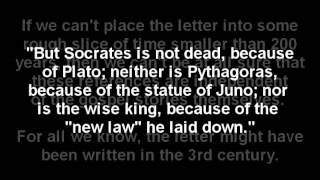
There are many who will not accept the fact that Philo was connected to the first Catholic Fathers. Many ignore Philo and present a solution to the problem with someone much further away in historyHere we present much evidence of Philo in early Catholic history.
DISCLAIMER
All videos are shared for educational and information purposes only. All videos are hosted and viewable on Youtube servers. Video titles are generated using the original video title; overall content theme including actual dialogue and speech (Transcript); and A.I-based recommendations with a focus on SEO, keyword density, and internal search functions. The video title does not represent the views held by the Youtube video uploader, or any individual, organisation or business.
If you spot any mistake, omission or give feedback, kindly Contact Us with details
SEARCH RESULTS: approvedofGod, Eusebius, PhiloExplore Topics | 4News | 0Articles | 0FAQ | 0Video | 41Links | 0
SEARCH AGAIN? | VIDEO • NEWS • ARTICLE
Explore Topics: approvedofGod, Eusebius, Philo (4)
Who was Philo Alexandria? Philo of Alexandria (20 BC - 50 AD), was a Hellenistic Jewish philosopher who lived in Alexandria, in the Roman province of Egypt. Philo used philosophical allegory to harmonize Jewish scripture, mainly the Torah, with Greek philosophy. His allegorical exegesis was important for some Christian
Church Fathers, but he had very little reception history within the Rabbinic Judaism. Philo adopted allegorical instead of literal interpretations of the Hebrew Bible. |
Who are approvedofGod?
I am here to teach all people, but especially the "body of Christ" (the Church), that the bible is sufficient for what we believe. Throughout the centuries, men have brought many doctrines into the church that have caused confusion and separation. My desire and goal is to clarify some of these
errors and bring all Christians back to the basics of the Bible. |
Who was Eusebius? Eusebius of Caesarea (260-340 AD) was a historian of Christianity, exegete, and Christian polemicist. He became the bishop of Caesarea Maritima about 314 AD. Together with Pamphilus, he was a scholar of the Biblical canon and is regarded as an extremely learned Christian of his time. During the
Council of Antiochia (325) he was excommunicated for subscribing to the heresy of Arius (Arianism), and thus withdrawn during the First Council of Nicaea where he accepted that the Homoousion referred to the Logos. Never recognized as a saint, he became counselor of Constantine the Great, and with the bishop of Nicomedia he continued to polemicize against Saint Athanasius of Alexandria, Church Fathers, since he was condemned in the First Council of Tyre in 335. |
Who was Philo? Philo of Alexandria (20 BC-50 AD) was a Hellenistic Jewish philosopher who lived in Alexandria, in the Roman province of Egypt. Philo used philosophical allegory to harmonize Jewish scripture, mainly the Torah, with Greek philosophy. His method followed the practices of both Jewish exegesis and
Stoic philosophy. His allegorical exegesis was important for some Christian Church Fathers, but he had very little reception history within the Rabbinic Judaism. He adopted allegorical instead of literal interpretations of the Hebrew Bible. Some scholars hold that his concept of the Logos as God's creative principle influenced early Christology. |
Youtube Videos on approvedofGod, Eusebius, Philo (41)
|
369 views
51:55
|
|
826 views
1:48
|
|
820 views
26:36
|
|
380 views
9:29
|
|
722 views
4:49
|
|
746 views
2:58
|
|
1049 views
2:23
|
|
944 views
5:06
|
|
813 views
4:18
|
|
809 views
3:04
|
|
733 views
1:37
|
|
185 views
4:17
|
|
900 views
4:39
|
|
275 views
2:29
|
|
379 views
3:26
|
|
745 views
4:12
|
|
826 views
1:26
|
|
552 views
2:11
|
|
978 views
6:59
|
|
658 views
3:39
|
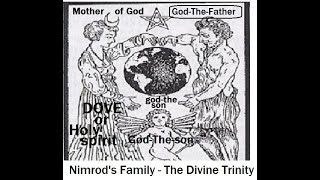 Trinity is based on the Babylonian Trinity (2700 BC) of Nimrod, Tammuz and Semiramis - approvedofGod
876 views
2:16
|
|
166 views
1:30
|
|
1651 views
11:51
|
|
669 views
15:46
|
|
364 views
8:46
|
|
1070 views
8:04
|
|
1103 views
12:38
|
|
543 views
2:39
|
|
906 views
3:21
|
|
1004 views
8:42
|
|
855 views
2:40
|
|
692 views
3:31
|
|
1212 views
2:33
|
|
744 views
6:53
|
|
640 views
4:01
|
|
743 views
4:26
|
|
219 views
3:33
|
 Philo of Alexandria used Greek Philosophy to teach that God was One of Three Trinity - approvedofGod
632 views
6:06
|
|
813 views
4:08
|
|
222 views
7:19
|
|
199 views
15:10
|
 Who was
  After Nicaea 325 AD, Constantine had
  Greek: Iesous is not a translation of Hebrew: Yeshua, claimed Josephus,
  I am a Jesus Mythicist due to: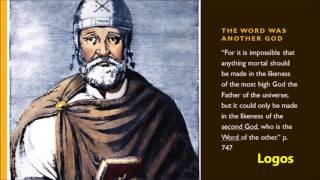
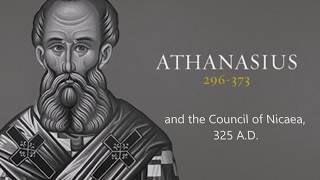
 Greek Apostate Fathers: Clement, Ignatius, Justin Martyr, Shepherd of Hermas & Polycarp founded the Catholic 'cult' of Rome -
 Trinity (Triune Gods) are found in Gnostic and Kabbalah beliefs dating to Ancient Babylon -
  Early Church Fathers and their contributions -
  Jesus, a 'Begotten God' contradicts an Eternal, Everlasting God -
  In 180 AD, Theophilus of Antioch borrowed Greek philosophy to first define 'Trinity'; not Tertullian -
  Athanasian Creed was NOT written by Athanasius -
 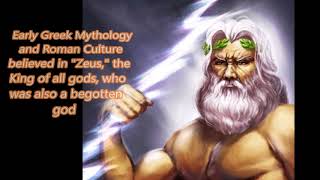 Jesus, the 'Begotten God' of the Eternal Father. This is Paganism -

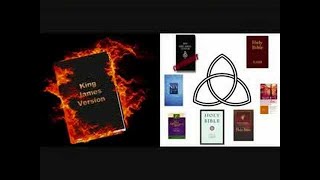 On John 1:18, this verse contradicts the Old Testament -
  From Proverbs 8:22,
 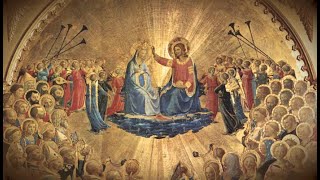 In Council of Ephesus (431 AD), Roman Catholics elevated Mary, to 'Mother of God' aka 'Queen of Heaven' -
  Nobody knows what Jesus or Mary looked like -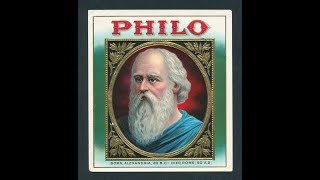
 Is Mark's Gospel based on writings of
  Jesus was a Jew, not a Trinitarian -
  God is One. He moves by Spirit. He creates through Spoken Word (Trinity is from Pagan philosophy) -
  Greek philosophy, John's gospel and
  Homoousios ('same substance') was a confusing and theologically Ambiguous word used by Athanasius,
 Thallus, quoted by Africanus, then
  Were Ignatius, Polycarp, Clement, Tertullian & Origen followers of God or the Antichrist? -
  Both Apostle Paul and
  Theophilus of Antioch (d. 183 AD) first wrote of the 'mystery' Trinity, taken from
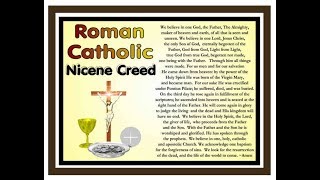
  Nicene Creed:
 In 431 AD, Council of Ephesus voted on Goddess worship. Mary became the 'Mother of God' -
 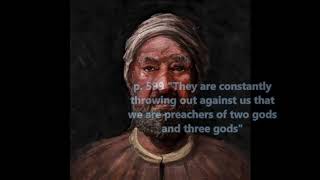 Majority rejected Tertullian's Trinity (240 AD), based on Greek philosophy -
 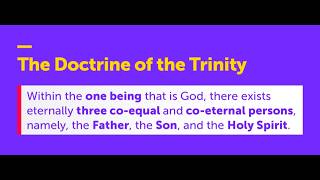 Early Christians rejected the Trinity Doctrine |
 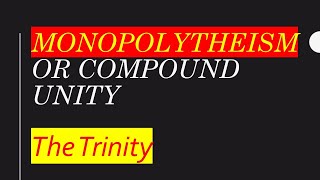 Christian Trinity is Mono-Polytheism adopted from Greek Philosophy |