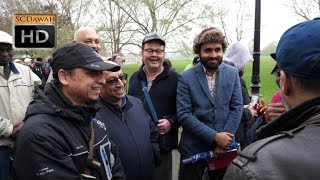
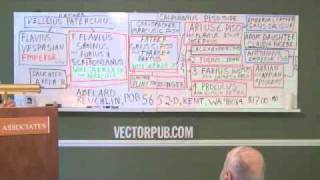
10:33
430 views
·
Last viewed: 1 week ago
Uploaded: 20 May 2019 (7 years ago) · Shared: 21 May 2019
Video Description (from Youtube)
Overview & Key Concepts
Who is Imran Hosein?
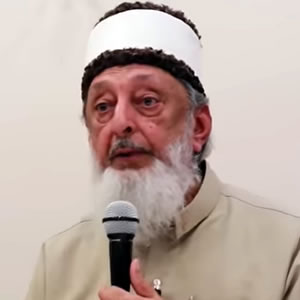 Imran Nazar Hosein (born 1942) is an Islamic scholar, author and philosopher. He specializing in Islamic eschatology, world politics, economics, and
modern socio-economic/political issues. He is the author of Jerusalem in the Qur'an and other books. Hosein has traveled extensively around the world on Islamic lecture tours since graduating from the Aleemiyah Institute of Islamic Studies in 1971 at age 29. He has written more than a dozen books on Islam.
What is Saudi Arabia?
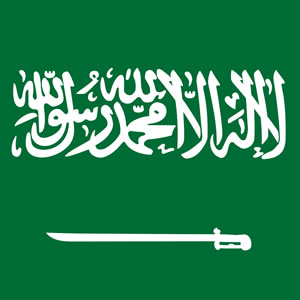 Saudi Arabia, officially the Kingdom of Saudi Arabia (KSA) is a country in Western Asia constituting the bulk of the Arabian Peninsula. With a land
area of approximately 2,150,000 km2 (830,000 sq mi), Saudi Arabia is geographically the largest sovereign state in the Middle East, the 2nd largest in the Arab world (after Algeria), the 5th largest in Asia, and the 12th largest in the world. Saudi Arabia is bordered by Jordan and Iraq to the north, Kuwait to the northeast, Qatar, Bahrain, and the United Arab Emirates to the east, Oman to the southeast and Yemen to the south; most of its terrain consists of arid desert, lowland and mountains. As of October 2018, the Saudi economy was the largest in the Middle East and the 18th largest in the world. Saudi Arabia also enjoys one of the world's youngest populations; 50% of its 33.4 million people are under 25 years old.
What is Creation?
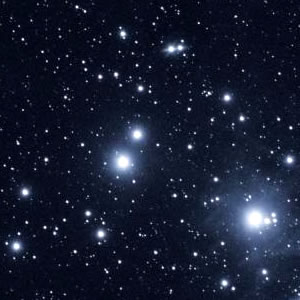 A creation myth or cosmogonic myth is a type of cosmogony, a symbolic narrative of how the world began and how people first came to inhabit it. While
in popular usage the term myth often refers to false or fanciful stories, members of cultures often ascribe varying degrees of truth to their creation myths. In the society in which it is told, a creation myth is usually regarded as conveying profound truths - metaphorically, symbolically, historically, or literally. They are commonly, although not always, considered cosmological myths - that is, they describe the ordering of the cosmos from a state of chaos or amorphousness.
Creation myths often share several features. They often are considered sacred accounts and can be found in nearly all known religious traditions. They are all stories with a plot and characters who are either deities, human-like figures, or animals, who often speak and transform easily.
Who was the Ottoman?
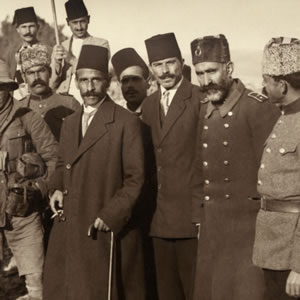 The Ottoman Empire historically known in Western Europe as the Turkish Empire or simply Turkey. This was a state that controlled much of Southeast
Europe, Western Asia and North Africa between the 14th and early 20th centuries. After 1354, the Ottomans crossed into Europe, and with the conquest of the Balkans, the Ottoman beylik was transformed into a transcontinental empire. The Ottomans ended the Byzantine Empire with the 1453 conquest of Constantinople by Mehmed the Conqueror.
What is British?
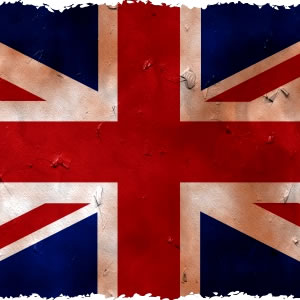 British people or Britons, also known colloquially as Brits, are the citizens and diaspora of the United Kingdom, the British Overseas Territories
and the Crown dependencies.
British nationality law governs modern British citizenship and nationality, which can be acquired, for instance, by descent from British nationals.
The British are a diverse, multinational, multicultural and multilingual people, with "strong regional accents, expressions and identities". The social structure of the United Kingdom has changed radically since the 19th century, with a decline in religious observance, enlargement of the middle class, and increased ethnic diversity, particularly since the 1950s, when citizens of the British Empire were encouraged to immigrate to Britain to work as part of the recovery from World War II.
The population of the UK stands at around 67 million, with around 50 million being White British. This includes 44.4 million in England and Wales as of 2021, and 4.2 million in Scotland as of 2022. 1.8 million identify as White in Northern Ireland, including White British and other White ethnicities, as of 2021.
Frequently Asked Questions
1.Who built the Kabah in Saudi Arabia?
Videos on Imran Hosein (7)
 5:31
5:31
572
1501545600
1787114838
Muhammad told us the Major Signs of the Last Day will be in Syria, Yemen and Saudi Arabia - Imran Hosein
000331
1
 1:11:17
836
1516679259
1787256294
Evil of Dajjal/Antichrist: Our Children become one-eyed, like the Dajjal, when they watch TV and Smartphone - Imran Hosein
004277
2
 19:49
19:49
808
1521552178
1787118486
Greater Israel Project (Yinon Plan) - Imran Hosein
001189
3
 1:21:02
291
1535194796
1787253678
Return of Jesus the Messiah - Imran Hosein
004862
4
 10:33
10:33
430
1558442565
1786426786
In 1916, British influence led to creation of Saudi Arabia, and demise of Ottoman Caliphate - Imran Hosein
000633
5
 37:50
37:50
678
1749181312
1787229065
WW3 - NATO, Saudi Arabia and 80 Sunni Countries against Russia | Imran Hosein
002270
6
 8:31
8:31
60
1783323714
1787217074
COVID Virus and its 'Unnatural Origins' | My personal thoughts by Imran Hosein
000511
7