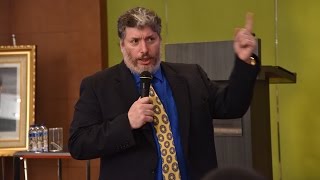
In Hebrews 9:22, Apostle Paul requires shedding of Blood. Jews reject this teaching - Julius Ciss

   14:11
692 views  ·  Last viewed: 1 week ago
Uploaded: 07 Sep 2019   (7 years ago)  ·  Shared: 09 Sep 2019

Video Description (from Youtube)

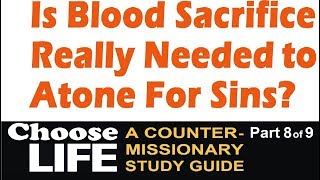
Christian Missionaries would have Jews believe that Blood Sacrifice Is Really Needed to Atone For Sins. But is that True? IS BLOOD SACRIFICE REALLY NEEDED TO ATONE FOR SINS? – narrated by

Counter-Missionary and former Jew for Jesus Julius Ciss, Excecutive Director of Jews for Judaism (Canada) is Part 8 of 9 of CHOOSE LIFE – A COUNTER-MISSIONARY STUDY GUIDE written by Rick Halpern and edited by Rabbi Michael Skobac.

Click here for the complete transcript of the CHOOSE LIFE book https://jewsforjudaism.ca/choose-life-pdf

Why “CHOOSE LIFE?” – A COUNTER-MISSIONARY STUDY GUIDE

Today, over 1,000 different Christian missionary organizations specifically target Jews worldwide for conversion. This threat is intensified by the reality that Christianity is the dominant religion throughout North America. Most Jews have had some contact with a fervently Christian friend, neighbour or business associate that is determined to share his or her faith with them.

Unfortunately, most Jewish people are unaware of the nature of these serious challenges and the ways to respond. “Choose Life: A Counter-Missionary Study Guide” is an excellent educational resource because it alerts us to the spiritual threat Christianity poses to our community and provides a critical foundation of essential knowledge to keep our families securely Jewish.

More than just another “Know-How-to-Respond” manual, Choose Life sounds a passionate call to all Jewish people to truly appreciate and embrace our 3,300 year-old spiritual treasure – our “Tree of Life.”

Choose Life is published by JEWS FOR JUDAISM, the world’s leading counter-missionary organization. If you would like to get additional information, receive assistance for you or someone you know, or arrange a speaking engagement, please contact us.

JEWS FOR JUDAISM is an outreach organization whose primary goal is to win back to Judaism those Jews who have been influenced by the following six threats to Jewish survival that are devastating the global Jewish community.

1. Hebrew-Christian missionaries convert thousands of Jews worldwide every year
2. Destructive cults cause many Jews to abandon family, friends and careers
3. Eastern religions, Buddhism and Hinduism are spiritual choices for many Jews
4. Apathy and ignorance leave many Jews unaware, unaffiliated and assimilated
5. Intermarriage is exploding with a 75% rate in some North American cities
6. Anti-Israel BDS on campus inhibits Jewish students from standing up for Israel and Judaism

To assist non-Jews who have left other religions, JEWS FOR JUDAISM also provides educational programs to help them embrace the Torah’s Seven Noachide Laws for Gentiles.

We achieve our goals through our worldwide Internet outreach, Social Media, free educational programs, educational literature and counseling services that connect Jewish people to the spiritual depth, beauty and wisdom of Judaism.

“I am so grateful to have discovered the wonderful Jews for Judaism YouTube lectures by Rabbi Skobac. I am a Jew who converted to Christianity in college, but now, thanks to your online outreach, I have returned to Judaism. Thank you.” – Rebecca G.

In a nutshell, Jews for Judaism saves Jewish lives and keeps Jews Jewish.

PLEASE SUPPORT JEWS FOR JUDAISM’S LIFE-SAVING WORK!
Your help is very much needed and greatly appreciated.
Jews for Judaism never charges for its programs, books and counseling services… ever.
We rely solely on donations from people like you.
To donate click here: https://www.canadahelps.org/dn/24741

Thank you very much.

JEWS FOR JUDAISM
3110 Bathurst St, PO Box 54042,
Toronto, ON, CANADA M6A 3B7
T: 416-789-0020 • F: 416-789-0030
EMAIL: info@jewsforjudaism.ca

VISIT: https://www.jewsforjudaism.ca
FACEBOOK: https://www.facebook.com/jewsforjudaismcanada
YOUTUBE: https://www.youtube.com/user/JewsforJudaismCanada
TWITTER: https://twitter.com/JewsforJudaism1
DONATE: https://www.canadahelps.org/dn/24741

DISCLAIMER
All videos are shared for educational and information purposes only. All videos are hosted and viewable on Youtube servers. Video titles are generated using the original video title; overall content theme including actual dialogue and speech (Transcript); and A.I-based recommendations with a focus on SEO, keyword density, and internal search functions. The video title does not represent the views held by the Youtube video uploader, or any individual, organisation or business.

If you spot any mistake, omission or give feedback, kindly Contact Us with details
Overview & Key Concepts


Who was Apostle Paul?
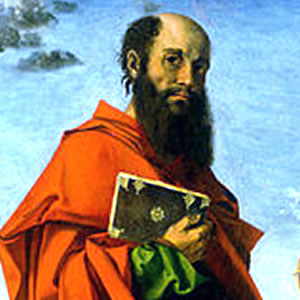
Paul the Apostle (Latin: Paulus), commonly known as Saint Paul and also known by his Jewish name Saul of Tarsus was an apostle (though not one of the

Twelve Apostles) who taught the gospel of Christ to the first century world. Paul is generally considered one of the most important figures of the Apostolic Age and in the mid-30s to the mid-50s AD he founded several churches in Asia Minor and Europe. He took advantage of his status as both a Jew and a Roman citizen to minister to both Jewish and Roman audiences. According to writings in the New Testament and prior to his conversion, Paul was dedicated to persecuting the early disciples of Jesus in the area of Jerusalem. In Acts, Paul was traveling on the road from Jerusalem to Damascus on a mission to 'arrest them and bring them back to Jerusalem' when the resurrected Jesus appeared to him in a great light. He was struck blind, but after three days his sight was restored by Ananias of Damascus and Paul began to preach that Jesus of Nazareth is the Jewish Messiah and the Son of God.

What is Hebrew?

Hebrew is a Northwest Semitic language within the Afroasiatic language family. A regional dialect of the Canaanite languages, it was natively spoken

by the Israelites and remained in regular use as a first language until after 200 CE and as the liturgical language of Judaism (since the Second Temple period) and Samaritanism. The language was revived as a spoken language in the 19th century, and is the only successful large-scale example of linguistic revival. It is the only Canaanite language still spoken today. It is also one of the only two Northwest Semitic languages with contemporary speakers, the other being Aramaic.

Nearly all of the Hebrew Bible is written in Biblical Hebrew, with much of its present form in the dialect that scholars believe flourished around the 6th century BCE, during the time of the Babylonian captivity.

What is Jews?

Judaism is an Abrahamic, monotheistic, ethnic religion that comprises the collective spiritual, cultural, and legal traditions of the Jewish people

Religious Jews regard Judaism as their means of observing the Mosaic covenant, which they believe was established between God and the Jewish people. The religion is considered one of the earliest monotheistic religions. Jewish religious doctrine encompasses a wide body of texts, practices, theological positions, and forms of organization. Among Judaism's core texts is the Torah - the first five books of the Hebrew Bible - and a collection of ancient Hebrew scriptures. The Tanakh, known in English as the Hebrew Bible, has the same books as Protestant Christianity's Old Testament, with some differences in order and content.

Frequently Asked Questions


1.Why did Apostle Paul preach a new religion?

When Rome adopted Christianity with the conversion of the Roman Emperor (4th Century) and his official campaign to repress anyone who refused to conform; to kill those Christians who refused to follow Romes 'Trinitarian Christianity'.
Paul knew that the victors wrote history and in order to win 'he had to be all things to all men' (I Corinthians 9:24-27).
Those who dig their heels in 'beat the air' and refused to compromise any detail of the true faith ended their days as martyrs.


2.What did early Jewish-Christians think of Apostle Paul?

Between 55 and 66 CE, early Jewish-Christian leaders in Jerusalem rejected Paul's teachings and challenged his authority, leading to a significant decline in his popularity.


3.How did Saul become Apostle Paul?

A young man named Saul of Tarsus was bent on murdering all the Christians he could. He was a Jew, a Pharisee (well-versed in the Law of Moses), a man of knowledge, letters and spirit.

Following a dramatic experience, where according to Saul, Jesus Christ appeared to him on the road to Damascus.

Saul converted to Christianity and now became the beloved apostle, saint, evangelist, theologian, and pastor we call Apostle Paul.


4.How was Apostle Paul's message different to Jesus?

Paul introduced a new theology focusing on Jesus as a divine sacrifice, arguing that Jewish law was unnecessary for salvation and largely disregarding Jesus's earthly teachings.


5.How did Apostle Paul view Jesus?

Paul viewed Jesus as the divine image of God, the firstborn of creation, and the fullness of God, as outlined in Colossians 1:15-20.


6.How did the Jews view Apostle Paul?

Faithful Jews viewed Paul's salvation theory as blatant blasphemy because his theological teachings explicitly ridiculed all previous revelations from God, including the sacred Torah, while teaching a doctrine that went against the absolute oneness of God.


7.How did Apostle Paul become the authority?

Following his dramatic conversion experience on the road to Damascus, Paul claimed direct divine authority to speak on behalf of God and began preaching that salvation depended entirely on believing that Jesus was part of the divine Godhead.


8.According to Apostle Paul, why did God give Jews the Torah?

Paul viewed the Torah as a temporary guide, claiming it was given to the Jews until they could be saved through faith in Jesus Christ.


9.How did Apostle Paul differ with the Jewish Rabbis?

The Jewish Rabbis preached a person was saved so long as their intention was to remain within the covenant, and one truly repented and seek forgiveness for their sins.

Paul preached that every person was 'damned' until they was offered salvation. Mans problem was that he was 'in the flesh' in bondage to the Law, sold under Sin, enslaved by the fundamental spirits of the universe (ie. dead).

Paul preached the only cure was liberation from slavery and death by union with Christ, who had conquered death and sin.


10.What was the core message of Apostle Paul's teachings?

The core of Paul's theology rested entirely on the absolute necessity of the crucifixion and resurrection of Jesus Christ, arguing in his letters that if righteousness could be achieved through the Mosaic Torah, then Christ died for absolutely nothing. He insisted to his followers that if Christ was not raised from the dead, then all Christian preaching and faith were completely vain and empty.


11.What happened after Apostle Paul converted to Christianity?

Following his conversion, Paul did not immediately meet with the original Apostles in Jerusalem; instead, he went to Arabia and returned to Damascus, waiting three years before visiting Peter and James for only fifteen days, avoiding the others.


12.What about Apostle Paul's writings?

Paul authored 13 of the 27 books in the modern New Testament, comprising a major portion of the text. This is significant due to his differing theological teachings to the law-observant teachings of Jesus.


13.What books did Apostle Paul write?

Romans
Paul explains how the gospel works and how to respond. Paul wrote this letter before he had visited the Roman church.

1 Corinthians
In 55 A.D., Paul admonished the local church that he had founded in Corinth.

2 Corinthians
Come 56 A.D., the Corinthian church had escalated and then resolved their conflict with Paul. Second Corinthians is Paul's a letter of forgiveness and reconciliation.

Galatians
Someone had misled the churches of Galatia re-subjecting them to the Law of Moses and devaluing God's grace. Paul writes the Galatians an aggressive letter to set them straight on their freedom in Christ.

Ephesians
Paul outlines doctrines of grace, peace, and salvation, and then instructs the church to walk in a manner worthy of Jesus Christ.

Philippians
Even though he's suffering in prison, Paul finds joy in Christ. He writes to the church at Philippi urging them to take on a Christlike attitude.

Colossians
This letter explains to the church at Colossae who they are in Christ.

1 Thessalonians
The church of Thessalonica is setting a great example for other churches, even though they're being persecuted for their faith. Paul encourages them to 'excel still more'.

2 Thessalonians
The affliction just won't let up on the Thessalonian church, so Paul coaches them on standing firm until Jesus return.

1 Timothy
This is Paul's guide to godliness and sound teaching for the young pastor Timothy at Ephesus.

2 Timothy
Paul's death is drawing near, and he charges Timothy to carry on his gospel work.

Titus
Paul had left Titus at Crete to set up order in the churches there. Now he writes Titus instructions for leading a counter-cultural church.

Philemon
It's a message to Philemon, a leader in the Colossian church.


14.Why is believing in Apostle Paul so wrong?

Accepting Paul's theology implies that Jesus mistakenly selected the wrong individuals as his original twelve disciples,

It renders Jesus's earthly life and direct moral teachings completely irrelevant, and

Ignores the fact that Paul never actually met Jesus in person yet rejected the guidance of those who lived and learned directly from him.

Furthermore, it notes that the final New Testament canon restricted competing eyewitness accounts by omitting the gospels of Peter, Barnabas, and James.


15.What did Apostle Paul think of his fellow Gospel writers?

Paul was deeply unyielding toward alternative views of the faith, explicitly writing in Galatians 1:9 that if any person preached a gospel different from the one his followers had received, that individual should be completely accursed. This indicates he aggressively dismissed the legalistic, Jewish-Christian perspectives held by original disciples like James and Peter.


16.How did Apostle Paul break Gods Law?

Paul is described as rejecting the binding authority of the Torah, specifically mandatory male circumcision as an everlasting covenant and laws regarding dietary purity. Thereby breaking away from divine commands given to the Hebrew people.


17.How was Apostle Paul viewed in his time?

Paul's controversial doctrine of justification through faith alone made him an implacable enemy of the Jewish population who vehemently refused to accept his arguments. Concurrently, many early Christians viewed him as an outsider and a dangerous theological threat, as his teachings ultimately caused the absolute severance of Christianity from its original Judaism roots.


18.Was Apostle Paul an Apostle?

An Apostle is one of the original 12 disciples called by Jesus to preach the gospel: Simon Peter, the brothers James and John, Andrew, Philip, Bartholomew, Matthew, Thomas, James the son of Alpheus, Thaddaeus, Simon the Zealot, Judas Iscariot.

As Paul never met Jesus, many Galatians and Corinthian Christians actively challanged Pauls right to even teach, and his right to call himself an Apostle.


19.What dramatic experience made Apostle Paul convert to Christianity?

Paul experienced a sudden vision of a blinding light and a voice on the road to Damascus, but the multiple accounts recorded in the Book of Acts contain clear, direct contradictions regarding whether his companions also fell to the ground, and whether they actually heard the voice or saw the light.


20.How did Matthew (Gospel) support Apostle Pauline Christian doctrine?

The Gospel of Matthew, aimed at law-abiding Jewish-Christians, did not support Pauline doctrine and actually stood in direct opposition to it.


21.Why was Apostle Paul superior to other Apostles?

Paul insisted that his gospel possessed a superior divine authority because he claimed it was delivered directly by the risen Lord Jesus, rather than the earthly, historical Jesus whom the twelve disciples had trained under in-person; this supposed heavenly origin entitled him to act entirely independently of the original Jewish-Christian beliefs and modify their doctrine.


22.Did Apostle Paul face any opposition. If so how?

Yes, early gospel writers strongly opposed Paul's innovations, with John the Evangelist and John of Patmos writing sharp warnings in 1 John and the Book of Revelation to guard believers against a dangerous heretic, a false Jew, a false apostle, and a deceitful doctrine that broke God's commandments.


23.What was the message preached by Apostle Paul?

Paul's theology centered on the message that salvation is a gift from God obtained through faith in the death and resurrection of Jesus Christ, rather than through performing the works of the Mosaic law. He argued that Christ's sacrifice fulfilled the ultimate requirements of the law, opening the path to redemption and righteousness for both Jews and Gentiles globally.


24.Why did Apostle Paul choose to preach to the Gentiles?

Historically, Paul's mission shifted toward non-Jewish Gentiles because the majority of mainstream Jewish communities rejected his messianic doctrines regarding Jesus. In orthodox Christian history, this decision is also framed as a direct divine calling following his conversion, leading him to systematically establish multi-ethnic churches across the Roman Empire.

Paul was a Pharisee and would have been familiar with the knowledge, teachings, methodologies and mistakes of his Pharasaic brothers. Thus, he would have been the best person to preach to them his interpretation of soteriology. Yet he chose not to; leaving this task to James, Peter and the rest, dubbing them as the 'super apostles'.

The real reason why Paul preached to the gentiles is because they were ignorant. They did not know the Torah. They did not possess intimate knowledge of Judaism, its scripture or its doctrine.

Therefore Paul was not presenting his new religion to his own brethren because they would be able to debunk him. Due to this, logically speaking, he preached to those who would find his new faith appealing.

The gentiles would not argue about Christ's deity, or about the new doctrine of salvation, but the Jews would and vehemently so. Thus the path of least resistance is among the gentiles who would eventually see him as an authoritative figure, as opposed to the Jews who would see him as a heretic and shame him.

Yet with the gentiles, he is able to avoid these problems and ascend to power and authority very quickly.


25.How was Apostle Paul viewed by the Jews?

Paul was widely viewed by mainstream Jewish communities as a radical apostate and religious heretic because he preached that observance of the Mosaic Torah was no longer required for salvation. This fierce theological conflict frequently resulted in severe public opposition, legal charges before Roman authorities, and physical riots during his travel throughout ancient Mediterranean cities.


26.What did Apostle Paul achieve by his Christian conversion?

By adopting faith in Jesus, Paul effectively expanded a localized, strictly observant Jewish movement into a highly adaptable, universal religion accessible to all cultures. He utilized his unique background as both a learned Pharisee and a Roman citizen to systematically build an expansive network of legal-exempt Christian communities across multiple Roman provinces.


27.What did Apostle Paul say about the other gospels?

In Galatians 1:6-9, Paul strongly condemned anyone preaching a different gospel, reflecting a significant conflict in the early church between his Gentile-inclusive mission and strict adherence to the Law.


28.How important was Jesus' crucifixion to Apostle Paul?

In his surviving epistles, the Apostle Paul demonstrates almost no interest in the day-to-day earthly life, chronological career, or specific moral parables of Jesus of Nazareth. Instead, his extensive theology is completely fixated on the cosmic, atoning meaning of the crucifixion and subsequent resurrection of the figure he addresses as 'the Lord'. Secular historians analyze this focus to illustrate how early Christian theology transformed from an inward-looking Jewish prophetic movement into a universal savior faith.


29.Was Apostle Paul a disciple of Jesus?

No, Paul never met Jesus during his ministry. He is considered an independent figure whose teachings, influenced by Hellenism, shifted the focus toward a divine Christ.


30.What life did Apostle Paul lead before his miraculous conversion to Christianity?

Before his conversion, Paul was known as Saul and operated as a strict Pharisee and enforcer hostile toward early followers of Jesus. Academic historians note that he worked under the authority of the high priestly administration in Jerusalem to systematically suppress the growing messianic movement, believing he was protecting traditional Judaism from a dangerous heresy


31.Why did James allow Apostle Paul to preach a new religion?

It is suggested James tolerated Paul's expansive missionary activities because the financial collections Paul raised from wealthy Gentile communities directly supported the impoverished Jerusalem mother church. Critical historians clarify that this financial collection, detailed across Paul's letters, was an official diplomatic agreement meant to preserve a fragile unity between Paul's Gentile converts and James' law-abiding Jewish-Christian community.


32.How did Apostle Paul view Jesus' teachings?

According to the source text, Paul's theology effectively relegated Jesus' specific earthly, Jewish ethical teachings to a position of secondary importance, prioritizing instead a cosmic message centered entirely on the crucifixion and resurrection for salvation. Textual analysis demonstrates that Paul's letters rarely quote Jesus' parables or earthly sermons, focusing almost exclusively on his identity as a divine savior figure.


33.What did Apostle Paul do after his miraculous conversion to Christianity?

Following his Damascus vision, Paul records in his letters that he did not seek instruction from others, but immediately withdrew into the Arabian desert for a period of reflection. The platform notes that this independence significantly elevated Paul's personal status, allowing him to claim he received his theological mandate directly from a divine revelation rather than from Jesus' twelve original earthly disciples.


34.What was the main difference between Apostle Paul's religion and the message of Jesus?

The core difference lies in the theological meaning of Jesus' life, with Paul's creed fundamentally focusing on the crucifixion as a necessary cosmic sacrifice to save mankind from sin. While Jesus preached repentance and the ethical arrival of the Kingdom of God, Paul's Damascus vision shifted the entire framework to a savior faith centered on the mechanical necessity of Jesus' violent death and resurrection for salvation.


35.How did Apostle Paul convince the Gentiles?

Paul's theological message had a strategic advantage because it stayed close to the authority of the Hebrew Scriptures while thoroughly re-interpreting them to forecast the saving death of Jesus. This scriptural grounding gave his teachings a unique legitimacy that proved highly attractive and persuasive to the Gentile masses.


36.How did James, leader of the Jerusalem Church, view Apostle Paul?

Paul's new doctrine met with disapproval from the Jewish-Christians of the Jerusalem Church led by James, who regarded the substitution of Jesus' atoning death for the observance of the Torah as a lapse into paganism.

Paul was duly summoned to Jerusalem by the leaders James, Peter and John to explain his doctrine in 50 AD.


37.What was Apostle Paul's view on circumcision?

Paul considered the physical act of circumcision to be unimportant, prioritizing faith and adherence to God's commandments as more significant than the physical ritual.


38.What did Apostle Paul do after he converted to Christianity, on the road to Damascus?

Following his conversion 1-3 years after the crucifixion, Paul vanished from the public eye before re-emerging 13 years later (47-60 CE) as a missionary to the Gentiles.


39.How did the Early Jewish-Christians practise their religion?

The earliest Jewish-Christians strictly followed traditional Hebrew practices, including daily prayers, circumcision, rituals for purity, fasting, dietary laws, and temple, according to the source material.


40.Did Jesus claim to be 'King of the Jews'?

A political placard accusing Jesus of making this claim was nailed to his cross, and this historical artifact can be found today at the Church of Santa Croce in Rome.


41.How was Jesus Jewish?

Jesus fully observed the laws of the Torah, maintained kosher dietary regulations, and never asked his followers to abandon Judaism, as they continued to meet at the Temple and practice circumcision rather than establishing a separate religion or attending a church.


42.What did early Jewish-Christians think of Apostle Paul?

Between 55 and 66 CE, early Jewish-Christian leaders in Jerusalem rejected Paul's teachings and challenged his authority, leading to a significant decline in his popularity.


43.Were the early Christians Jews?

Yes, Jesus and early followers were entirely Jewish, strictly observing traditional laws and customs.


44.Did Saul kill the early Jewish-Christians?

Before his conversion, Saul actively sought to imprison and execute early Jewish-Christians. Saul believed that he was serving God by finding Christians, throwing them into prison, and even executing them.
1 And Saul was consenting unto his death. And at that time there was a great persecution against the church which was at Jerusalem; and they were all scattered abroad throughout the regions of Judaea and Samaria, except the apostles.
2 And devout men carried Stephen to his burial, and made great lamentation over him.
3 As for Saul, he made havock of the church, entering into every house, and haling men and women committed them to prison.
[Acts 8:1-3]


45.How did the Jews view Apostle Paul?

Faithful Jews viewed Paul's salvation theory as blatant blasphemy because his theological teachings explicitly ridiculed all previous revelations from God, including the sacred Torah, while teaching a doctrine that went against the absolute oneness of God.


46.According to Apostle Paul, why did God give Jews the Torah?

Paul viewed the Torah as a temporary guide, claiming it was given to the Jews until they could be saved through faith in Jesus Christ.


47.How did Apostle Paul differ with the Jewish Rabbis?

The Jewish Rabbis preached a person was saved so long as their intention was to remain within the covenant, and one truly repented and seek forgiveness for their sins.

Paul preached that every person was 'damned' until they was offered salvation. Mans problem was that he was 'in the flesh' in bondage to the Law, sold under Sin, enslaved by the fundamental spirits of the universe (ie. dead).

Paul preached the only cure was liberation from slavery and death by union with Christ, who had conquered death and sin.


48.How did the early Jewish-Christians view Jesus' resurrection?

The earliest Jewish-Christians did not believe that the resurrection meant Jesus was God, but rather that he was a righteous man approved by God through miracles, wonders, and signs. Based on texts like Acts 2:22-24, they maintained the theological view that Jesus had been raised by God, not that he was the Creator himself.


49.Who seperated Christianity from Judaism?

It was Apostle Paul's dramatic conversion and subsequent teachings that directly resulted in the permanent theological separation of Christianity from Judaism. Within mere months of Jesus' departure, the original human-centric and law-abiding message was fundamentally altered into an independent religious system.


50.Why Jews do not accept Jesus as the Messiah?

The Bible claims the Messiah will accomplish certain signs:

1. Build the Third Temple (Ezekiel 37:26-28).

2. Gather all Jews back to the Land of Israel (Isaiah 43:5-6).

3. Usher in an era of world peace, and end all hatred, oppression, suffering and disease. As it says: 'Nation shall not lift up sword against nation, neither shall man learn war anymore.' (Isaiah 2:4)

4. Spread universal knowledge of the God of Israel, which will unite humanity as one. As it says: 'God will be King over all the worldon that day, God will be One and His Name will be One' (Zechariah 14:9).

The historical fact is that Jesus fulfilled none of these messianic prophecies.

Christians counter that Jesus will fulfill these in the Second Coming, but Jewish sources show that the Messiah will fulfill the prophecies outright, and no concept of a second coming exists.


51.What does the Quran say about Jews and Christians?

The Quran recognizes Jews and Christians as 'People of the Book' (Ahl al-Kitab), acknowledging that they were given previous divine revelations through prophets like Moses and Jesus. While it praises the righteous among them, it also critiques their theological developments, specifically rejecting the Christian doctrine of the Trinity and the divine sonship of Jesus.


52.How was Apostle Paul viewed by the Jews?

Paul was widely viewed by mainstream Jewish communities as a radical apostate and religious heretic because he preached that observance of the Mosaic Torah was no longer required for salvation. This fierce theological conflict frequently resulted in severe public opposition, legal charges before Roman authorities, and physical riots during his travel throughout ancient Mediterranean cities.


53.Does the Quran tell Jews and Christians to refer to their Scriptures (Torah and Bible)?

Yes, the Quran references previous scriptures in passages like Surah Al-Ma'idah (5:47), which tells the followers of the Gospel to judge by what God has revealed in it. From an academic perspective, this reflects the historical context of 7th-century Medina, where Jews and Christians were recognized as 'People of the Book' who possessed divine laws. While Islamic theology holds that modern biblical texts have suffered from textual corruption (tahrif), the Quran historically appeals to the core monotheistic truths remaining in those scriptures to validate Muhammad's message.


54.In the time of Jesus, what qualities would identify the Messiah, to the Jews?

First-century Jewish expectations, as discussed in this analysis of Trinity dogma, centered on a human leader, such as a prophet or king from David's line, rather than a divine figure.

A human empowered by God. Not a God-man, a person of the Godhead or part of a Triune God (Trinity)
From the lineage of Abraham (Gen. 22:18)
From the tribe of Judah (Gen. 49:10)
A descendant of David (2 Sam. 7:12)
A Lord under Yahweh, the God of Israel (Ps. 110:1)
From amongst their own people (Jer. 30:21)


55.How did the 1st century Jews view the Holy Spirit?

The Holy Spirit was understood as God's active, divine power, rather than a distinct, third person of a Trinity.

First century Jews believed the Holy Spirit was another name for God, similar to Yahweh, Elohim or El Shaddai - not a separate Person in the Trinity!

There is no record of Jesus ever trying to correct the Jews and prove the Holy Spirit was a third Person in the Trinity.


56.Jesus claimed to be God. The Jews must have understood this, as they accused him of blasphemy and were ready to stone him?

The platform asserts that Jesus did not claim divinity in this instance, and that his mention of Psalm 82:6 in John 10:34 was a defense noting that human judges are called 'gods' in scripture, thus challenging the accusation of blasphemy.


57.Why do Jews let the hair grow on the sides of there head?

In the text of the Torah (Leviticus 19:27), God explicitly forbids cutting or rounding off the corners of the hair on the sides of the head and marring the edges of the beard.


58.How did Jews view the Greek Bible (Septuagint)?

The Jewish community regarded the Septuagint only as a translation of the original Hebrew, never as an independent or authoritative scripture.


59.In the time of Jesus, how were the Jews viewed by the Greeks?

The text suggests that the Greeks perceived Judaism as an insular tradition, weakened by long-term Roman occupation, economic decline, and emigration.


Videos on Hebrew (42)

Video: Did Apostle Paul read the Jewish Hebrew Bible? - Tovia Singer 30:02
Video: Jewish Scripture translated from Hebrew to 'Toxic' English - Tovia Singer 26:01
Video: In Hebrews 7:1, is Melchizzadek greater than Jesus? - Shabir Yusuf vs Lucas 44:39
Video: In Hebrews 9:22, is Blood necessary for  Atonement of Sin? - Tovia Singer 30:50
Video: Is Islam from Satan? - Hamza Myatt vs Hebrew Israelite 1:22:07
Video: Black-on-black crime plagues our Community - Shamsi vs Hebrew Israelite 1:57:52
Video: Textual Corruption in the Old Testament and Hebrew Bible - Emanuel Tov 54:28
Video: New Testament: Interpreting Hebrews - Dale Martin 18/23 48:06
Video: Bible Project: Hebrews
245 views  
8:17
Video: In Hebrews 1:8, a Davidic King who lived before Jesus was called God - Trinity Delusion 29:58
Video: In Jeremiah 31:32 and Hebrews 8:9, Christians replaced the word 'Husband' with 'Disregard'. Why? - Tovia Singer 38:39
Video: In Jeremiah 31:32 and Hebrews 8:9, God established a New Covenant (Promise) based on faith in Jesus and New Testament? - Michael Skobac 11:35
Video: In Hebrews 7:3, was Melchizedek a God? - Anthony Buzzard 2:47
Video: Forged Fiction - Hebrews 8:44
Video: Moses the Hebrew - Christadelphian 1/5 1:05:32
Video: In Hebrews, Apostle Paul writes of a mystical, heavenly Jesus. Not a Earthly human being - David Fitzgerald 0:58
Video: In Hebrews 9:15, Christians replaced the Jewish Temple sacrificial Lamb with ultimate sacrifice, Jesus Christ - Richard Carrier 2:58
Video: In Hebrew Bible, God took human form and walked amongst Adam & Eve in Garden of Eden - Bart Ehrman 0:30
Video: In Hebrew Bible, the 'Angel of the Lord' regularly appears as a Human being - Bart Ehrman 0:09
Video: In Hebrew Bible, humans were called Gods i.e. King of Israel, Enoch - Bart Ehrman 1:12
Video: In Hebrews, scribes edited a verse as they saw fit - Bart Ehrman 1:59
Video: Papias (163 AD) described Matthew's Gospel as Jesus' sayings written in Hebrew - Bart Ehrman vs Richard Bauckham 2:31
Video: In Hebrews 7:3, Melchizedek had no mother or father. Is he a God too? - Hashim vs Christians 1/2 19:33
Video: In Hebrews 7:3, Melchizedek had no mother or father. Is he a God too? - Hashim vs Christians 2/2 20:01
Video: After Marcion (160 AD) rejected 'Angry' OT Hebrew God, Christians compiled NT Bible - Craig Blomberg 1:28
Video: NT Bible: Hebrews, James, 2 Peter, 2/3 John, Jude & Revelation were 'disputed' books - Craig Blomberg 3:34
Video: Jews disagreed on the Hebrew Bible canon; different canons listed 5,24,39,46 & 94 books - Brant Pitre 28:18
Video: Greek: Iesous is not a translation of Hebrew: Yeshua, claimed Josephus, Eusebius, Clement & Cyril. We simply do NOT know Jesus' real name - Mansur Ahmad vs Christian 26:36
Video: In Isaiah 42, Muhammad is found in the Bible - Shamsi vs Hebrew Israelite 6:23
Video: In Jewish and Hebrew Scriptures, God cannot become a Man and walk amongst us - Peleh Ben Avraham 7:59
Video: In Hebrews 2:9, Jesus was 'Made a Little Lower' than the Angels? - Muhammad Lamin 9:29
Video: King James bible (KJV) translators 'twisted' the Jewish Hebrew verse to make it more 'Christian-like' - Tovia Singer 9:30
Video: Moses was not a Jew who spoke modern Hebrew. Show me 'Judaism' in the Torah - Shamsi vs Jews 13:18
Video: In Hebrews 9:22, Apostle Paul wrote only 'shedding blood' atoned for Sin. He is wrong! - RTC 17:19
Video: Jesus Died because Paul said so in his 'Hebrews' Letter 100 times. It must be true! - Shamsi vs Christian 18:20
Video: Yeshua was Jesus' Hebrew Name - Michael Brown 4:11
Video: In Hebrews 9:22, Apostle Paul requires shedding of Blood. Jews reject this teaching - Julius Ciss 14:11
Video: Apostle Paul Lied! Hebrew Bible does not predict Jesus | Tovia Singer | History Valley 52:10
Video: Does Quran acknowledge the Semitic languages: Arabic, Hebrew, Aramaic and Akkadian? | Exploring Quran Bible 17:41
Video: Eber - Father of the Hebrews | Bible Flame 1:12:55
Video: Eber - True Father of the Hebrews | Unraveling Scriptures 12:27
Video: Shem's 5 Sons: Elam (Elamites), Asshur (Assyrians), Arphaxad (Chaldeans/Hebrews), Lud (Lydians), and Aram (Arameans) 1:28:37

EXPLORE TOPICS : APOSTLE PAUL | 181 JEWISH | 224 JEWS | 140 JUDAISM | 74 HEBREW | 45   JESUS

Latest videos  •  6,061 videos  •  0 viewed/24 hour

SUBSCRIBE

Receive the latest news and updates by email - Subscribe Now!
About  |  Q&A  |  Contact Us    •    Terms  |  Privacy  |  Disclaimer  |  Sitemap
Connect:      Facebook  |    Twitter  |    Youtube
MuslimProphets.com is an educational website on the Prophets of God: David, Noah, Abraham, Moses, Jesus and Muhammad, who established the Abrahamic faiths of Judaism, Christianity and Islam. MuslimProphets.com explores contemporary social themes through Scripture, Evidences, Photo, Video, Maps, Current Affairs, Debate and 'alternative' Views held by Theologians, Apologists, Scholars and Street Preachers. Take a Site Tour

In accordance with Islamic etiquette, all prophet names should be followed with 'Peace Be Upon Him (PBUH)'. This is omitted to minimise text.

DISCLAIMER: All website content is for general information and educational purposes only and available in the public domain. Whilst all information comes from sources believed to be reliable, this cannot be guaranteed. External links are provided as a convenience and for informational purposes only. They do not constitute endorsement or approval for any products, services or comments by organizations or individuals. Title and Text links may be edited for external SEO, internal site and keyword search purposes. We bear no responsibility for the accuracy, legality, or content found on any external website or its subsequent links. Unless indicated, all images and content is licensed under a Creative Commons Attribution License distributed by Wikipedia, Wikimedia Commons, Pixabay, Pxhere, Pexels, Unsplash, Flickr and others. All Torah, Psalms, Old and New Testament Bible quotes are from the King James Version (KJV) Holy Bible in the public domain. All Quran quotes are from Taqi-ud-Din al-Hilali/Muhsin Khan English Quran translation.

ALWAYS DO YOUR OWN RESEARCH. If you spot any mistake, error or omission of information, contact us so we can correct it.