Explore More
Webster Tarpley False Flag TerrorSearch Google Search Explore Topics
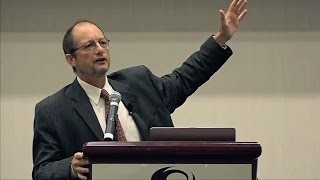
 Who is Webster Tarpley?
Webster Griffin Tarpley (born 1946) is an American author, historian, journalist, lecturer and critic of U.S. foreign and domestic policy. Some of his publications revolve around conspiracy theories. After receiving a Bachelor of Arts in Languages from Princeton University in 1966, summa cum laude and Phi Beta Kappa, he became a Fulbright Scholar at the University of Turin, Italy. He later earned a Master of Arts in humanities from Skidmore College and a Ph.D. in early modern history from the Catholic University of America. Tarpley maintains that the September 11 attacks were engineered by a rogue network of the Military-industrial complex and intelligence agencies as a false flag operation.
What is False Flag?False flag is a covert operation designed to deceive. The deception creates the appearance of a particular party, group, or nation being responsible for some activity, disguising the actual source of responsibility. The term today include countries that organize attacks on themselves and make the attacks appear to be by enemy nations or terrorists, thus giving the nation that was supposedly attacked a pretext for domestic repression and foreign military aggression. Operations carried out during peacetime by civilian organizations, as well as covert government agencies, can (by extension) also be called false flag operations if they seek to hide the real organization behind an operation.
 What is Terror?
Terrorism is the use of intentionally indiscriminate violence as a means to create terror among masses of people. With aim to create fear to achieve a financial, political, religious or ideological aim. It is used in this regard primarily to refer to violence against peacetime targets or in war against non-combatants. The terms "terrorist" and "terrorism" originated during the French Revolution of the late 18th century but gained mainstream popularity during the U.S. presidency of Ronald Reagan (1981-89) after the 1983 Beirut barracks bombings and again after the 2001 September 11 attacks. There is no commonly accepted definition of "terrorism". Being a charged term, with the connotation of something "morally wrong", it is often used, both by governments and non-state groups, to abuse or denounce opposing groups.