0:09
630 views
·
Last viewed: 14 hrs ago
Uploaded: 20 Jun 2018 (8 years ago) · Shared: 21 Jun 2018
Video Description (from Youtube)
Link to the original video: https://www.youtube.com/watch?v=tr0D7W6zPSs DISCLAIMER We do NOT own the video materials and all credits belong to the respectful owners. In case of copyright issuesplease contact us immediately for further credits or clip delete.
COPYRIGHT
Under Section 107 of the Copyright Act 1976, allowance is made for 'fair use' for purposes such as criticism, comment, news reporting, teaching, scholarship and research. Fair use is a use permitted by copyright statute that might otherwise be infringing. Non-profit, educational or personal use tips the balance in favour of fair use.
DISCLAIMER
All videos are shared for educational and information purposes only. All videos are hosted and viewable on Youtube servers. Video titles are generated using the original video title; overall content theme including actual dialogue and speech (Transcript); and A.I-based recommendations with a focus on SEO, keyword density, and internal search functions. The video title does not represent the views held by the Youtube video uploader, or any individual, organisation or business.
If you spot any mistake, omission or give feedback, kindly Contact Us with details
Overview & Key Concepts
Who is Bart Ehrman?
 Bart Ehrman (born 1955) is an American New Testament scholar focusing on textual criticism of New Testament, historical Jesus, and development of
early Christianity. Ehrman has written and edited 30 books, including three college textbooks. He has also authored six New York Times bestsellers. He is currently the James A. Gray Distinguished Professor of Religious Studies at the University of North Carolina at Chapel Hill.
What is Hebrew?
 Hebrew is a Northwest Semitic language within the Afroasiatic language family. A regional dialect of the Canaanite languages, it was natively spoken
by the Israelites and remained in regular use as a first language until after 200 CE and as the liturgical language of Judaism (since the Second Temple period) and Samaritanism. The language was revived as a spoken language in the 19th century, and is the only successful large-scale example of linguistic revival. It is the only Canaanite language still spoken today. It is also one of the only two Northwest Semitic languages with contemporary speakers, the other being Aramaic.
Nearly all of the Hebrew Bible is written in Biblical Hebrew, with much of its present form in the dialect that scholars believe flourished around the 6th century BCE, during the time of the Babylonian captivity.
What is an Angel?
 An angel is generally a supernatural being found in various religions and mythologies. In Abrahamic religions, angels are often depicted as benevolent
celestial beings who act as intermediaries between God or Heaven and Humanity. Other roles of angels include protecting and guiding human beings, and carrying out God's tasks. Within Abrahamic religions, angels are often organized into hierarchies, although such rankings may vary between sects in each religion, and are given specific names or titles, such as Gabriel or 'Destroying angel'.
Frequently Asked Questions
1.What are Angels?
2.What do angels look like?
3.What functions do angels perform?
4.How do the Angels pray?
5.How is the Hebrew Bible different from the Greek Bible (Septuagint)?
Videos on Hebrew (42)
 30:02
30:02
963
1482796800
1787238009
Did Apostle Paul read the Jewish Hebrew Bible? - Tovia Singer
001802
1
 26:01
26:01
579
1483401600
1787155583
Jewish Scripture translated from Hebrew to 'Toxic' English - Tovia Singer
001561
2
 44:39
44:39
334
1490659200
1787076251
In Hebrews 7:1, is Melchizzadek greater than Jesus? - Shabir Yusuf vs Lucas
002679
3
 30:50
30:50
526
1490659200
1787179468
In Hebrews 9:22, is Blood necessary for Atonement of Sin? - Tovia Singer
001850
4
 1:22:07
619
1493856000
1787247092
Is Islam from Satan? - Hamza Myatt vs Hebrew Israelite
004927
5
 1:57:52
593
1493856000
1787034965
Black-on-black crime plagues our Community - Shamsi vs Hebrew Israelite
007072
6
 54:28
54:28
547
1493856000
1786955703
Textual Corruption in the Old Testament and Hebrew Bible - Emanuel Tov
003268
7
 48:06
48:06
508
1493856000
1787113528
New Testament: Interpreting Hebrews - Dale Martin 18/23
002886
8

 29:58
29:58
615
1505863314
1787217480
In Hebrews 1:8, a Davidic King who lived before Jesus was called God - Trinity Delusion
001798
10
 38:39
38:39
591
1505867180
1787232668
In Jeremiah 31:32 and Hebrews 8:9, Christians replaced the word 'Husband' with 'Disregard'. Why? - Tovia Singer
002319
11

683 views
11:35
683
1511317996
1787144067
In Jeremiah 31:32 and Hebrews 8:9, God established a New Covenant (Promise) based on faith in Jesus and New Testament? - Michael Skobac
000695
12
 2:47
2:47
561
1513808062
1787207959
In Hebrews 7:3, was Melchizedek a God? - Anthony Buzzard
000167
13

227 views
8:44
227
1520421085
1787070972
Forged Fiction - Hebrews
000524
14

310 views
1:05:32
310
1523010360
1786829376
Moses the Hebrew - Christadelphian 1/5
003932
15
 0:58
0:58
638
1528567068
1786668504
In Hebrews, Apostle Paul writes of a mystical, heavenly Jesus. Not a Earthly human being - David Fitzgerald
000058
16
 2:58
2:58
811
1529235754
1787165097
In Hebrews 9:15, Christians replaced the Jewish Temple sacrificial Lamb with ultimate sacrifice, Jesus Christ - Richard Carrier
000178
17

648 views
0:30
648
1529623236
1787196880
In Hebrew Bible, God took human form and walked amongst Adam & Eve in Garden of Eden - Bart Ehrman
000030
18
 0:09
0:09
630
1529591098
1787213306
In Hebrew Bible, the 'Angel of the Lord' regularly appears as a Human being - Bart Ehrman
000009
19
 1:12
1:12
470
1529623243
1787184860
In Hebrew Bible, humans were called Gods i.e. King of Israel, Enoch - Bart Ehrman
000072
20
 1:59
1:59
273
1530143047
1787181465
In Hebrews, scribes edited a verse as they saw fit - Bart Ehrman
000119
21
 2:31
2:31
749
1530742098
1787247590
Papias (163 AD) described Matthew's Gospel as Jesus' sayings written in Hebrew - Bart Ehrman vs Richard Bauckham
000151
22
 19:33
19:33
1320
1531289909
1787129593
In Hebrews 7:3, Melchizedek had no mother or father. Is he a God too? - Hashim vs Christians 1/2
001173
23
 20:01
20:01
530
1531222007
1787178228
In Hebrews 7:3, Melchizedek had no mother or father. Is he a God too? - Hashim vs Christians 2/2
001201
24
 1:28
1:28
501
1531853204
1787014699
After Marcion (160 AD) rejected 'Angry' OT Hebrew God, Christians compiled NT Bible - Craig Blomberg
000088
25

283 views
3:34
283
1531853757
1787205585
NT Bible: Hebrews, James, 2 Peter, 2/3 John, Jude & Revelation were 'disputed' books - Craig Blomberg
000214
26
 28:18
28:18
343
1533843880
1786789562
Jews disagreed on the Hebrew Bible canon; different canons listed 5,24,39,46 & 94 books - Brant Pitre
001698
27
 26:36
26:36
817
1536046391
1787183408
Greek: Iesous is not a translation of Hebrew: Yeshua, claimed Josephus, Eusebius, Clement & Cyril. We simply do NOT know Jesus' real name - Mansur Ahmad vs Christian
001596
28
 6:23
6:23
961
1537793866
1786918391
In Isaiah 42, Muhammad is found in the Bible - Shamsi vs Hebrew Israelite
000383
29

451 views
7:59
451
1540936494
1787230272
In Jewish and Hebrew Scriptures, God cannot become a Man and walk amongst us - Peleh Ben Avraham
000479
30
 9:29
9:29
534
1548092817
1786928873
In Hebrews 2:9, Jesus was 'Made a Little Lower' than the Angels? - Muhammad Lamin
000569
31

905 views
9:30
905
1552936900
1787178016
King James bible (KJV) translators 'twisted' the Jewish Hebrew verse to make it more 'Christian-like' - Tovia Singer
000570
32

701 views
13:18
701
1554734225
1787239762
Moses was not a Jew who spoke modern Hebrew. Show me 'Judaism' in the Torah - Shamsi vs Jews
000798
33
 17:19
17:19
640
1559047874
1787090674
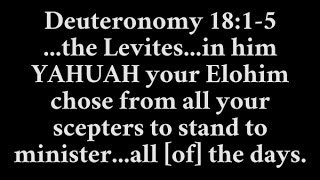
In Hebrews 9:22, Apostle Paul wrote only 'shedding blood' atoned for Sin. He is wrong! - RTC
001039
34
 18:20
18:20
684
1562108853
1786959108
Jesus Died because Paul said so in his 'Hebrews' Letter 100 times. It must be true! - Shamsi vs Christian
001100
35
 4:11
4:11
408
1567017193
1787186644
Yeshua was Jesus' Hebrew Name - Michael Brown
000251
36
 14:11
14:11
692
1567988503
1786544004
In Hebrews 9:22, Apostle Paul requires shedding of Blood. Jews reject this teaching - Julius Ciss
000851
37
 52:10
52:10
305
1772210301
1787248617
Apostle Paul Lied! Hebrew Bible does not predict Jesus | Tovia Singer | History Valley
003130
38
 17:41
17:41
126
1783080678
1787229396
Does Quran acknowledge the Semitic languages: Arabic, Hebrew, Aramaic and Akkadian? | Exploring Quran Bible
001061
39
 1:12:55
51
1783341408
1787045439
Eber - Father of the Hebrews | Bible Flame
004375
40
 12:27
12:27
70
1783341408
1787100496
Eber - True Father of the Hebrews | Unraveling Scriptures
000747
41
 1:28:37
70
1783345258
1786993198
Shem's 5 Sons: Elam (Elamites), Asshur (Assyrians), Arphaxad (Chaldeans/Hebrews), Lud (Lydians), and Aram (Arameans)
005317
42