3:10
806 views
·
Last viewed: 1 hr ago
Uploaded: 09 Dec 2023 (3 years ago) · Shared: 26 Jun 2025
Video Description (from Youtube)
The short story of Jesus sacrifice and resurrection. Don't forget to hit the SUBSCRIBE button, giving us a thumbs up, comment your thoughts below and share this video with your friends and family!Every like, share and comment helps us bring more videos your way! ❤️
HOW CAN YOU SUPPORT US?
▀▀▀▀▀▀▀▀▀▀▀▀▀▀▀▀▀▀▀▀▀▀▀▀▀▀
This is how we make our living and how you can make our vision of full length christian films come to life! We are grateful for your support! ❤️ ✝️
Get Products designed with love ❤️: (Shop releasing soon)
Join the Patreon Nutshell Family 💪: patreon.com/BibleNutshells
OUR STORYTELLING CHANNELS 🎬
▀▀▀▀▀▀▀▀▀▀▀▀▀▀▀▀▀▀▀▀▀▀▀▀▀▀
History In a Nutshell: https://www.youtube.com/@HistoryNutshells
Scared In a Nutshell: https://www.youtube.com/@ScaryNutshells
Sci-Fi In a Nutshell: https://www.youtube.com/@ScienceFictionNutshells
Earth In a Nutshell: https://www.youtube.com/@PlanetEarthNutshells
Life In a Nutshell: https://www.youtube.com/@RealLifeNutshells
Mythology In a Nutshell: https://www.youtube.com/@MythologyNutshells
Explained In a Nutshell: https://www.youtube.com/@ExplainedNutshells
OUR MUSIC CHANNELS 🎧
▀▀▀▀▀▀▀▀▀▀▀▀▀▀▀▀▀▀▀▀▀▀▀▀▀▀
Bible In a Nutshell Music: https://www.youtube.com/@BibleNutshellsMusic
Lofi Animals: https://www.youtube.com/@LofiAnimalss
Bonjour Paris: https://www.youtube.com/@BonjourParis.
Listen to our music on Spotify: https://open.spotify.com/artist/2d4Pm0Zsusyh0gVRIC6KlH
SOCIAL MEDIA
▀▀▀▀▀▀▀▀▀▀▀▀▀▀▀▀▀▀▀▀▀▀▀▀▀▀
Instagram: https://www.instagram.com/biblenutshells?igsh=MWl0d2NmcmJrdTV4cg%3D%3D&utm_source=qr
TikTok: https://www.tiktok.com/@biblenutshells?_t=8myHbs876BN&_r=1
Facebook: https://www.facebook.com/people/Bible-In-a-Nutshell/61561073485384/
▶︎ DISCLAIMER ◀︎
▀▀▀▀▀▀▀▀▀▀▀▀▀▀▀▀▀▀▀▀▀▀▀▀▀▀
For informational and entertainment purposes only. While we strive for historical and factual accuracy, please note that these cinematic recreations may involve dramatisation and should not be considered wholly precise in every detail. Our goal is to present these timeless stories in an engaging, visually appealing way that simplifies complex narratives, making them accessible and enjoyable for all audiences.
• Animated visuals & narrative is made by the Nutshell Studios team. 🎨
• This video has proper licensing to use the music and sound effects. 🎵
• All music in this video are protected by copyright.
Do not react / dub our videos without emailed permission. Use of any audio or affiliated animations of these videos on YouTube or any other social media platform is not allowed as it is a direct violation of copyright law and will result in a copyright strike.
Copyright © 2024 NutshellStudios. All rights reserved.
DISCLAIMER
All videos are shared for educational and information purposes only. All videos are hosted and viewable on Youtube servers. Video titles are generated using the original video title; overall content theme including actual dialogue and speech (Transcript); and A.I-based recommendations with a focus on SEO, keyword density, and internal search functions. The video title does not represent the views held by the Youtube video uploader, or any individual, organisation or business.
If you spot any mistake, omission or give feedback, kindly Contact Us with details
Overview & Key Concepts
Who are Bible In Nutshell?
 Welcome to Bible in a Nutshell!
Our vision is to create full-length movies that bring the Bible to life. Imagine watching a beautifully animated
Welcome to Bible in a Nutshell!
Our vision is to create full-length movies that bring the Bible to life. Imagine watching a beautifully animated
film about the life of Jesus or the adventures of David and Goliath with your family. While mainstream media may never produce these movies, we are committed to making them a reality with the help of AI technology.
You can watch all our content for free on YouTube.
What is Resurrection?
 Resurrection is the concept of coming back to life after death. In a number of ancient religions, a dying-and-rising god is a deity which dies and
resurrects. The death and resurrection of Jesus, an example of resurrection, is the central focus of Christianity. As a religious concept, it is used in two distinct respects: a belief in the resurrection of individual souls that is current and ongoing (Christian idealism, realized eschatology), or else a belief in a singular resurrection of the dead at the end of the world. The resurrection of the dead is a standard eschatological belief in the Abrahamic religions.
What is Crucifixion?
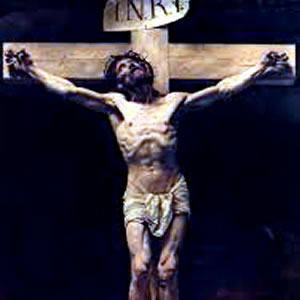 Crucifixion is a method of capital punishment in which the victim is tied or nailed to a large wooden beam. The victim is left to hang for several
days until eventual death from exhaustion and asphyxiation. The crucifixion of Jesus is a central narrative in Christianity, and the cross (sometimes depicting Jesus nailed onto it) is the main religious symbol for many Christian churches. The English term cross derives from the Latin word crux. The Latin term crux classically referred to a tree or any construction of wood used to hang criminals as a form of execution. The term later came to refer specifically to a cross.