44:15
544 views
·
Last viewed: 6 hrs ago
Uploaded: 04 Apr 2012 (14 years ago) · Shared: 29 Sep 2017
Video Description (from Youtube)
The Early Middle Ages, 284--1000 (HIST 210) In this lecture, Professor Freedman considers the importance of the British Isles in the early Middle Ages, both in their own right and as an example of apost-Roman frontier society. In the wake of the fifth century Roman withdrawal, England experienced 'radical economic simplification.' However, England's conversion to Christianity beginning at the end of the sixth century brought about a flourishing written culture and Latin learning. Ireland experienced a similar cultural flowering, although it had converted to Christianity centuries earlier. It had never been colonized by the Romans, and the Irish Church was less hierarchical, more decentralized, and placed less importance on bishops than did the Roman. The conversion of England under the competeing influences of Rome and ireland was thus not just a conflict between Christianity and paganism, but also between two administrative styles of Christianity. Professor Freedman ends the lecture with a few remarks on the cultural accomplishments of the British Isles.
00:00 - Chapter 1. Introduction to the British Isles
22:32 - Chapter 2. The Conversion of England
36:30 - Chapter 3. The Conversion of Ireland and the Irish Church
45:34 - Chapter 4. Closing Remarks
Complete course materials are available at the Yale Online website: online.yale.edu
This course was recorded in Fall 2011.
DISCLAIMER
All videos are shared for educational and information purposes only. All videos are hosted and viewable on Youtube servers. Video titles are generated using the original video title; overall content theme including actual dialogue and speech (Transcript); and A.I-based recommendations with a focus on SEO, keyword density, and internal search functions. The video title does not represent the views held by the Youtube video uploader, or any individual, organisation or business.
If you spot any mistake, omission or give feedback, kindly Contact Us with details
Search Results on 'Rome: Britain and Ireland - Paul Freedman 12/18'
SCROLL TO: TOPICS | 3 NEWS | 6 ARTICLES | 1 FAQ | 2 VIDEO | 58 LINKS | 2Topics include Paul Freedman, Rome, Ireland (3)
Who is Paul Freedman? Paul Freedman is the Chester D Tripp Professor of History at Yale University. He specializes in medieval social history, the history of Spain, the study of medieval peasantry, and medieval cuisine.
|
Where is Rome? Rome is the capital city of Italy and a special comune (named Comune di Roma Capitale). Rome also serves as the capital of the Lazio region. With 2,872,800 residents in 1,285 km2 (496.1 sq mi), it is also the country's most populated comune. It is the fourth-most populous city in the European Union
by population within city limits. It is the centre of the Metropolitan City of Rome, which has a population of 4.3 million residents. Rome is located in the central-western portion of the Italian Peninsula, within Lazio (Latium), along the shores of the Tiber. The Vatican City is an independent country inside the city boundaries of Rome, the only existing example of a country within a city: for this reason Rome has been often defined as capital of two states. Rome's history spans 28 centuries. While Roman mythology dates the founding of Rome at around 753 BC, the site has been inhabited for much longer, making it one of the oldest continuously occupied sites in Europe. |
What is Ireland? Ireland is an island in the North Atlantic. It is separated from Great Britain to its east by the North Channel, the Irish Sea, and St George's Channel. Ireland is the second-largest island of the British Isles, the third-largest in Europe, and the twentieth-largest on Earth. Geopolitically, Ireland
is divided between the Republic of Ireland (officially named Ireland), which covers five-sixths of the island, and Northern Ireland, which is part of the United Kingdom. In 2011, the population of Ireland was about 6.6 million, ranking it the second-most populous island in Europe after Great Britain. As of 2016, 4.8 million live in the Republic of Ireland, and 1.8 million live in Northern Ireland. |
News on Paul Freedman, Rome, Ireland (6)
Articles on Paul Freedman, Rome, Ireland (1)
1.Rome, Caesar & Emperors in the Bible

|
FAQ on Paul Freedman, Rome, Ireland (2)
| 1.When did Catholic Christianity become official religion of Rome? |
| 2.What happened after Rome chose Christianity as the state religion? |
Youtube Videos on Paul Freedman, Rome, Ireland (58)

 Flavian Signature: Proof
  Seige of Jerusalem:
  Eclipsing Empire: Apostle
  Christianity opposed


 The World of Jesus,
  In 70 AD,
  Christian theology is based on decisions made in
 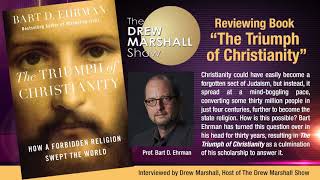 Triumph of Christianity: How
  In 73 AD, Masada was conquered by
  Islam's victory over Byzantine
  'Christianity converts to
  Jesus, an Aramaic speaking Palestinian. New Testament originally in Greek, language of
  Apostle
  In 382 AD, Council of
  Theodosius (380 AD) declared Christianity as official state religion of
  From 306 AD, Constantine used Christianity to restore power & glory to
  In 389 AD,
  In 70 AD,
  Greek Apostate Fathers: Clement, Ignatius, Justin Martyr, Shepherd of Hermas & Polycarp founded the Catholic 'cult' of
  Bar Kokhba and Jesus were both killed by
  Pagan
Pagan  Christianity is a Graeco-Roman production for Greek
  Early Christians believed Jesus was a Man.
  Early Christians believed Jesus was a Man.
  Early Christians believed Jesus was a Man.
  In 70 AD,
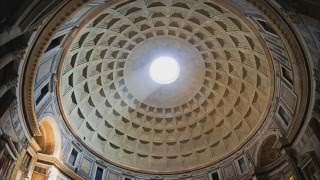 Pantheon, Roman Temple to the Gods and Idols of pagan
  Jesus,
  The Homeless On The Streets of
  Did
Did  Greater Israel defeats United States (
 Caesar Messiah EXPOSED: Did
  Edom (Christianity,
  Caesar Augustus (63 BC-14 AD): Saviour of
 Apostle
 Links on Paul Freedman, Rome, Ireland (2)
| 1.Apostle Paul preaches at Rome under guard (Acts 28:17-31) |
| 2.Apostle Paul sails for Rome (Acts 27:1-12) |