1:23:11
722 views
·
Last viewed: 2 days ago
Uploaded: 14 Sep 2018 (8 years ago) · Shared: 09 Nov 2016
Video Description (from Youtube)
Seven of today's most controversial Bible scholars reveal their shocking conclusions about the origins of Christianity. Based on the best-selling religious studies book by Joseph Atwill, thisdocumentary shows that Jesus is not a historical figure, the events of Jesus' life were based on a Roman military campaign, his supposed second coming refers to a historical event that already occurred, the teachings of Christ came from the ancient pagan mystery schools, and the Gospels were written by a family of Caesars and their supporters, who left us documents to prove it.
Dissecting the history and literature of this time, the scholars show that the Gospels are a sophisticated pro-Roman multi-layered allegorical text that could not have been written by simple Jewish fishermen. Noting that the history officially provided by the Church does not hold up to rigorous scrutiny, the scholars agree that Christianity was used as a political tool to control the masses of the day, and is still being used this way today.
Much like the ancient era from which Christianity emerged, we are currently on the brink of an immense paradigm shift, and studying this history can help us understand modern-day politics, and give us the much-needed perspective for coming up with solutions to today's problems, in order to create the better world that we envision.
Featured scholars are Joseph Atwill, Robert Eisenman, John Hudson, Kenneth Humphreys, Rod Blackhirst, Acharya S / D.M. Murdock, and Timothy Freke.
Search Results on 'Caesar Messiah: Roman Conspiracy To Invent Jesus - Joseph Atwill'
SCROLL TO :TOPICS | 6NEWS | 12ARTICLES | 10FAQ | 2VIDEO | 104LINKS | 0TOPICS #MESSIAH ROMAN JOSEPH ATWILL CAESAR MESSIAH CAESAR
Topics include Messiah, Roman, Joseph Atwill, Caesar Messiah, Caesar (6)
Who is the Messiah? In Abrahamic religions, the messiah or messias is a saviour or liberator of a group of people.
|
What is Roman? In historiography, ancient Rome is Roman civilization. From the founding of the city of Rome in the 8th century BC to the collapse of the Western Roman Empire in the 5th century AD, encompassing the Roman Kingdom, Roman Republic and Roman Empire until the fall of the western empire. The civilization
began as an Italic settlement in the Italian peninsula, dating from the 8th century BC, that grew into the city of Rome and which subsequently gave its name to the empire over which it ruled and to the widespread civilisation the empire developed. The Roman empire expanded to become one of the largest empires in the ancient world, though still ruled from the city, with an estimated 50 to 90 million inhabitants (roughly 20% of the world's population) and covering 5.0 million square kilometres at its height in AD 117. |
Who is Joseph Atwill? Caesar's Messiah is a 2005 book written by Joseph Atwill. In which he argues the New Testament Gospels were written as wartime propaganda by scholars connected to the Roman imperial court of the Flavian emperors: Vespasian, Titus and Domitian. According to Atwill, their primary purpose in creating
the religion was to control the spread of Judaism and moderate its political virulence. The Jewish nationalist Zealots had been defeated in the First Jewish-Roman War of 70 AD, but Judaism remained an influential movement throughout the Mediterranean region. Atwill argues that the biblical character Jesus Christ is a typological representation of the Roman Emperor Titus. Atwill's theory contradicts the mainstream historical view, which is that while the Gospels include many mythical or legendary elements, these are religious elaborations added to the biography of a historical Jesus who did live in 1st-century Roman Palestine (Judea), was baptized by John the Baptist and was crucified by the order of the Roman Prefect Pontius Pilate. |
Who are Caesar Messiah?
Caesar's Messiah is a 2005 book by Joseph Atwill, which argues that the New Testament Gospels were written as wartime propaganda by scholars connected to the Roman imperial court of the Flavian emperors: Vespasian, Titus and Domitian. According to Atwill, their primary purpose in creating the
religion was to control the spread of Judaism and moderate its political virulence. The Jewish nationalist Zealots had been defeated in the First Jewish-Roman War of 70 AD, but Judaism remained an influential movement throughout the Mediterranean region. Atwill argues that the biblical character Jesus Christ is a typological representation of the Roman Emperor Titus. |
What is Caesar? Gaius Julius Caesar, 100-44 BC, known by his cognomen Julius Caesar, was a Roman politician and military general. Caesar played a critical role in the events that led to the demise of the Roman Republic and the rise of the Roman Empire.
|
What is Greco-Roman?
The Greco-Roman world, also Greco-Roman civilization, Greco-Roman culture or Greco-Latin culture is the term used by modern scholars and writers to describe the geographical regions and countries. The regions that were culturally, and so historically, directly and intimately influenced by the
language, culture, government, and religion of the ancient Greeks and Romans. The term "classical antiquity" is used for describing the time period when the Greco-Roman culture exerted its greatest influence and dominance on the European continent. Specifically, the term "Mediterranean world" refers to the extensive tracts of land centered on the Mediterranean and Black Sea basins which are considered the "swimming pool and spa" of the Greeks and the Romans. In these regions, the cultural perceptions, ideas, and sensitivities of these peoples became dominant in classical antiquity. |
News on Messiah, Roman, Joseph Atwill, Caesar Messiah, Caesar (12)
Articles on Messiah, Roman, Joseph Atwill, Caesar Messiah, Caesar (10)
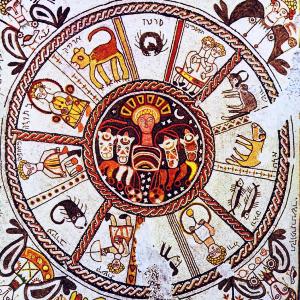
Roman Calendar
22,609 views
|
Roman Empire

1,893 views
|
| Roman Christianity
1,922 views
|
Messiah - Jesus?

19,372 views
|
| Messiah - His Aims & Objectives
19,366 views
|
Rome, Caesar & Emperors in the Bible

20,473 views
|
Book Burnings in Roman, Catholic and Protestant society

25,628 views
|
| Timeline of Roman Empire
20,561 views
|
Gods & Roman Emperors

18,969 views
|
Roman Emperors in Bible

18,090 views
|
FAQ on Messiah, Roman, Joseph Atwill, Caesar Messiah, Caesar (2)
| 1.Why Jews do not accept Jesus as the Messiah? |
| 2.In the time of Jesus, what qualities would identify the Messiah, to the Jews? |
Youtube Videos on Messiah, Roman, Joseph Atwill, Caesar Messiah, Caesar (104)

 Was Jesus the promised Jewish
  Will the Jews consider the
  Constantine and
  In 200 years, Christianity lost Jesus' Jewish teachings; adopting Greek and
  The
The  New Testament:
 Jesus the Jewish
  Roots of Jesus' Christianity -
  Roots of Jesus' Christianity -
  Christianity and Mind Control -
  Flavian
  Flavian Signature: Proof Rome Invented Jesus -
  Origins of Christianity - Rod Blackhirst (
 Christianity Legitimation and Context - Rod Blackhirst (
 Yeshua The Real
 New Testament Authors by
  New Testament Authors by
  New Testament Authors by
  New Testament Authors by
  New Testament Authors by
  Crusades:
  Siege of Jerusalem and
  History of Ptolemy, Serapis and
  In Isaiah 9:6,
  Early Church, Mithraism, Serapis and the
 Christianity opposed Rome Imperialism by adopting the titles Son of God, Lord and Savior, previously reserved for
  Julius
  Rome: Constantine & The Early
  Rome: Christian
  Rome: Transformation of the
  Christianity adopted Graeco-
 Deliberate Deception: Interview with Pateo TV -
  In Isaiah 7:14, Jesus born of a Virgin qualified him as
  In 48 BC,
  Secret Societies - History of the
  Jesus evolved from Mithras, the
  Historical records of Jesus' trial and Crucifixion would have been destroyed/lost in the 66-70 AD Judea-
 Jesus Christ, the myth was based on Julius
  Was Christianity influenced by Graeco-
 Constantine converted to Christianity. Yet remained a blood-thirsty, violent, intolerant
  Jesus and his disciples were Jewish. Yet, Jews rejected him as
  'Christianity converts to Rome' by adopting
  In 70 AD, Mark, the earliest Gospel depicts Jesus as suffering & dying Jewish
  Ebionites believed Jesus was Jewish
  Ebionites, early Christians were Jewish, but believed Jesus was the Jewish
  For Jews, the
  Ancient
  Matthew depicts Jesus as a Jewish
  The four Gospels have anonymous authors, as did much Ancient Greek and
  Apostle Paul's foundations are in the Greek Hellenistic, Graeco-
 In 391 AD,
  Return of Jesus the
  Do Christians believe Jesus is
  For Jews, God cannot take on Human form (i.e. Christian Trinity), nor will the
  Is Jesus the Promised Jewish
  Idolatory is praying to Mary or Saints, as
  Jesus Christ: A pagan Sun God turned into a Jewish Man -
  Christians were ordered to 'Render unto
  In Acts 5:42, Jesus' disciples preached of Jesus the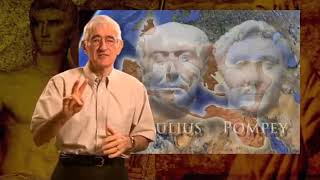
 History of The
  From Proverbs 8:22, Philo of Alexandria applied a 'feminine' Wisdom (Sophia) in support of
  In Council of Ephesus (431 AD),
  Bar Kokhba and Jesus were both killed by Rome. Who is the
  In Daniel 7:13 and Matthew 16:27, 'Son of Man' is the Jewish nation, or Jewish
  Jews MUST recognize Jesus as
  Josephus (37-100 AD): Aramaic was language of Jews in
  Jewish
  Christianity is a Graeco-
 In Psalm 91:3, a 'messianic prophecy' of a Man rescued by Angels fails to prove Jesus is
  Suetonius (69-122 AD): Chrestus (Jesus) encouraged Jews to cause disturbance for
  Virgin Births were common in pagan, Graeco-
 Jesus is not the Jewish
  Tour of
  Planets named after Greek Gods by
  Pantheon,
  Jesus Resurrection Written for Greco-
 Protestant Christians rely on
  Was Apostle Paul a secret
  Christianity adopted
  Julius
  Is Jesus the Jewish
  Sasanian and
  Why do Jews reject Jesus as
  Was October 7th a sign the Jewish
  Muhammad's letters to
  Return of Jesus The
  The Jewish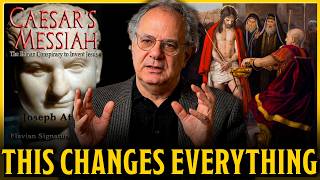
 Is Jesus the Real
  DEBATE: Christianity emerged after the 70 AD Jewish-
 Jesus from a Greco-
 Who is Jesus The
  Origins of 'Son Of God' & 'Lord' from Pre-Jesus,
DISCLAIMER
All videos are shared for educational and information purposes only. All videos are hosted and viewable on Youtube servers. Video titles are generated using the original video title; overall content theme including actual dialogue and speech (Transcript); and A.I-based recommendations with a focus on SEO, keyword density, and internal search functions. The video title does not represent the views held by the Youtube video uploader, or any individual, organisation or business.
If you spot any mistake, omission or give feedback, kindly contact us with details
All videos are shared for educational and information purposes only. All videos are hosted and viewable on Youtube servers. Video titles are generated using the original video title; overall content theme including actual dialogue and speech (Transcript); and A.I-based recommendations with a focus on SEO, keyword density, and internal search functions. The video title does not represent the views held by the Youtube video uploader, or any individual, organisation or business.
If you spot any mistake, omission or give feedback, kindly contact us with details
![Video: Noah [Longest Serving Prophet]](https://img.youtube.com/vi/L_nRLj6Hzls/mqdefault.jpg)