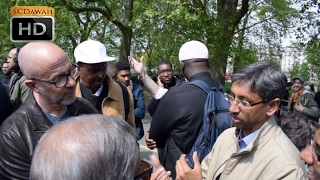
28:58
1099 views
·
Last viewed: 2 days ago
Uploaded: 04 May 2025 (1 year ago) · Shared: 06 May 2025
Video Description (from Youtube)
If you liked this video, please subscribe & share the link on your social media platforms. The Prophet said, “Whoever guides someone to goodness will have a similar reward.” [Sahih Muslim1893]
Support us & become a
PayPal- https://www.paypal.com/donate?hosted_button_id=MGVKW56Z5KZ6Y
*Request to all to please not abuse or swear in comments, Dawah is to invite not to insult. Jazak Allah Khair
Disclaimer: The views and opinions of partakers in these debates and videos in no way represent the views of Sam Dawah but are a representation of what takes place at Speakers Corner.
#Islam #Dawah #street Dawah #Speakers Corner #hyde park #stratford #leiceter square
DISCLAIMER
All videos are shared for educational and information purposes only. All videos are hosted and viewable on Youtube servers. Video titles are generated using the original video title; overall content theme including actual dialogue and speech (Transcript); and A.I-based recommendations with a focus on SEO, keyword density, and internal search functions. The video title does not represent the views held by the Youtube video uploader, or any individual, organisation or business.
If you spot any mistake, omission or give feedback, kindly Contact Us with details
EXPLORE TOPICS :
ISRAEL |
724
IDF |
15
GENOCIDE |
57
HOLOCAUST |
7
ANWAR |
14
AMALEK |
6
CHILDREN |
150
BABIES |
12
GOD |
0
Overview & Key Concepts
What is a Genocide?
 Genocide is intentional action to destroy a people. People are defined as an ethnic, national, racial, or religious group in whole or in part. The
hybrid word "genocide" is a combination of the Greek word genos ("race, people") and the Latin suffix -cide ("act of killing"). The United Nations Genocide Convention, which was established in 1948, defines genocide as "acts committed with intent to destroy, in whole or in part, a national, ethnic, racial or religious group". The Political Instability Task Force estimated that, between 1956 and 2016, a total of forty-three genocides took place, causing the death of about 50 million people. The UNHCR estimated that a further 50 million had been displaced by such episodes of violence up to 2008.
<br><br>
The Holocaust is a specific instance of genocide. It refers specifically to the systematic, bureaucratic, state-sponsored persecution and murder of approximately six million Jewish people by the Nazi regime and its collaborators.
What is Israel?
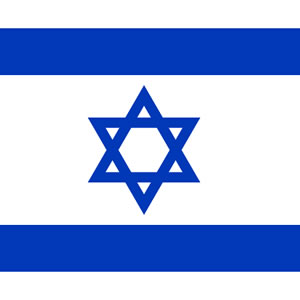 Israel, officially the State of Israel, is a country in the Middle East. Located on the southeastern shore of the Mediterranean Sea and the northern
shore of the Red Sea. It has land borders with Lebanon to the north, Syria to the northeast, Jordan on the east, the Palestinian territories of the West Bank and Gaza Strip to the east and west, respectively, and Egypt to the southwest.
What is Amalek?
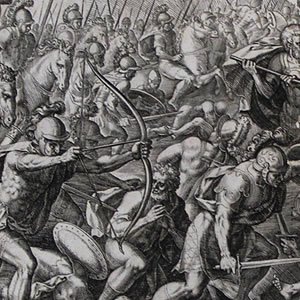 In the Hebrew Bible, Amalek refers to a historical nation and their descendants, who were depicted as enemies of the Israelites. The name "Amalek" can
also refer to anyone who lived in the territories of the Amalekites or to descendants of Ham, a son of Noah.
Biblically, the Israelites were commanded to destroy Amalek, a command that has been interpreted in various ways throughout history, including as a call to eradicate the nation or a symbolic representation of eradicating evil.
Who are Babies?
 A child or children, is a human being between the stages of birth and puberty, or between the developmental period of infancy and puberty. The term
may also refer to an unborn human being. In English-speaking countries, the legal definition of child generally refers to a minor, in this case as a person younger than the local age of majority, regardless of their physical, mental and sexual development as biological adults. Children generally have fewer rights and responsibilities than adults.
Who is Anwar?
 A Speakers' Corner is an area where open-air public speaking, debate, and discussion are allowed. The original and most noted is in the north-east
corner of Hyde Park in London, England. Speakers here may talk on any subject, as long as the police consider their speeches lawful, although this right is not restricted to Speakers' Corner only. Contrary to popular belief, there is no immunity from the law, nor are any subjects proscribed, but in practice the police intervene only when they receive a complaint. Speakers' Corner is often held up to demonstrate freedom of speech, as anyone can turn up unannounced and talk on almost any subject, although always at the risk of being heckled by regulars.
Who is GOD?
In monotheism and henotheism, God is conceived as the Supreme Being and principal object of faith. The concept of God as described by theologians
commonly includes the attributes of omniscience (infinite knowledge), omnipotence (unlimited power), omnipresence (present everywhere), omnibenevolence (perfect goodness), divine simplicity, and eternal and necessary existence.
<ul>
<li>In theism, God is the creator and sustainer of the universe</li>
<li>In deism, God is the creator, but not the sustainer, of the universe</li>
<li>Monotheism is the belief in the existence of one God or in the oneness of God</li>
<li>In pantheism, God is the universe itself</li>
<li>In atheism, God is purported not to exist, while deemed unknown or unknowable within the context of agnosticism. </li>
</ul>
Frequently Asked Questions
1.Are children born believing in a God?
A £1.9 million Oxford University project found that human cognition is inherently predisposed towards religious concepts, such as supernatural agents and an afterlife . This suggests that religious belief is part of human nature, making attempts to suppress it often futile .
2.Why did God send so many prophets?
Thousands were sent to constantly redirect humanity to the worship of the one true Creator, preventing the worship of created entities, such as people, nature, or material objects.
3.How did God send his revelation to us?
God assigned the Angel Gabriel with the task of conveying His divine messages directly to the selected prophets.
4.What is the basic teaching of Islam about God?
Islam teaches the existence of one, unique Creator who controls the entire universe, possesses absolute power, and is the sole recipient of worship.
5.Does Islam give any arguments to prove the existence of God?
The Quran offers three distinct arguments: the flawless order, beauty, and laws of nature; the innate human instinct to call upon a higher power during hardships; and the historical presence of prophets who proved God's reality through their exemplary lives and miracles.
6.Other religions also teach the existence of God. Is there any difference between their teaching and the Islamic concept of God?
Islam emphasizes absolute oneness, rejecting the idea that any entity can share divinity, that God has limitations, or that any human could be an incarnation of God.
7.What is a prophet or messenger of God?
8.Christianity and Hinduism revere their religious figures as gods or incarnations of God
Followers deified these human prophets because later generations mistook their figurative expressions literally and failed to preserve accurate historical details, causing myths and exaggerations to grow around their deeds.
9.Is Allah the Moon-God?
This is a entirely false claim that originally originated from a Christian pastor named Robert Morey; Islam explicitly refutes this idea, maintaining that Allah is the all-powerful, unique Creator of the entire universe and not a pagan entity or a creation like the moon.
10.Do Muslims believe in a God?
Yes, Muslims believe in Allah as the all-powerful, eternal Creator who is separate from creation, has no partners, no gender, and is the absolute sole entity worthy of human worship.
11.How many prophets did God send?
While exact figures vary across tracking traditions, historical records note that God sent thousands of guides to humanity, with traditional sources citing an estimate of 124,000 prophets.
12.In the Bible, God says "For God so loved the world, that he gave his only Begotten son"
The words "Begotten" and "Son" are not factually accurate when describing Jesus's relationship to the divine Creator. To support this point, it contrasts the Biblical text with the Quran, specifically quoting Chapter 19, Verses 88-92, which strongly condemns the claim that God has begotten a son, describing the assertion as a monstrous falsehood that contradicts the absolute majesty of the Creator.
13.According to Apostle Paul, why did God give Jews the Torah?
Paul viewed the Torah as a temporary guide, claiming it was given to the Jews until they could be saved through faith in Jesus Christ.
14.Does the resurrection of Jesus prove he is God?
The website argues that resurrection does not prove divinity because Jesus himself raised multiple people from the dead, such as Jairus' daughter, a widow's son, and Lazarus. Furthermore, the Old Testament documents that prophets like Elijah also raised people from death, meaning resurrection was not a unique or inherently divine indicator.
15.How did Apostle Paul break Gods Law?
Paul is described as rejecting the binding authority of the Torah, specifically mandatory male circumcision as an everlasting covenant and laws regarding dietary purity. Thereby breaking away from divine commands given to the Hebrew people.
16.How did the Sun-God manifest itself?
The Sun God was recognized across ancient cultures by various names, including Apollo, Dionysus, Hercules, Mithras, Adonis, Attis, and within the Babylonian Baal-Astarte-Tammuz triad.
17.How were the Triadic or 'Trinity-like' Pagan Gods presented?
Ancient triadic deities in the Roman Empire were depicted in art and monuments as a single, unified figure featuring three distinct faces or heads to illustrate their triune nature.
18.Who was Mithras, the Sun-God?
Mithras was a Persian Sun-God with a narrative sharing strong parallels with the later Christian story, including a December 25th birth from a virgin, twelve disciples, and a death and resurrection, according to the source.
19.Who was Dionysus, the Greek God of Wine?
Dionysus was a Greek deity whose myth included a December 25th virgin birth, being sent by a higher god to save the world, and representing the shedding of blood through wine, closely mirroring elements of Christian doctrine.
20.Who was the Attis God?
Attis was a deity believed to be born of a virgin (Nana) and to have bled to death to bring fertility, with his followers celebrating his resurrection from an empty tomb, mirroring the narrative of a dying and rising savior.
21.Were the Gods sacrificed?
Yes, numerous ancient traditions featured the ritual sacrifice of gods or their representatives, such as in the cases of Horus, a son of Kronos, and Tammuz, involving the symbolic shedding of blood for salvation, based on the provided material.
22.Who was the Tammuz God?
23.Who was the Babylonian Baal God?
24.Why are their so many similarities between Jesus Christ and all the pagan Gods?
25.What is the God of the Old Testament like?
The Old Testament presents God through a complex lens of absolute justice, holiness, and profound mercy. While certain historical passages depict severe divine judgments and battles, others emphasize his enduring love, slow anger, and care for the vulnerable.
26.In Islam, can God become a Man?
No, Islamic theology strictly rejects the concept of divine incarnation (Hulul). Islam teaches that God is completely transcendent, unchangeable, and separate from his creation, making it a logical contradiction for the infinite Creator to assume finite human attributes.
27.Jesus is the son of God as he had no Father?
In orthodox Christian theology, the title "Son of God" refers to Jesus' unique, eternal divine nature within the Trinity rather than a biological process. While his birth without a human father is considered a miracle, his divinity is rooted in being the pre-existent Word of God.
28.In John 1:1. Jesus claims to be God?
The Gospel of John opens with the phrase, "In the beginning was the Word, and the Word was with God, and the Word was God," which mainstream Christian theology interprets as an explicit declaration of Jesus' pre-existent divinity. Historical and linguistic scholars note that the "Word" (Logos) represents the divine reason and creative power of God becoming flesh in the person of Jesus.
29.How did the prophets Moses, Jesus, Abraham etc. call out to God?
Historical and linguistic evidence shows that these prophets spoke ancient Semitic languages, meaning they addressed God using linguistic cognates tightly linked to the Arabic word Allah. Abraham and Moses historically used the Hebrew names El or Elohim, while Jesus addressed God in Aramaic using Elah or Alaha, all of which share identical ancient roots across the Semitic language family tree.
30.In the beginning was the Word, and the Word was with God, and the Word was God
John 1:1
John 1:1 declares, "In the beginning was the Word, and the Word was with God, and the Word was God," utilizing the philosophical Greek concept of the Logos to establish the eternal pre-existence of Christ before his physical incarnation on Earth. While Trinitarian theology views this text as definitive proof of Jesus' divinity within the Godhead, Unitarian and Islamic scholars argue that the "Word" refers functionally to God's divine command, creative wisdom, or verbal decree rather than a separate co-equal deity.
31.Why does God allow suffering?
This classic philosophical dilemma is known as the theodicy problem. In Christian theology, suffering is primarily explained through human free will (the consequence of the Fall in Genesis), structural testing, and a divine plan that brings ultimate spiritual maturity. In Islamic theology, suffering is viewed as a purposeful combination of an individual test of faith (ibtilah), an expiation for minor sins, and a reminder of humanity's dependence on the Creator.
32.How did God address Abraham and his wives?
In the text of the Hebrew Bible (Genesis 12-25), God speaks directly to Abraham on multiple occasions, renaming him from Abram and establishing an everlasting covenant through his descendants. God addresses his first wife, Sarah, by changing her name from Sarai and promising her a son in her old age, and also directly addresses his second wife, Hagar, through an angel in the wilderness, comforting her and promising to make a great nation out of her son Ishmael.
33.How did Jesus tell people to reach God?
In the Synoptic Gospels, Jesus frequently instructs his Jewish audience that the path to God requires loving God completely and strictly upholding the ethical weight of the Mosaic Law (as seen in Matthew 19:17, "if you want to enter life, keep the commandments"). In the later Gospel of John, the theological focus shifts to a personal, saving faith in Jesus himself as the exclusive mediator to the divine, summarized in John 14:6: "I am the way, the truth, and the life."
34.Did Jesus claim to be equal to God?
This is the central point of departure between mainstream Christianity and Islam. Mainstream Christian theology states that Jesus affirmed his equality with God through declarations of essential unity (such as "I and the Father are one" in John 10:30) and by accepting divine worship. Conversely, secular scholars and Islamic theologians highlight passages showing functional subordination, such as John 14:28 ("the Father is greater than I"), arguing that the historical Jesus viewed himself as an exalted messenger entirely dependent on God's authority.
35.Are Jesus and God the same?
Mainstream Christian orthodoxy, solidified at the Council of Nicaea, dictates that Jesus and God are the same in essence (homoousios), defining Jesus as the pre-existent Word of God who took on human flesh. However, secular historians and Unitarian theologians point out that the Synoptic Gospels make explicit distinctions between Jesus and God, such as when Jesus prays to the Father or denies knowing the timing of the Final Hour. Islamic theology strictly rejects any identification of Jesus with God, viewing the claim as a violation of absolute monotheism (Tawhid).
36.Was Jesus sent and approved by God?
In both Christian and Islamic traditions, Jesus is explicitly recognized as a messenger sent with direct divine approval and authority. The New Testament documents this through public miracles and voices from heaven (such as at his baptism in Matthew 3:17), while the Quran (Surah Al-Ma'idah 5:110) states that God explicitly strengthened Jesus with the Holy Spirit and authorized his miracles to validate his prophetic mission to Israel.
37.Was Jesus a servant of God?
Yes, both early Christian writings, which use the Greek term pais (Acts 3:13), and the Quran (Surah Maryam 19:30) explicitly describe Jesus as the servant of God, reinforcing his prophetic role.
38.What is the greatest of Gods commandments?
According to the Synoptic Gospels (Matthew 22:37-40, Mark 12:30), the supreme command is total love for God, which, when coupled with loving one's neighbor, forms the foundation of all spiritual law.
39.Was Jesus and God one?
In mainstream Christian theology, Jesus and God the Father are understood to be "one" in divine essence, nature, and purpose, a concept rooted in John 10:30 ("I and my Father are one"). This does not mean they are the same person, but rather two distinct Persons co-existing within the single unified triune Godhead. From a historical-critical and Islamic perspective, this statement is interpreted differently; it is viewed as a functional unity of mission and divine authority meaning Jesus acted in perfect alignment with God's will as His prophet, rather than an assertion of shared divine identity.
40.Does the Bible support the Trinity (3-in-1) God concept?
Mainstream biblical scholars and historians state that the doctrine of the Trinity is never explicitly laid out as a formal dogma anywhere in the text of the Old or New Testaments. While the New Testament contains early triadic formulas (such as the baptismal command in Matthew 28:19 and apostolic blessings in 2 Corinthians 13:14), the actual systemic theology of a three-in-one God was developed later by early church fathers over centuries. Christian theologians argue that the doctrine is implicitly woven throughout the scriptures, while critics and Islamic scholars point to the lack of clear, direct scriptural definitions to argue it was a later modification of strict biblical monotheism.
41.If God is so powerful, can he become a man?
This question highlights a core philosophical divide between Christian and Islamic theology. In mainstream Christianity, God's omnipotence means He has the power to manifest Himself in the material world, and the Incarnation: God taking on human flesh in the person of Jesus is viewed as the ultimate expression of His love and willingness to humble Himself for human salvation. In Islamic theology, this concept is rejected as an absolute logical contradiction; Islam teaches that God's nature is completely perfect, unchangeable (immutable), and transcendent, meaning the infinite, eternal Creator cannot simultaneously possess the weak, limited, and mortal attributes of a human being.
42.Do all Christians believe Jesus was God or Son of God?
While the vast majority of modern Christians adhere to Trinitarian orthodoxy, diverse groups throughout history have explicitly rejected this view. Early Christian sects like the Ebionites and Arians viewed Jesus as an exalted human prophet or a uniquely created heavenly being rather than co-equal with God. In the modern era, non-Trinitarian movements such as Unitarians, Jehovah's Witnesses, and Christadelphians continue to reject the doctrine of his literal divinity, emphasizing instead strict unitarian monotheism.
43.Did God sent Jesus with the task of guiding people?
Yes, both Christian scripture and Islamic theology completely agree that Jesus was explicitly sent by God as a divinely appointed guide, teacher, and messenger to humanity. In the New Testament gospels, his mission is framed as bringing spiritual salvation, healing the sick, and declaring the immediate arrival of the Kingdom of God. Similarly, the Quran defines his core task as delivering the Gospel (Injeel) and serving as a miraculous sign to guide the Children of Israel back to pure monotheistic worship.
44.Jesus was God as he had the power to forgive sin. Was he God?
Historical-critical scholars note that in 1st-century Jewish thought, a prophet or messianic figure could act as a uniquely authorized agent of the divine king, possessing the delegated authority to declare God’s forgiveness on Earth without being God Himself.
Islamic theology maintains that the absolute power to forgive sins belongs exclusively to the Creator; therefore, any historical accounts of a prophet pronouncing forgiveness are understood as an announcement of God's mercy rather than a claim to personal divinity.
45.What did God promise Abraham regarding Isaac?
In the textual tradition of the Book of Genesis, God establishes an everlasting covenant specifically through Isaac and his future lineage, promising that he would be the father of nations and that royal kings would descend from him. Biblical scholars and theologians note that because this explicit divine promise of a massive, multi-generational lineage was given before the command to sacrifice him, Abraham's willingness to obey demonstrated an absolute faith that God would miraculously preserve or resurrect Isaac to fulfill that covenant.
46.What does God say about Ishmael, Abraham's eldest son?
In the Book of Genesis, God explicitly promises to bless Ishmael, make him exceptionally fruitful, and multiply his descendants into a great nation because he is Abraham's physical offspring. Islamic theology elevates Ishmael to the status of a fully legitimate prophet and messenger who actively helped his father construct the Kaaba. Both traditions historically recognize his lineage as the genealogical root of the North Arabian tribes, from whom the Prophet Muhammad eventually descended.
47.Did Jesus confirm the oneness of God?
Yes. Throughout his ministry, Jesus consistently reinforced that the Creator is a single, unique entity, adhering to the monotheism of the Hebrew prophets.
48.Did Jesus call for worship of one God?
Yes, both the gospels and Islamic theology state that Jesus strictly directed all worship and devotion to the single Creator alone.
49.Does God make a distinction between clean and unclean animals?
In biblical literature, the operational distinction between clean and unclean animals is established long before the formal revelation of the Mosaic dietary laws at Mount Sinai. Within the Genesis account of Noah's Flood, God directly commands Noah to gather seven pairs of every clean animal and only one pair of every unclean animal onto the Ark. This narrative indicates that early biblical figures possessed an innate understanding of which specific creatures were approved for divine sacrificial offerings and human survival.
50.Does God define clean and unclean animals, i.e. those we can eat?
In biblical literature, the operational distinction between clean and unclean animals is established long before the formal revelation of the Mosaic dietary laws at Mount Sinai. Within the Genesis account of Noah's Flood, God directly commands Noah to gather seven pairs of every clean animal and only one pair of every unclean animal onto the Ark. This narrative indicates that early biblical figures possessed an innate understanding of which specific creatures were approved for divine sacrificial offerings and human survival.
51.Did Jesus claim to be God?
There is a distinction between Jesus and the Father, explicitly noting that the Father is greater than all. Therefore, they are not one single person, but separate Persons whose stated unity refers to a shared alignment of divine nature and essence.
52.Who are the Gods in the Bible?
Historically, the term "God" was applied to powerful figures, such as leaders and magistrates, who served as representatives on Earth. Emperor Constantine referenced this, citing Psalm 82:6 to remind bishops of their high, albeit human, office.
53.Does God have many sons?
According to biblical analysis, the phrase "sons of God" is plural and refers to earthly rulers, princes, or kings, rather than being an exclusive title for a single individual.
54.Jesus claimed to be God. The Jews must have understood this, as they accused him of blasphemy and were ready to stone him?
The platform asserts that Jesus did not claim divinity in this instance, and that his mention of Psalm 82:6 in John 10:34 was a defense noting that human judges are called "gods" in scripture, thus challenging the accusation of blasphemy.
55.In John 9:38, Jesus is worshipped like a God?
While the verse describes a healed blind man worshipping Jesus, the webpage highlights that this verse is absent from the Codex Sinaiticus, the oldest 4th-century New Testament manuscript . It appears only as a later marginal addition, suggesting a deliberate insertion by a scribe to support the doctrine of Jesus' divinity
56.In John 20:28, Jesus is called a God?
Trinitarians often cite Doubting Thomas's declaration, "My Lord and my God," as proof of Jesus' divinity . However, the platform argues that in Papyrus 66, the phrase "and my God" is absent, suggesting later scribes filled in a gap in the text with speculation.
57.Are children born believing in a God?
A £1.9 million Oxford University project found that human cognition is inherently predisposed towards religious concepts, such as supernatural agents and an afterlife . This suggests that religious belief is part of human nature, making attempts to suppress it often futile .
Videos on Amalek (5)
 24:36
24:36
593
1552936966
1787086989
In 1 Samuel 15:3, the killing of Amalekites, Giant babies was an order from God - Hashim vs Ross
001476
1

1099 views
28:58
1099
1746526273
1786922046
GOD Commands Israel to Genocide Amalek and Smash Babies Heads on Rocks? | AnwarSC vs Jew
001738
2
 17:07
17:07
1029
1753283285
1786479558
Israel's DARKEST Experiment on the 'Amalek' Palestinians | Double Down News
001027
3
 15:58
15:58
429
1772560644
1786841586
Israel quotes 'Amalek' Bible verse as 165 School girls in Iran are killed | Young Turks
000958
4
 7:33
7:33
322
1773192393
1787013992
Israel quotes 'Amalek' Bible verse after killing of 165 Iranian School Girls on Jewish Purim Festival | Young Turks
000453
5
EXPLORE TOPICS :
ISRAEL |
724
IDF |
15
GENOCIDE |
57
HOLOCAUST |
7
ANWAR |
14
AMALEK |
6
CHILDREN |
150
BABIES |
12
GOD |
0