EGYPT
Egypt is a Mediterranean country bordered by the Gaza Strip and Israel to the northeast, the Gulf of Aqaba and the Red Sea to the east, Sudan to the south, and Libya to the west. Across the Gulf of Aqaba lies Jordan, across the Red Sea lies Saudi Arabia, and across the Mediterranean lie Greece, Turkey and Cyprus, although none share a land border with Egypt.
Scripture Themes on Egypt (60)
Youtube Videos on Egypt (29)
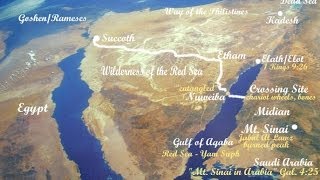 Exodus Revealed - Hard Evidence in Red Sea of Israel's Escape From
 In Matthew 2:15, Out of
 In Jude 1:5, who delivered the People out of
 Who was Pharaoh when Moses lived in
 In Matthew 2:15 and Hosea 11:1, Jesus came from
 In Numbers 1:46, the Exodus had 2 Million Jews leave
 In 48 BC, Roman Emperor, Julius Caeser destroyed 700,000 texts by burning the Library of Alexandria,
 Jesus' infancy is difficult to reconcile in the Gospels (his birthplace, Bethlehem, Jerusalem, Nazareth,
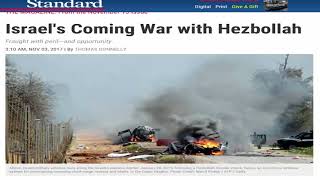 In Psalm 83, is Israel and USA going to war with Palestine, Iran, Iraq, Lebanon, Jordan,
 Origen (Lebanon, 253 AD) & Athanasius (
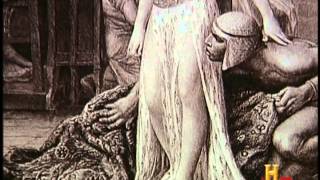 Burning of
 Ancient Library of Alexandria,


 We are responsible for Morsi's death in
 Homoousios ('same substance') can be traced back to Pre-Christian
 God will destroy America, just like He destroyed
 The Quran, Moses, Pharaoh and the Secrets of

 How Saudi Arabia, UAE, Jordan,
 Moses and The 10 Plagues of
 Greater Israel Zionist project supported by Arab Leaders and Armies of

 'Ahmed, my son was shot in the head. The
 Saudi Arabia,
 Moses and Plagues of
 Joseph - Journey from betrayal to Ruler of
 The 10 Plagues of
Photos on Egypt (27)


FAQ on Egypt (24)
1.Were the Gods sacrificed?
* Horus - In Egypt, in the Heb-Sed festival, the powers of Pharaoh
(Horus incarnate) were tested. If found weak, Horus was expected to
sacrifice himself by donating his blood to the soil
* Kronos - A man was sacrified annually at the Phoenician
feast of Kronos. Kronos had a son, Ieoud who he sacrificed. Ieoud
was known as 'the only begotten son of his Father'
* Tammuz - A popular Syrian saviour-God born of a virgin
was killed and rose again every spring. Wherever Tammuz was
worshipped a human victim in royal robes was killed and eaten, so
his body and blood might bring salvation to the community.
2.There is only one Bible with one Christian doctrine?
No, textual criticism shows the Bible consists of thousands of varying manuscripts rather than a single, uniform text. These textual differences, such as in Jude 1:5, have historically contributed to diverse theological interpretations within Christianity.
Bible versions translate verses with different explanations. For example, in JUDE 1:5, who saves and then destroys the people of Egypt?
17 Bible versions state the 'Lord' did
7 Bibles state 'Jesus'
1 Bible claims 'God' did
These differences give rise to different Christian theological views.
3.Who was Prophet Aaron, and what was his primary role?
Aaron was an important prophet, the elder brother of Moses (Musa), and the first High Priest of Israel. Because Moses possessed a speech impediment, God appointed Aaron as his spokesperson to confront Pharaoh, guide the Israelites out of slavery in Egypt, and maintain spiritual order in the desert.
4.How was Benjamin reunited with his brother Joseph in Egypt?
During a regional famine, Benjamin traveled to Egypt with his older brothers to buy grain. Joseph, then a powerful minister in Egypt recognized him, secretly revealed his identity to Benjamin, and devised a plan involving a planted royal cup to keep Benjamin by his side.
5.What is Benjamin's legacy and lifespan?
Recognized as a foundational patriarch whose lineage formed the Tribe of Benjamin, his life was pivotal to reuniting Jacob's family in Egypt. He lived to be 111 years old and died around 1596 BC in Egypt.
6.What was Prophet Jacob's relationship with Prophet Joseph?
Joseph (Yusuf) was Jacob's favorite son. When Joseph's jealous brothers threw him into a well and claimed he was killed, Jacob suffered immense grief and wept for decades until he lost his eyesight. His vision was later miraculously restored when he was reunited with Joseph in Egypt.
7.How long did Prophet Jacob live, and where is he buried?
Jacob was born around 1653 BC and lived to be 147 years old. He passed away around 1506 BC in Egypt, and his body was carried back to Canaan to be buried in the Cave of the Patriarchs in Hebron alongside his ancestors.
8.Who was Prophet Jethro in religious and historical tradition?
Jethro (known as Shoaib in Islam and Reuel in early biblical passages) was a wise prophet, elder, and priest of Midian (located near modern-day northwest Saudi Arabia and Jordan). He was the father-in-law of Moses, offering him refuge and guidance after Moses fled Egypt.
9.What is the relationship between Jethro and Moses?
After Moses fled Egypt, he met Jethro's daughters at a well in Midian and helped them water their flock. Impressed by Moses' character, Jethro welcomed him into his household, gave him his daughter Zipporah in marriage, and mentored him for a decade while Moses worked as a shepherd.
10.Who was Prophet Joseph across major world religions?
Joseph (Yusuf) was a major patriarch, prophet, and Chief Minister of Egypt. Celebrated for his exceptional integrity, beauty, and gift of dream interpretation, he survived extreme betrayal by his brothers to become a powerful ruler who saved the Near East from a devastating famine.
11.How did Prophet Joseph end up in Egypt?
Driven by intense jealousy over their father Jacob's love for Joseph, his older brothers plotted against him, threw him into a dry well, and sold him into slavery to a passing caravan. He was taken to Egypt and bought by Potiphar (Al-Aziz), a high-ranking Egyptian official.
12.What role did Joseph's ability to interpret dreams play in his rise to power?
While unjustly imprisoned following false allegations by Potiphar's wife, Joseph accurately interpreted the dreams of fellow prisoners. When Pharaoh was troubled by dreams of seven fat cows eaten by seven lean cows, Joseph interpreted them as seven years of abundance followed by seven years of severe famine, leading Pharaoh to appoint him Chief Minister over Egypt's agricultural affairs.
13.How did Joseph reunite with his family?
During the regional famine, Joseph's brothers traveled to Egypt to purchase grain. Joseph recognized them, tested their character and remorse, and ultimately revealed his identity, forgiving them completely and inviting his entire family including his father Jacob to settle safely in Egypt.
14.Who was Prophet Joshua in religious and historical tradition?
Joshua (known as Yusha' ibn Nun in Islam and Yehoshua in Judaism) was a courageous military general, prophet, and the chosen successor to Moses. Born in Egypt during the Israelites' bondage, he led the Twelve Tribes across the Jordan River to conquer Canaan and fulfill the promise of entering the Holy Land.
15.What role did Judah play in the story of Joseph?
When Joseph's brothers plotted to kill him in the wilderness, Judah intervened to save his life by proposing they sell Joseph to a traveling merchant caravan instead. Years later in Egypt, Judah demonstrated deep remorse and leadership by offering himself as a slave in place of his youngest brother, Benjamin, which prompted Joseph to reveal his true identity.
16.What role did Levi play in the story of Joseph?
As one of Joseph's older brothers, Levi initially joined in plotting against Joseph out of jealousy. Years later, after traveling to Egypt during the regional famine, he repented alongside his brothers and settled his family in Egypt under Joseph's protection.
17.What is Midian's connection to Moses and Jethro?
Midian served as a place of refuge for Moses after he fled Egypt. While there, Moses met Jethro (Shoaib), a prophet and priest of Midian, married Jethro's daughter Zipporah, and lived as a shepherd in Midian for forty years before receiving his divine call at the burning bush.
18.How did Moses survive infancy in Egypt?
Born during Pharaoh's decree to kill all newborn Hebrew boys, Moses was hidden by his mother and placed in a waterproof basket on the Nile River. Discovered by Pharaoh's family (Pharaoh's daughter in biblical tradition; Pharaoh's wife, Asiya, in Islamic tradition), he was adopted into the Egyptian royal court and raised as a prince.
19.What were the key miracles performed through Prophet Moses?
Empowered by God, Moses performed monumental miracles to confront Pharaoh and free his people: turning his staff into a serpent, his hand glowing with divine light, initiating the plagues of Egypt, and miraculously parting the Red Sea for the Israelites to escape before it collapsed onto Pharaoh's army.
20.What are some interesting historical facts about Prophet Abraham?
- The king put Abraham into a fire which remained burning for a long period, but Abraham was not burnt. He came out of the fire alive
- God ordered Abraham to sacrifice his son, Isaac or Ishmael. At the time of sacrifice, a lamb appeared and was sacrificed instead
- Abraham was son of Terah
- Lived to 175 years of age
- He knew Shem, son of Noah 150 years
- Noah died 2 years before Abraham was born
- Heber outlived Abraham by 4 years
- Travelled from Ur in Iraq to Haran in Turkey, and onto the promised land of Canaan (Palestine)
- Travelled to Egypt
21.What are some interesting historical facts about Prophet Aaron?
- Aaron's rod was endowed with miraculous power during the plagues of Egypt
22.What is the Druze religion?
The Druze religion is a monotheistic, Abrahamic, and highly secretive syncretic faith that emerged during the 11th century in Cairo, Egypt. Adherents, known as the Druze, are a distinct ethnoreligious group primarily living in the Levant. The faith blends the foundational monotheism of Shia Isma'ili Islam with elements of Christianity, Gnosticism, ancient Greek philosophy (such as Neoplatonism and Pythagoreanism), and Hinduism.
23.Who founded the Druze faith?
The Druze religion was founded by Hamza ibn Ali ibn Ahmad, a Persian scholar and mystic who formally proclaimed the faith on May 30, 1017 AD. It arose under the reign of the sixth Fatimid Caliph of Egypt, al-Hakim bi-Amr Allah, whom the Druze revere as a divine figure and the human manifestation of cosmic unity. Following al-Hakim's mysterious disappearance in 1021, Hamza and other early theologians structured the faith's core doctrines.
24.What is the Nag Hammadi Library?
The Nag Hammadi Library is a collection of 13 ancient, leather-bound papyrus codices discovered buried in a jar near Nag Hammadi, Egypt in 1945. Written primarily in Coptic, these 52 texts revolutionized the modern understanding of early religion. The library preserved the original, long-lost writings of the Gnostics, which had been systematically destroyed by the early institutional church, giving the world direct access to their mystical philosophies.