Live Screenshot
Source link:
https://www.middleeasteye.net/opinion/online-freedoms-face-growing-threat-sisis-egyptPublished by: MIDDLE EAST EYE on 13 May 2019
1423 views · Last view: 1 day ago
News Text (from MIDDLE EAST EYE)
Internet restrictions increased in Egypt during the recent constitutional referendum, which will allow President Abdel Fattah al-Sisi to remain in office until 2030. These restrictions followed an anti-Sisi online petition that had accumulated more than 60,000 signatures by 9 April. Given thecountry’s implementation of harsh social media laws last year, the latest developments raise concerns over Egypt’s growing tendency to restrict digital freedoms to suppress government dissent.
In light of the extension to Sisi’s presidency, it is likely that the digital rights of Egypt’s citizens will diminish even further, severely limiting their ability to express anti-government views.
Last month, 34,000 sites were blocked by Egyptian ISPs in an attempt to suppress the opposition campaign known as Batel (Arabic for “Void”). NetBlocks reported that 37.5 billion web links had also been broken as a result of the blocking of the Bitly URL shortening service.
The Batel [...]
Explore More
Middle East Eye Free Speech EgyptSearch Google Search Explore Topics
 Who are Middle East Eye?
Middle East Eye (MEE) is a United Kingdom-based media website and channel that primarily focuses on news related to the Middle East, North Africa, and the broader Muslim world.
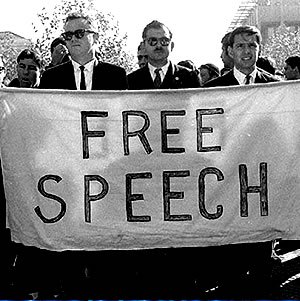 What is Free Speech?
Freedom of speech is a principle that supports the freedom of an individual or a community to articulate their opinions and ideas without fear of retaliation, censorship, or legal sanction. The term "freedom of expression" is sometimes used synonymously but includes any act of seeking, receiving, and imparting information or ideas, regardless of the medium used. Freedom of expression is recognized as a human right under article 19 of the Universal Declaration of Human Rights (UDHR) and recognized in international human rights law in the International Covenant on Civil and Political Rights (ICCPR). Article 19 of the UDHR states that "everyone shall have the right to hold opinions without interference" and "everyone shall have the right to freedom of expression; this right shall include freedom to seek, receive and impart information and ideas of all kinds, regardless of frontiers, either orally, in writing or in print, in the form of art, or through any other media of his choice".
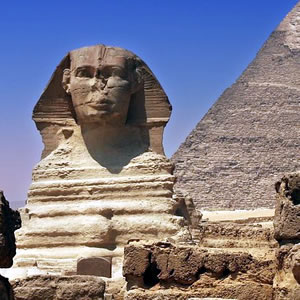 What is Egypt?
Egypt, officially the Arab Republic of Egypt, is a country spanning the northeast corner of Africa and southwest corner of Asia by a land bridge formed by the Sinai Peninsula. Egypt is a Mediterranean country bordered by the Gaza Strip and Israel to the northeast, the Gulf of Aqaba and the Red Sea to the east, Sudan to the south, and Libya to the west. Across the Gulf of Aqaba lies Jordan, across the Red Sea lies Saudi Arabia, and across the Mediterranean lie Greece, Turkey and Cyprus, although none share a land border with Egypt.