Scientific Evidence claims Face Masks offer insufficient protection against illness and virus
There have been extensive randomized controlled trial (RCT) studies, and meta-analysis reviews of RCT studies, which all show that Face Masks, Face Covering or Respirators DO NOT WORK to prevent respiratory influenza-like illnesses, or respiratory illnesses believed to be transmitted by droplets and aerosol particles, like COVID-19.Listed below are medical literature that unanimously agree wearing face masks, surgical masks and respirators (N95 or similar) do not reduce the risk of contracting a verified illness.
Effectiveness of N95 respirators versus surgical masks against influenza: A systematic review and meta-analysis
J Evid Based Med. 2020; 1- 9
https://onlinelibrary.wiley.com/doi/epdf/10.1111/jebm.12381
N95 Respirators vs Medical Masks for Preventing Influenza Among Health Care Personnel: A Randomized Clinical Trial
JAMA. 2019; 322(9): 824–833
https://jamanetwork.com/journals/jama/fullarticle/2749214
Effectiveness of Masks and Respirators Against Respiratory Infections in Healthcare Workers: A Systematic Review and Meta-Analysis
Clinical Infectious Diseases, Volume 65, Issue 11, 1 December 2017, Pages 1934–1942
https://academic.oup.com/cid/article/65/11/1934/4068747
Effectiveness of N95 respirators versus surgical masks in protecting health care workers from acute respiratory infection: a systematic review and meta-analysis
CMAJ Mar 2016
https://www.cmaj.ca/content/188/8/567
The use of masks and respirators to prevent transmission of influenza: a systematic review of the scientific evidence
Influenza and Other Respiratory Viruses 6(4), 257–267
https://onlinelibrary.wiley.com/doi/epdf/10.1111/j.1750-2659.2011.00307.x
Face masks to prevent transmission of influenza virus: A systematic review,
Epidemiology and Infection, 138(4), 449-456.
https://www.cambridge.org/core/journals/epidemiology-and-infection/article/face-masks-to-prevent-transmission-of-influenza-virus-a-systematic- review/64D368496EBDE0AFCC6639CCC9D8BC05
Use of surgical face masks to reduce the incidence of the common cold among health care workers in Japan: A randomized controlled trial
American Journal of Infection Control, Volume 37, Issue 5, 417 – 419
https://www.ncbi.nlm.nih.gov/pubmed/19216002
SOURCE
To view the full document:
206-covid-science-face-mask
| Author: Guest • Updated: 04 Sep 2020 • 16,747 views | 2 days ago |
Explore More
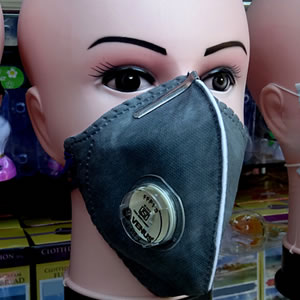 What is Face Mask?
A face mask or respirator is a device designed to protect the wearer from inhaling hazardous atmospheres. These include fumes, vapours, gases and particulate matter such as dusts and airborne microorganisms. There are two main categories: the air-purifying respirator, in which respirable air is
obtained by filtering a contaminated atmosphere, and the air-supplied respirator, in which an alternate supply of breathable air is delivered. Within each category, different techniques are employed to reduce or eliminate noxious airborne contaminants. Air-purifying respirators range from relatively inexpensive single-use, disposable face masks sometimes referred to as a dust mask to more robust reusable models with replaceable cartridges often called a gas mask.
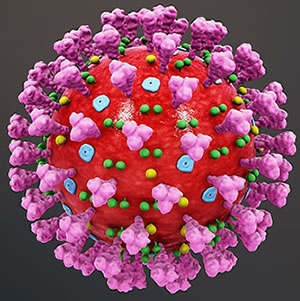 What is COVID?
Coronaviruses are a group of viruses that cause diseases in mammals and birds. In humans, coronaviruses cause respiratory tract infections that are typically mild, such as the common cold, though rarer forms such as SARS, MERS, and COVID-19 can be lethal. Symptoms vary in other species: in chickens
they cause an upper respiratory tract disease, while in cows and pigs they cause diarrhea. There are yet to be vaccines or antiviral drugs to prevent or treat human coronavirus infections.