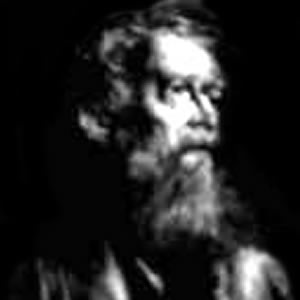
HEBREW: Hanoch
ARAMAIC: Hanokh
ARABIC: Idris
AGE: 365 Years
BIRTH: 3382 BC
DEATH: 3017 BC
GENDER: Male
BORN IN: Iraq / Levant
LIVED IN: Iraq / Levant Region
DIED IN: Unknown
SCRIPTURE: Book of 1 Enoch
48,119 views
Last view: 3 hrs ago
Born around 3382 BC in the fertile lands of ancient Mesopotamia, he lived during a pre-flood era when humanity was rapidly multiplying and falling into deep sin. Enoch stood out because he "walked faithfully with God" and served as a divine warner, urging his community to repent before the eventual Great Flood. He was blessed with immense wisdom, and historical traditions credit him as the first human to use a pen, study astronomy, and establish structured arithmetic. Like Elijah, Enoch did not experience a traditional physical death; due to his exceptional purity and devotion, God took him directly up to heaven at the age of 365 years old around 3017 BC, preserving him from the corruption of the world.
| INTRODUCTION |
| 1. Prophet Enoch in Judaism, Christianity, and Islam |
| 2. Family Tree of Enoch and His Relations to Abrahamic Prophets |
| HISTORICAL CONTEXT |
| 3. Describe the World and Society Enoch Came Into |
| 4. Why Did God Send Enoch? |
| KEY LIFE EVENTS |
| 5. Chronological Timeline of Enoch's Life and Ministry |
| 6. Did Enoch Perform Miracles? 1 miracles |
| GEOGRAPHY & EVIDENCE |
| 7. On Google Maps: Birth, Life, and Death Locations of Enoch 4 locations |
| 8. Photograpic Evidence for Enoch 9 photos / 1 albums |
| SCRIPTURE & NEWS |
| 9. Is Enoch Mentioned in Current News Today? 3 news |
| 10. Frequently Asked Questions About Enoch 8 faqs |
| EXPLORE FURTHER |
| 11. Revealed Scripture That Mention Enoch 34 verse |
| 12. YouTube Videos to Learn More About Enoch 15 videos |
Prophet Enoch in Judaism, Christianity, and Islam
Judaism
Viewed as an early, righteous patriarch who "walked with God". He is linked to esoteric wisdom and apocalyptic literature, though his historical prophetic role is less prominent in mainstream Rabbinic Judaism than in other traditions.
Christianity
Mentioned in the New Testament as a prophet who prophesied about the Lord's coming. Christians highly value the apocalyptic wisdom attributed to him, which provides context for early Christian theology.
Islam
Identified in Islam as the Qur'anic prophet Idris. Muslims believe he was a man of truth and a prophet whom God elevated to a high position.
Family Tree of Enoch and His Relations to Abrahamic Prophets
Describe the World and Society Enoch Came Into
The Environment
The pristine but rapidly developing early Earth prior to the global Flood.The Society
A technologically advancing but rapidly deteriorating population, where expanding cities were completely detached from divine guidance.The Social Climate
Characterized by overwhelming moral corruption, widespread violence, lawlessness, and a collective, defiant rebellion against God that ultimately set the stage for the Great Flood.Why Did God Send Enoch?
1. To model a lifestyle of unbroken fellowship with God
Enoch was placed in history to demonstrate a life of pure intimacy, walking closely with the Creator amid an increasingly wicked world.2. To prophesy final judgment against ungodliness
God sent Enoch to deliver sharp warnings to pre-Flood society, foretelling that the Lord would come with thousands of holy ones to execute justice on wicked deeds.3. To define the nature of pleasing God through faith
Enoch's life was orchestrated to serve as a universal blueprint, proving that a believer must fully trust in God's existence and His rewarding nature.4. To establish early writing, science, and civilization
In closely linked extra-biblical and Islamic histories (where he is identified as Idris), Enoch was sent to pioneer the use of the pen, sewing, tailoring, and foundational astronomy.5. To demonstrate victory over physical death
God took Enoch directly to heaven without passing through physical death, serving as a powerful sign of eternal life and resurrection hope for future generations.Chronological Timeline of Enoch's Life and Ministry
Did Enoch Perform Miracles?
- Being supernaturally translated or taken directly to heaven by God without experiencing physical death
On Google Maps: Birth, Life, and Death Locations of Enoch | 4 locations
Lived In :Southern Levant region, Israel / Palestine
Travelled To :Central Mesopotamian plains, Iraq / Pre-flood regional settlements, Israel / Palestine
Died In :Jordan River Valley region, West Bank, Palestine (According to biblical tradition, he did not die a natural death but was taken directly by God)
Photographic Evidence for Enoch | 9 photos
-
 Photo: Hatem Moushir | CC BY-SA 4.02. Prophet Enoch: The Nile River Basin (Memphis Region, Egypt): Enoch migrated here [...] ON MAP
 -
 4. Prophet Enoch: Shrine on Mount Ebal ON MAP


Photo Album for Enoch (1)
| Album 1. Mount Ebal, Nablus, West Bank where Enoch is buried | 5 photos |
Is Enoch Mentioned in Current News Today? | 3 news
Frequently Asked Questions About Enoch | 8 faqs
| Links to more content on Enoch and other Prophets |
| Articles on Enoch and other Prophets |
Revealed Scripture That Mention Enoch | 34 texts
The story of Enoch is mentioned in Surah Maryam there is praise that he was highly upright, pious, and that Allah raised him to a high place. Some said this place was the fourth heaven and some said the sixth. What is confirmed is that Enoch then came back to Earth after being raised to the heavens. He came back to Earth and died on Earth. Enoch was a Prophet and Messenger, confirmed in the Quran. We must have a firm belief that Enoch was a Prophet of God and that he conveyed the message from God.
Allah has praised Enoch, describing him as being a prophet and truthful: "Mention in the Quran, Enoch. Verily! He was a man of truth (and) a prophet. We raised him to a high station". (Ch 19:56-57 Quran).
Enoch was born and raised in Babylon following the teachings and religion of Adam and his son Seth . Enoch was the 5th generation from Adam. He called the people back to his forefathers religion, but only a few listened to him, while the majority turned away.
Enoch and his followers left Babylon for Egypt. There he carried on his mission, calling people to what is just and fair, teaching them certain prayers and instructing them to fast on certain days and to give a portion of their wealth to the poor.
He was the first of the Children of Adam to be given prophethood after Adam and Seth. It is reported that he was the 1st to invent the basic form of writing. Some of his wise sayings are:
"Happy is he who looks at his own deeds and appoints them as pleaders to his Lord."
"None can show better gratitude for Allah's favors than he who shares them with others."
"Do not envy people for what they have as they will only enjoy it for a short while."
"He who indulges in excess will not benefit from it."
"The real joy of life is to have wisdom."
YouTube Videos to Learn More About Enoch | 15 videos

333
1772210611
1791909523
Book of Enoch (2025) - The Movie that Shocked the World | Unraveling Scriptures
004908
1

60
1790508931
1791891097
Book of Enoch (2026) | Bible In Nutshell
001446
2

672
1496793600
1791792667
Book of Enoch: Fallen Angels, Nephilim, Devils & Men
005164
3

277
1452384000
1791737736
Enoch - Mufti Menk
003145
4
550
1482796800
1791742023
Noah and Enoch (Lives of the Prophets) - Hasan Ali 1/4
003754
5

384
1570473472
1791754821
Prophet Enoch
000714
6

666
1529160074
1791927348
Prophet Enoch - IslamicCinema
000935
7

580
1420070400
1790992421
Prophet Enoch - Shady Al-Suleiman
000393
8

593
1420070400
1791934755
Salvation Q&A Session - Bilal Philips
002645
9

472
1424217600
1791556990
Seth: Music & Adultery Begins - Merciful Servant
000763
10

488
1570127005
1791106642
Stories of Prophets: Seth, Enoch & Noah - Shady Al-Suleiman
003404
11

363
1516222756
1791802813
Story of Enoch - Merciful Servant
000328
12

636
1482192000
1791133338
Story of Prophet Enoch - Iqra Cartoon
000196
13
1685
1438041600
1791911878
The Book Of Enoch - Full Film
012642
14

233
1552446326
1791927484
The Story of Enoch - Shady Al-Suleiman
002536
15